Canine Osteoarthritis Treatment 2026: Home Mods & New Therapies
Discover top canine osteoarthritis treatments in 2026. Learn to combine Librela injections, home modifications, and daily routines for your senior dog.
Understanding the 2026 Landscape of Canine Osteoarthritis
Osteoarthritis (OA), also known as degenerative joint disease, remains one of the most prevalent chronic conditions in veterinary medicine today. As we navigate through 2026, approximately 25% of all dogs and up to 80% of senior dogs are diagnosed with some degree of OA. However, the way we manage this condition has undergone a radical transformation over the last few years. Gone are the days when treatment was limited to masking pain with traditional non-steroidal anti-inflammatory drugs (NSAIDs) while watching a dog's mobility slowly decline. According to the American Kennel Club, modern veterinary medicine now embraces a multimodal approach that targets the root mechanisms of pain, preserves joint cartilage, and drastically improves the quality of life for our canine companions.
Living with an arthritic dog requires a blend of cutting-edge veterinary science and thoughtful, practical home modifications. In this comprehensive guide, we will explore the most effective canine OA treatments available in 2026, from revolutionary monoclonal antibodies to the best orthopedic setups for your living room.
The Medical Paradigm Shift: Anti-NGF Monoclonal Antibodies
The most significant breakthrough in canine OA management in recent years—and the gold standard entering 2026—is the use of anti-Nerve Growth Factor (anti-NGF) monoclonal antibodies. Marketed primarily under the brand name Librela (bedinvetmab), this therapy has fundamentally changed how veterinarians approach chronic joint pain.
Unlike NSAIDs, which circulate systemically and can sometimes cause gastrointestinal, renal, or hepatic side effects, Librela specifically targets NGF, a protein that is a key player in the transmission of pain signals from damaged joints to the brain. Administered as a simple subcutaneous injection once a month by your veterinarian, it offers continuous pain relief without the organ toxicity concerns associated with long-term daily NSAID use.
In 2026, the cost for Librela typically ranges from $130 to $280 per month, depending on your dog's weight tier. For many pet owners, the dramatic return of their dog's youthful energy and mobility makes this a highly cost-effective investment. VCA Animal Hospitals notes that while anti-NGF therapies are highly effective for pain management, they do not halt the structural progression of cartilage degradation, which is why combining them with joint-protective supplements and environmental modifications is critical.
Strategic Home Modifications for Joint Preservation
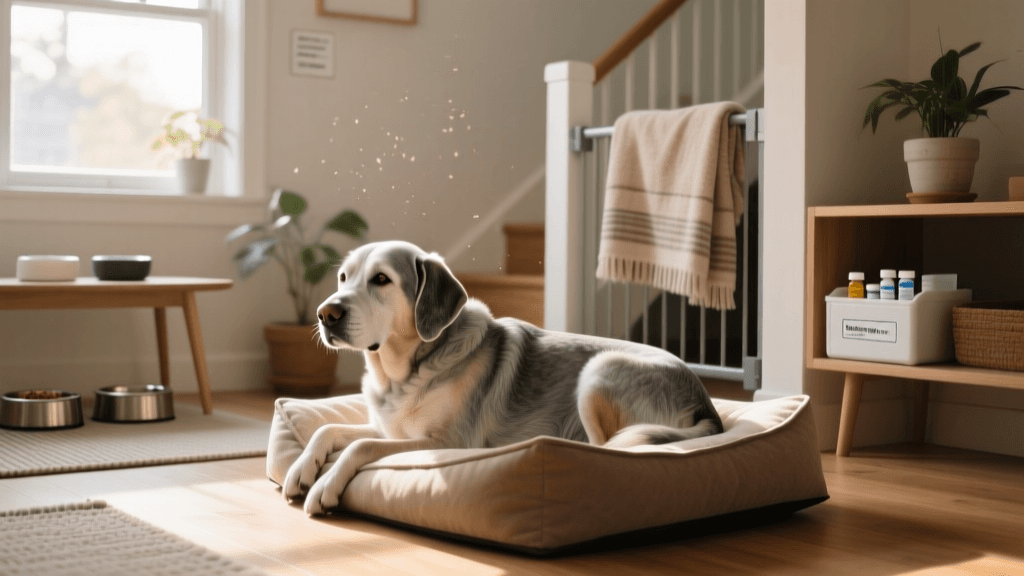
Medical therapy must be paired with environmental management. Slipping on hard floors or jumping off high furniture can cause micro-traumas that exacerbate joint inflammation. Here are the essential home modifications for 2026:
1. High-Traction Flooring Solutions
Hardwood, tile, and laminate floors are the enemies of arthritic dogs. The splaying of the hind legs on slippery surfaces puts immense torque on the hip joints and cruciate ligaments. Cover high-traffic areas with interlocking EVA foam tiles or large, low-pile area rugs equipped with heavy-duty non-slip rug pads. If you prefer a permanent solution, consider installing textured luxury vinyl plank (LVP) flooring with a high coefficient of friction.
2. Premium Orthopedic Bedding
Standard poly-fill dog beds compress under the weight of a large dog, offering zero joint support. You need a bed with a minimum of 4 inches of high-density, medical-grade orthopedic memory foam. Brands like Big Barker and K9 Ballistics lead the market in 2026, offering beds that retain their structural integrity for up to a decade. Expect to invest between $250 and $350 for a large-sized therapeutic bed. Place beds in draft-free areas with easy access to water and family spaces.
3. Ramps and Stairs for Elevation
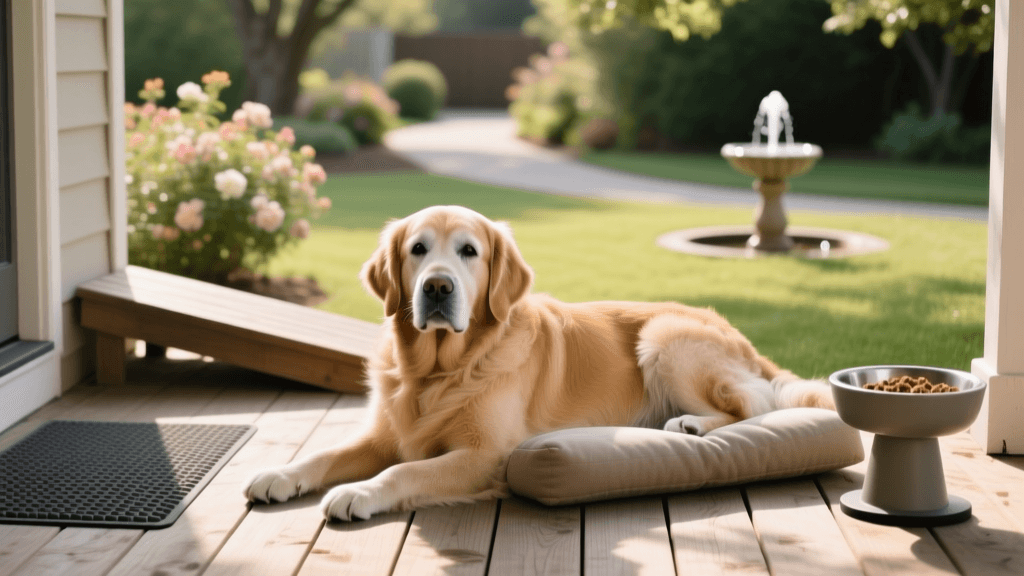
Never allow an arthritic dog to jump into an SUV or onto a high bed. Use a folding ramp with an incline angle of less than 20 degrees for large breeds. The Pet Gear Tri-Fold Ramp or the PetSafe Happy Ride Extra Long Telescoping Ramp are excellent choices, providing a stable, 28-inch wide walking surface with high-traction grip tape. For indoor furniture, high-density foam pet stairs with a washable cover are ideal for smaller breeds.
Nutritional Interventions and Weight Management
Weight management is arguably the single most important modifiable factor in treating canine OA. Every single extra pound of body weight exerts roughly four pounds of additional pressure on a dog's joints. Keeping your dog at a lean body condition score (BCS of 4/9) is non-negotiable.
Beyond calorie restriction, specific nutritional interventions can alter the inflammatory environment of the joint. Veterinary nutritionists in 2026 heavily recommend diets rich in Omega-3 fatty acids, specifically EPA (eicosapentaenoic acid) and DHA (docosahexaenoic acid). Prescription joint diets, such as Hill's Prescription Diet j/d or Royal Canin Mobility Support, are clinically formulated to provide therapeutic doses of Omega-3s, along with glucosamine and chondroitin sulfate.
If you prefer to feed a fresh or standard kibble diet, supplement with a high-quality, third-party-tested green-lipped mussel oil or a veterinary-specific Omega-3 pump. The target therapeutic dose for joint inflammation is approximately 370 mg of combined EPA and DHA per 100 kcal of food consumed daily.
Rehabilitation and Physical Therapy Modalities
Physical rehabilitation has moved from the fringe to the mainstream of OA treatment. The American College of Veterinary Surgeons strongly advocates for physical therapy to maintain muscle mass, which acts as a vital shock absorber for compromised joints.
- Class IV Cold Laser Therapy: Photobiomodulation using Class IV lasers penetrates deep into the joint capsule to reduce inflammation, increase cellular ATP production, and stimulate tissue healing. Most clinics recommend an initial loading phase of twice-weekly sessions, followed by monthly maintenance.
- Underwater Treadmill Therapy: The buoyancy of the water unloads the joints while the resistance of the water builds muscle. This is particularly beneficial for dogs with bilateral hip OA or post-operative cruciate ligament repairs.
- Acupuncture and Massage: Medical acupuncture can help modulate pain pathways and release endogenous endorphins, providing a drug-free adjunct to pain management.
2026 OA Treatment Comparison Matrix
To help you navigate the options with your veterinarian, here is a comparison of the primary OA treatments utilized in 2026:
| Treatment Type | Common Examples | Mechanism of Action | Est. 2026 Monthly Cost | Best For |
|---|---|---|---|---|
| Anti-NGF Monoclonal Antibodies | Librela (bedinvetmab) | Neutralizes Nerve Growth Factor to block pain signaling | $130 - $280 | Dogs with NSAID sensitivities or severe chronic pain |
| NSAIDs | Carprofen, Meloxicam, Galliprant | Inhibits COX enzymes to reduce systemic inflammation | $40 - $120 | Acute flare-ups or dogs needing oral daily management |
| Polysulfated Glycosaminoglycans | Adequan Canine | Inhibits cartilage-degrading enzymes; promotes synovial fluid health | $60 - $100 | Early-stage OA to slow structural cartilage degradation |
| Nutraceuticals | Omega-3s, Green-Lipped Mussel, UC-II Collagen | Provides building blocks for cartilage; modulates mild inflammation | $30 - $70 | Preventative care and mild OA baseline support |
A Practical Daily Routine for the Arthritic Dog
Consistency is key when managing canine OA. Here is a sample daily routine for a 70-pound senior dog with bilateral hip dysplasia and secondary OA:
Morning (7:00 AM): Wake up on a heated orthopedic memory foam bed to loosen stiff joints. Administer daily joint supplements (Omega-3s and UC-II collagen) with a measured portion of a mobility-support diet. Follow with a 15-minute gentle 'sniffari' walk on a flat, grassy surface using a front-clip harness to avoid neck strain.
Mid-Day (1:00 PM): Mental stimulation without physical strain. Use puzzle toys or snuffle mats on a non-slip rug to keep the dog engaged while resting. If scheduled, perform a 10-minute Class IV laser therapy session at home or at the veterinary rehab clinic.
Evening (5:00 PM): A second short, 10-minute leash walk. Avoid sudden stops, sharp turns, or playing fetch, which cause high-impact joint loading. Return home and apply a warm, moist compress to the hips for 10 minutes to increase local blood flow and relax the surrounding musculature.
Night (9:00 PM): Ensure the dog is settled on their orthopedic bed. Use a pet ramp if they sleep on an elevated human bed. Keep the ambient room temperature comfortably warm, as cold drafts can exacerbate joint stiffness.
Conclusion
Managing canine osteoarthritis in 2026 is no longer about simply accepting that a dog will 'slow down with age.' By leveraging targeted anti-NGF biologics, optimizing body weight through precision nutrition, and engineering a safe, high-traction home environment, you can profoundly extend your dog's active, pain-free years. Always consult with your primary veterinarian or a board-certified veterinary internal medicine specialist to tailor a multimodal pain management plan specifically suited to your dog's unique orthopedic needs.
priya-sutaria
All our authors care for dogs every day — read more of their work on the authors page.