Canine Osteoarthritis Home Care & Treatment Guide for 2026
Discover the latest 2026 canine osteoarthritis treatments, from Librela injections to home modifications, to keep your senior dog comfortable and active.
Understanding Canine Osteoarthritis in 2026
Osteoarthritis (OA) is a progressive, degenerative joint disease that affects an estimated 20% of adult dogs and over 80% of senior dogs. As a dog owner, watching your once-vibrant companion struggle to climb the stairs or hesitate before jumping into the car can be heartbreaking. However, the landscape of veterinary medicine and home care has evolved dramatically. In 2026, managing canine OA is no longer just about masking pain with daily medications; it is about a comprehensive, multimodal approach that combines cutting-edge biologics, strategic home modifications, and tailored daily routines to preserve your dog's mobility and quality of life.
Living with an arthritic dog requires a shift in how you structure your shared environment and daily activities. By understanding the latest therapeutic options and implementing practical lifestyle adjustments, you can significantly slow the progression of joint degeneration and keep your dog comfortable, happy, and engaged in their golden years.
The 2026 Medical Landscape: Beyond Daily NSAIDs
For decades, Non-Steroidal Anti-Inflammatory Drugs (NSAIDs) like carprofen and meloxicam were the undisputed cornerstone of canine OA treatment. While they remain highly effective for acute flare-ups, long-term daily use in aging dogs carries inherent risks to renal and hepatic function. The U.S. Food and Drug Administration (FDA) continually emphasizes the importance of rigorous blood monitoring and cautious dosing when relying on traditional NSAIDs for chronic pain management in senior pets.
Today, the standard of care has shifted heavily toward anti-Nerve Growth Factor (anti-NGF) monoclonal antibodies. Injectable biologics such as bedinvetmab (Librela) for dogs and frunevetmab (Solensia) for cats have revolutionized OA management. Administered as a convenient monthly subcutaneous injection by your veterinarian, these therapies specifically target and neutralize NGF, a key protein involved in the generation of OA pain signals. Because these biologics are metabolized like natural proteins rather than processed through the liver or kidneys, they offer a vastly superior safety profile for senior dogs with underlying organ sensitivities, making them the premier choice for long-term, baseline pain control in 2026.
Optimizing Your Home Environment for Joint Health
Medical intervention is only half the battle; the other half is ensuring your home does not inadvertently exacerbate your dog's joint stress. Slipping, sliding, and climbing are the enemies of arthritic joints.
Strategic Flooring and Traction
Hardwood, laminate, and tile floors are notoriously slippery and can cause micro-traumas to compromised joints every time a dog tries to stand or turn. In 2026, the best approach is to create "traction highways" through your home using high-traction area rugs secured with heavy-duty, non-slip rug pads. Alternatively, interlocking EVA foam mats (often used in home gyms or daycare centers) provide excellent grip and slight cushioning. For dogs that struggle specifically with getting up from a resting position, consider applying paw-grip traction pads to their footpads or using breathable, rubber-soled dog socks to prevent splaying.
Advanced Orthopedic Sleeping Solutions
An arthritic dog needs a bed that prevents pressure sores and supports joint alignment. The current gold standard is a high-density, medical-grade memory foam bed with a minimum thickness of 4 inches. Avoid beds stuffed with polyester fiberfill, as they compress and bottom out under the dog's weight, offering zero joint relief. Furthermore, modern smart orthopedic beds now feature app-controlled, thermostatic heating elements that provide gentle, consistent warmth to soothe stiff joints overnight, automatically adjusting to your dog's body temperature.
Ramps, Stairs, and Elevation
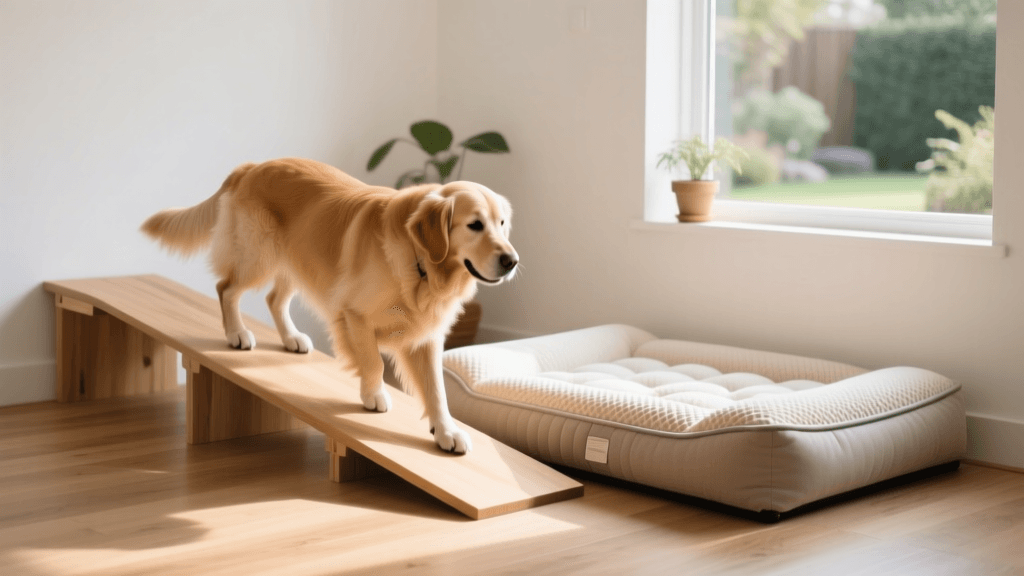
Never force an arthritic dog to jump into a vehicle or onto a high bed. Invest in a high-quality, foldable pet ramp. The ideal ramp should have a gentle incline ratio of at least 1:4 (for every 1 inch of height, the ramp should be 4 inches long) and feature a textured, high-grip surface. Inside the home, pet stairs with deep, wide treads and a low rise (under 5 inches per step) can help smaller dogs access furniture safely, provided they are placed on a non-slip surface so the stairs themselves do not slide.
Restructuring Your Daily Routine
Dogs with OA thrive on consistency, but their exercise and daily care routines must be carefully calibrated to avoid the "weekend warrior" effect, where overexertion leads to days of severe inflammation and pain.
The "Sniffari" and Low-Impact Exercise
Physical activity remains crucial to maintain muscle mass, which acts as a natural brace for arthritic joints. However, the type of exercise matters. Replace long, repetitive fetch sessions or jogging with multiple short, leisurely walks throughout the day. The American Kennel Club (AKC) highly recommends "Sniffaris"—decompression walks where the dog is allowed to roam at their own pace and engage heavily in scent work. Mental enrichment through sniffing tires a dog out just as effectively as physical running, but without the high-impact concussive forces on their joints.
Morning Warm-Ups and Evening Wind-Downs
Just like humans with arthritis, dogs experience significant morning stiffness. Before encouraging your dog to get up, spend 5 to 10 minutes gently massaging their major muscle groups (shoulders, hips, and thighs) to stimulate blood flow. Applying a warm (not hot) compress to their worst-affected joints for a few minutes can dramatically improve their morning mobility. In the evening, avoid vigorous play right before bed, and ensure their sleeping area is free from cold drafts, which can cause joints to seize up overnight.
Comparison of 2026 Canine OA Management Options
To help you navigate the myriad of treatment options available, here is a structured comparison of the most common therapies utilized by veterinarians and pet owners today.
| Therapy Type | Mechanism of Action | Pros | Cons |
|---|---|---|---|
| Anti-NGF Biologics (e.g., Librela) | Neutralizes Nerve Growth Factor to block pain signaling at the source. | Monthly dosing; bypasses liver/kidneys; excellent long-term safety profile. | Requires veterinary visits for injection; higher upfront monthly cost. |
| Traditional NSAIDs | Reduces systemic inflammation and blocks pain enzymes (COX-1/COX-2). | Fast-acting; highly effective for acute flare-ups; oral administration. | Risk of GI, renal, or hepatic side effects with chronic use; requires bloodwork. |
| Therapeutic Laser (Cold Laser) | Uses specific light wavelengths to stimulate cellular repair and reduce inflammation. | Non-invasive; drug-free; excellent for localized joint pain and wound healing. | Requires frequent clinic visits or expensive home units; results vary by dog. |
| Joint Supplements (Omega-3, GLM) | Provides building blocks for cartilage and natural anti-inflammatory fatty acids. | Safe for daily use; synergistic with medications; supports overall coat and heart health. | Takes 4-8 weeks to see clinical benefits; not a standalone treatment for severe OA. |
Nutrition, Weight Management, and Supplements
No amount of medication or home modification can fully compensate for the mechanical stress caused by excess body fat. Maintaining a lean Body Condition Score (BCS) of 4 out of 9 is the single most impactful lifestyle intervention for an arthritic dog. Adipose (fat) tissue is not merely stored energy; it is an active endocrine organ that secretes pro-inflammatory cytokines, which actively worsen joint pain and degradation.
Dietary supplementation is also a key pillar of multimodal management. High doses of marine-derived Omega-3 fatty acids (specifically EPA and DHA) have been clinically proven to reduce joint inflammation. Additionally, supplements containing Green-Lipped Mussel (GLM), curcumin, and undenatured type II collagen (UC-II) are widely recommended in 2026 to support cartilage matrix integrity. The American Veterinary Medical Association (AVMA) stresses that any dietary changes or supplement regimens for aging dogs should be closely coordinated with your veterinarian to ensure they do not interact negatively with existing medications or underlying metabolic conditions.
Final Thoughts on Living with an Arthritic Dog
Sharing your life with a dog suffering from osteoarthritis requires empathy, patience, and a proactive approach to their daily care. By leveraging the advanced, organ-safe biologic treatments available in 2026, transforming your home into a joint-friendly sanctuary, and adapting your exercise routines to prioritize mental enrichment over physical strain, you can ensure your loyal companion remains comfortable and joyful. OA is a progressive condition, but with the right multimodal strategy, you can successfully manage the pain and preserve the beautiful bond you share with your dog for years to come.
priya-sutaria
All our authors care for dogs every day — read more of their work on the authors page.