Master Deep Pressure Therapy for Service Dogs in 2026
Learn how to train deep pressure therapy for psychiatric service dogs in 2026. Step-by-step cues, weight guidelines, and public access tips included.
What is Deep Pressure Therapy (DPT)?
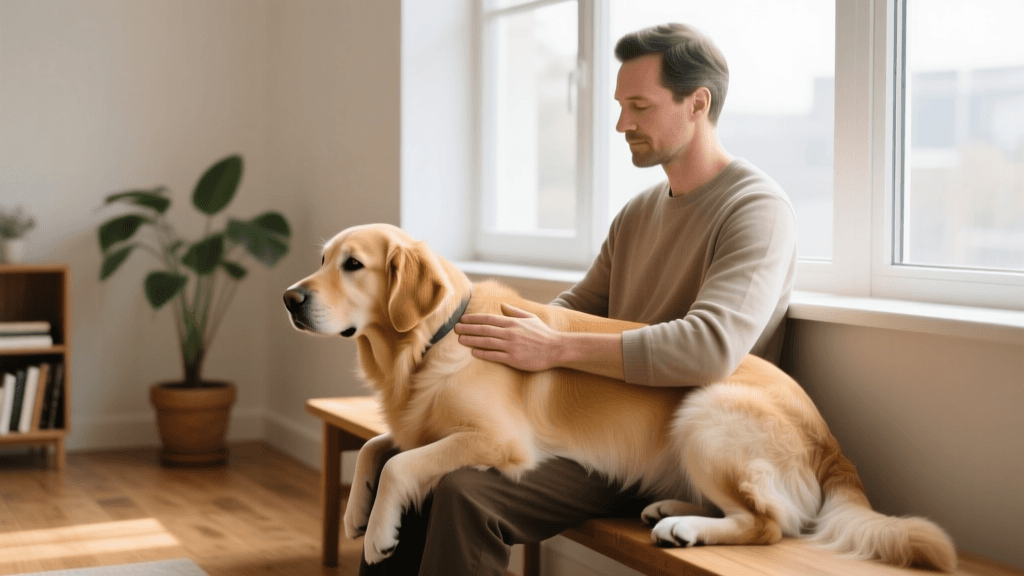
Deep Pressure Therapy (DPT) is a critical, life-changing task performed by psychiatric service dogs to mitigate symptoms of anxiety, PTSD, panic attacks, and sensory overload. By applying firm, evenly distributed weight across the handler's body, the dog stimulates the parasympathetic nervous system, promoting the release of endorphins and lowering the handler's heart rate. As of 2026, the Assistance Dogs International (ADI) continues to recognize DPT as a primary mitigating task for psychiatric disabilities, provided the dog is trained to perform it reliably on cue or in response to specific handler bio-markers.
Training a service dog to perform DPT requires patience, precision, and a deep understanding of canine ergonomics. Unlike simple obedience commands, DPT requires the dog to remain stationary and focused while applying physical weight, often in high-stress environments. This comprehensive 2026 guide will walk you through the exact steps to shape, proof, and generalize this essential task.
Prerequisites for DPT Training
Before introducing the physical mechanics of DPT, your dog must possess a rock-solid foundation in basic obedience and handler focus. According to the American Kennel Club (AKC), foundational programs like the Canine Good Citizen (CGC) are excellent benchmarks for service dog candidates. Your dog should reliably respond to the following cues before beginning DPT training:
- Mat Training: The dog must be able to settle on a designated mat or bed for at least 10 minutes with minimal movement.
- Chin Targeting: The dog should reliably place its chin on your hand or a designated target object and hold it there.
- Handler Focus: The dog must maintain eye contact and engagement with you, even in the presence of mild environmental distractions.
- Consent and Comfort: The dog must enjoy close physical contact and not display stress signals (lip licking, whale eye, yawning) when leaning against or lying on top of you.
Step-by-Step DPT Training Protocol
Step 1: Targeting the Chest and Lap
Begin in a quiet, low-distraction environment at home. Sit in a sturdy chair or on the floor with your legs extended. Using a high-value reward, such as freeze-dried beef liver or plain boiled chicken, lure your dog onto your lap or against your chest. If you are training for a floor-based supine position, lie down and pat your chest.
The moment the dog places its front paws on your lap or chest, mark the behavior with a clicker or a verbal 'Yes!' and deliver the treat. Repeat this 10 to 15 times per session. The goal of this phase is simply to build a positive association with being on top of or heavily leaning against the handler's body.
Step 2: Shaping the 'Settle' and 'Down' on the Handler
Once the dog is comfortably stepping onto your lap or chest, begin shaping the full DPT position. If you want the dog to lie across your lap, lure them into a 'down' position while they are on your legs. If you prefer the dog to lay its head and upper body heavily on your chest while you are seated, use your previously trained 'chin target' cue to guide their head onto your sternum.
Mark and reward heavily for any downward pressure. Do not reward the dog if they are standing or bracing their weight with their legs. The dog must be fully relaxed, with its muscles loose, allowing gravity to create the deep pressure effect. Use a calm, soothing voice to encourage relaxation.
Step 3: Building Duration and Distraction Proofing
DPT is only effective if the dog can maintain the pressure for an extended period, typically 5 to 15 minutes, depending on the handler's needs. Begin by delaying your reward. Instead of marking and treating the moment the dog lies down, wait for 3 seconds of sustained pressure before marking and rewarding.
Gradually increase the duration by 2 to 3 seconds per training session. Introduce a release cue, such as 'Free' or 'All Done,' so the dog knows exactly when the task is complete. As duration increases, transition from a continuous reinforcement schedule (treat every time) to a variable ratio schedule (treat randomly after 30 seconds, then 2 minutes, then 1 minute) to build resilience and prevent the dog from anticipating the reward and breaking position.
Step 4: Transferring to the Psychiatric Alert Cue
Once the dog can reliably perform the physical behavior on a hand signal or body lure, it is time to attach the final verbal cue, such as 'Pressure,' 'DPT,' or 'Comfort.' Say the cue clearly one second before you give the physical hand signal. After several repetitions, fade the hand signal entirely.
For handlers who require the dog to perform DPT in response to an anxiety or panic attack, you must also train the dog to recognize your specific bio-markers. This involves alerting the dog to your altered breathing patterns, trembling, or specific pacing behaviors, and having them offer the DPT behavior without a verbal command. This advanced alert training should always be guided by a professional service dog trainer certified in 2026 scent or behavioral alert methodologies.
Canine Ergonomics and Weight Guidelines
Not all dogs are physically suited for all types of DPT. The Americans with Disabilities Act (ADA) does not restrict service dogs by breed or size, but physical limitations and animal welfare must dictate the type of DPT you train. A small dog cannot safely provide full-body supine pressure, and a giant breed dog may cause joint or circulation issues if placed incorrectly on a seated handler's lap.
| Handler Position | Dog Size Requirement | Target Pressure Zone | Safety Considerations |
|---|---|---|---|
| Seated (Wheelchair/Chair) | Medium to Large (40+ lbs) | Lap, thighs, or chest | Ensure dog does not block wheelchair controls or restrict handler breathing. |
| Reclined (Sofa/Bed) | Any Size (15+ lbs) | Chest, abdomen, or legs | Monitor dog for overheating; use breathable gear. |
| Supine (Floor) | Large to Giant (60+ lbs) | Full torso and chest | Dog must be trained to avoid placing full weight directly on the handler's face or throat. |
| Standing / Leaning | Medium to Large (40+ lbs) | Handler's legs or side | Dog leans heavily against legs to provide grounding; no climbing involved. |
Modern Gear and Equipment for 2026
When training and performing DPT, especially in public access settings, the right gear is essential for both the dog's comfort and the handler's safety. In 2026, the service dog industry has seen significant advancements in ergonomic equipment:
- Breathable Mesh Service Vests: Prolonged DPT sessions can cause dogs to overheat, as they are absorbing the handler's body heat. Modern vests featuring aerospace-grade cooling mesh allow for heat dissipation while maintaining clear service dog identification.
- Orthopedic Training Mats: When training floor-based DPT, use a high-density orthopedic mat to protect the dog's joints, especially for large breeds that may be asked to perform DPT on hard public floors.
- Non-Slip Grip Socks: If your dog is performing DPT on a leather couch or a slippery wheelchair footrest, canine grip socks prevent them from sliding off and straining a muscle while trying to maintain their position.
Public Access and Generalization
A psychiatric service dog must be able to perform DPT anywhere the handler goes. Under the ADA, service dogs are granted public access rights, meaning they must be able to execute tasks in grocery stores, airports, and workplaces. However, performing DPT in public requires intense generalization training.
Start by practicing DPT in slightly more distracting environments, such as your backyard or a quiet park. Gradually move to pet-friendly stores, and eventually to high-stimulus environments like shopping malls or transit stations. The dog must learn to ignore dropped food, passing strangers, and loud noises while maintaining their pressure on the handler. If the dog breaks position to investigate a distraction, calmly reset them without punishment, and lower your criteria for success until they can focus again.
Troubleshooting Common DPT Challenges
The Dog Falls Asleep: It is very common for dogs to fall asleep during long DPT sessions. While a sleeping dog is relaxed, they must remain responsive to the handler's release cue or emergency recall. If your dog becomes too difficult to wake, gently shift your weight or use a specific 'wake up' tactile cue to ensure they remain semi-alert and ready to work if you need to move.
The Dog is Too Heavy for Lap DPT: If you use a wheelchair or have limited leg strength, a 90-pound Labrador may cause nerve compression if placed directly on your lap. Instead, train 'Floor DPT,' where the dog sits or lies heavily on your feet, or 'Side Lean DPT,' where the dog presses its entire body weight against your legs from the floor.
The Dog Refuses to Apply Pressure: If a previously trained dog suddenly refuses to perform DPT, rule out medical issues first. Joint pain, gastrointestinal discomfort, or dental issues can make a dog reluctant to lie down or bear weight. Consult your veterinarian to ensure your dog is physically comfortable before assuming it is a behavioral regression.
Conclusion
Training Deep Pressure Therapy is a profound journey that deepens the bond between handler and service dog. By following a structured, reward-based protocol and prioritizing the physical well-being of your canine partner, you can develop a reliable, life-saving psychiatric task. As service dog standards continue to evolve in 2026, maintaining a commitment to positive reinforcement, ergonomic safety, and rigorous public access proofing will ensure your team thrives in any environment.
anouk-beaumont
All our authors care for dogs every day — read more of their work on the authors page.