Canine Cognitive Dysfunction: Expert Behavioral Analysis
Discover expert behavioral signs of Canine Cognitive Dysfunction. Learn actionable management strategies, supplements, and enrichment tips for aging dogs.
Understanding Canine Cognitive Dysfunction: A Behavioral Perspective
As our canine companions age, pet parents often notice subtle shifts in behavior. While many dismiss these changes as simply "getting old," veterinary behaviorists recognize that profound behavioral shifts in senior dogs are frequently symptomatic of Canine Cognitive Dysfunction (CCD). Often compared to Alzheimer’s disease in humans, CCD is a neurodegenerative disorder characterized by the accumulation of amyloid-beta proteins in the brain, leading to oxidative stress, neuronal damage, and a decline in executive function.
From an expert behavior analysis perspective, CCD is not merely a loss of memory; it is a fundamental alteration in how a dog processes sensory information, navigates its environment, and regulates its emotional state. Recognizing the clinical signs early is paramount, as behavioral interventions and environmental modifications can significantly slow the progression of symptoms and improve the dog’s quality of life. According to the VCA Hospitals, up to 50% of dogs over the age of 11 show at least one clinical sign of cognitive decline, yet a vast majority remain undiagnosed.
The DISHAA Model: A Framework for Behavioral Assessment
Veterinary behaviorists utilize the DISHAA acronym to systematically evaluate senior dogs for cognitive decline. This framework moves beyond vague observations and categorizes specific, measurable behavioral anomalies.
- Disorientation: Dogs may wander into corners and become unable to back out, stare blankly at walls, or fail to recognize familiar pathways in the home. This indicates a breakdown in spatial mapping and proprioceptive processing.
- Interactions: A previously affectionate dog may become irritable, withdrawn, or fail to greet owners at the door. Conversely, some dogs develop hyper-attachment and exhibit severe separation anxiety.
- Sleep-Wake Cycle Alterations: Often referred to as "sundowning," dogs with CCD frequently pace, pant, or vocalize late at night while sleeping excessively during the day. This circadian rhythm disruption is a hallmark of neurological decline.
- House Soiling: Loss of housetraining in a previously reliable dog, characterized by a lack of signaling (e.g., no longer scratching at the door) and inappropriate elimination indoors, is a primary indicator of executive dysfunction.
- Activity Level Changes: Behaviors manifest in two extremes: apathy (loss of interest in walks, toys, or social interaction) or repetitive, purposeless activities (excessive licking, pacing in tight circles).
- Anxiety: New-onset fears, such as noise phobias or fear of smooth floors, emerge as the dog’s ability to process and habituate to environmental stimuli diminishes.
Differentiating Normal Aging from Cognitive Decline
A critical component of behavior analysis is distinguishing CCD from normal age-related changes or underlying medical conditions like osteoarthritis or sensory loss. The table below provides a structured comparison to aid in differential observation.
| Behavioral Domain | Normal Aging / Medical Issue | Canine Cognitive Dysfunction (CCD) |
|---|---|---|
| Navigation & Mobility | Hesitance to jump on furniture or climb stairs due to joint pain (osteoarthritis). | Getting trapped behind furniture, wandering aimlessly, or forgetting how to navigate around obstacles. |
| Sensory Response | Failing to respond to verbal cues due to acquired deafness; bumping into objects due to cataracts. | Staring blankly into space, failing to recognize familiar people or pets despite intact vision and hearing. |
| Sleep Patterns | Sleeping more deeply and for longer durations, but waking normally for bathroom breaks. | Pacing relentlessly at night, vocalizing in dark rooms, severe daytime lethargy. |
| Housetraining | Accidents occurring due to mobility issues preventing them from reaching the door in time. | Eliminating in plain sight, lack of pre-elimination signaling, seemingly forgetting the concept of outdoors. |
Actionable Behavioral Management Strategies
While there is no cure for CCD, a multi-modal approach combining environmental enrichment, routine stabilization, and targeted supplementation can forge new neural pathways and manage symptoms. Below are specific, actionable protocols recommended by veterinary behaviorists.
1. Targeted Cognitive Enrichment
Mental stimulation promotes neuroplasticity. However, senior dogs with CCD can become easily frustrated by overly complex tasks, leading to learned helplessness.
- Product Recommendation: The Nina Ottosson Dog Brick Puzzle (Level 2). Cost: Approximately $16. Protocol: Use this puzzle for exactly 10 minutes daily. Start with the easiest sliding compartments to ensure the dog experiences a "win," which stimulates dopamine release and reinforces problem-solving behaviors without causing stress.
- Olfactory Enrichment: Scent work bypasses damaged visual-spatial pathways. Use a Snuffle Mat ($15-$25) for their evening meal. The act of foraging lowers heart rate and provides deep cognitive engagement.
2. Circadian Rhythm Resetting
To combat nocturnal pacing and sundowning, you must aggressively regulate the dog’s circadian rhythm through light exposure and strict scheduling.
- Daytime Protocol: Maximize exposure to natural sunlight between 10:00 AM and 2:00 PM. This halts daytime melatonin production. Engage in a 20-minute structured sniffari walk during this window.
- Nighttime Protocol: Dim household lights by 8:00 PM. Administer a high-value, easily digestible treat like Zuke’s Mini Naturals ($8) immediately following the final bathroom break at 10:30 PM. This creates a positive behavioral anchor associated with settling down for the night.
3. Anxiety and Environmental Modification
Dogs with CCD lose their cognitive map of the home, making dark hallways or smooth floors terrifying. Modifying the environment reduces the cognitive load required to navigate the house.
- Traction and Mapping: Place interlocking foam yoga mats or non-slip runners ($30-$40) along primary transit routes. This provides tactile feedback that helps the dog orient itself when vision or spatial memory fails.
- Pheromone Therapy: Utilize an Adaptil Calm On-the-Go Collar ($25). This synthetic dog-appeasing pheromone (DAP) provides continuous olfactory reassurance, significantly reducing nocturnal anxiety and pacing behaviors.
- Lighting: Install motion-sensor LED nightlights ($15 for a 4-pack) in hallways and near the litter area to prevent disorientation during nighttime waking.
Nutritional and Supplement Interventions
From a neuro-behavioral standpoint, supporting brain health requires targeted antioxidants and alternative energy sources for aging neurons. The American Kennel Club notes that diets rich in specific fatty acids and antioxidants can improve clinical signs of CCD within weeks.
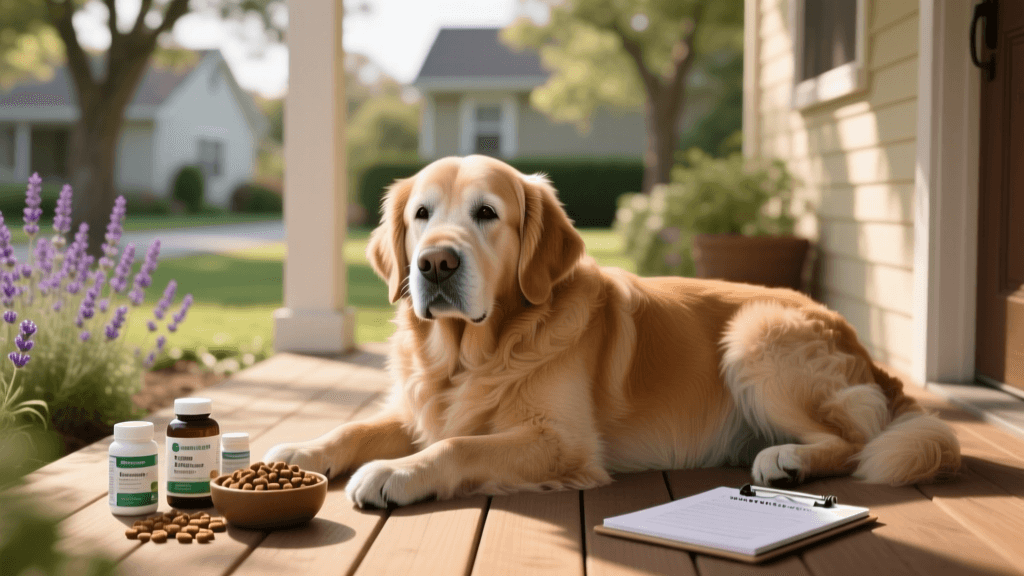
- Medium-Chain Triglycerides (MCTs): Aging brains struggle to metabolize glucose. MCT oil provides ketones, an alternative energy source for neurons. Dosage: Introduce generic, unflavored MCT oil at 1/4 teaspoon per 10 lbs of body weight daily, mixed thoroughly into wet food. Cost: ~$15 for a 16oz bottle.
- Phosphatidylserine Supplements: Products like Senilife contain phosphatidylserine, a phospholipid that maintains cell membrane fluidity in the brain. Dosage: 1 capsule per 50 lbs of body weight daily. Cost: ~$35 for a 30-day supply. Clinical improvements in recognition and interaction are typically observed after 4 to 6 weeks of consistent administration.
- Prescription Diets: Consult your veterinarian regarding neuro-care diets (such as Hill’s b/d or Purina NeuroCare), which are clinically formulated with synergistic blends of Vitamin E, Vitamin C, selenium, and flavonoids to combat oxidative stress.
The Importance of Professional Behavioral Guidance
It is imperative to rule out underlying metabolic, neurological, or painful conditions before confirming a CCD diagnosis. Conditions such as hypertension, chronic kidney disease, or severe dental pain can mimic cognitive decline by causing irritability, house soiling, and sleep disturbances. The UC Davis Veterinary Medicine Behavioral Service emphasizes that a comprehensive medical workup, including a full blood panel, urinalysis, and blood pressure screening, is the mandatory first step in any senior dog behavior consultation.
"Behavioral changes in senior dogs are never just a normal part of aging. They are a form of communication indicating underlying neurological or physical distress. Early intervention through environmental management and cognitive support is the cornerstone of maintaining their welfare."
By shifting our perspective from passive acceptance of "old age" to active behavioral management, we can profoundly impact the twilight years of our dogs. Implementing structured enrichment, optimizing their environment for safety, and utilizing targeted neuro-nutrition allows dogs with CCD to maintain their dignity, comfort, and bond with their human families for as long as possible.
priya-sutaria
All our authors care for dogs every day — read more of their work on the authors page.