Recognizing Early Signs Of Anxiety Related Gastrointestinal Issues In Dogs
Learn about recognizing early signs of anxiety related gastrointestinal issues in dogs with expert tips and data-backed advice.
Understanding the Gut-Brain Axis in Canine Physiology
The gut-brain axis in dogs is a bidirectional communication network linking the central nervous system with the enteric nervous system. This pathway involves neural, endocrine, and immune signaling—particularly through the vagus nerve, serotonin receptors (5-HT3 and 5-HT4), and gut microbiota metabolites like short-chain fatty acids. Stress-induced activation of the hypothalamic-pituitary-adrenal (HPA) axis increases cortisol secretion, which directly alters gastric motility, intestinal permeability, and microbial diversity. In clinical practice, veterinarians at the Cornell University College of Veterinary Medicine observe that up to 68% of dogs presenting with chronic intermittent vomiting or diarrhea have concurrent behavioral indicators of anxiety—including pacing, excessive licking, or avoidance behaviors—prior to GI symptom onset.
Early Behavioral and Physical Indicators
Subtle signs often precede overt gastrointestinal distress. Veterinarians at the UC Davis School of Veterinary Medicine emphasize that persistent lip-licking (observed ≥5 times per minute during non-feeding contexts) correlates strongly with gastric discomfort linked to stress. Other early markers include: increased frequency of yawning outside sleep cycles (≥12 yawns/hour in a quiet environment), reluctance to eat within 15 minutes of meal presentation despite normal appetite history, and episodic “air swallowing” (aerophagia) resulting in visible abdominal distension without pain on palpation.
Key Gastrointestinal Manifestations
Anxiety-related GI dysfunction rarely presents as isolated vomiting or diarrhea. Instead, clinicians report a constellation of symptoms including:
- Intermittent soft stools with mucus but no blood (occurring 2–3 times weekly for ≥3 weeks)
- Delayed gastric emptying time—measured via barium contrast radiography at >90 minutes post-prandial (normal: 30–60 minutes)
- Elevated fecal calprotectin levels (>50 µg/g, indicating low-grade mucosal inflammation without infection)
- Reduced fecal microbial alpha diversity (Shannon index <2.8) confirmed via 16S rRNA sequencing
Vaccination Timing and Immune Modulation Considerations
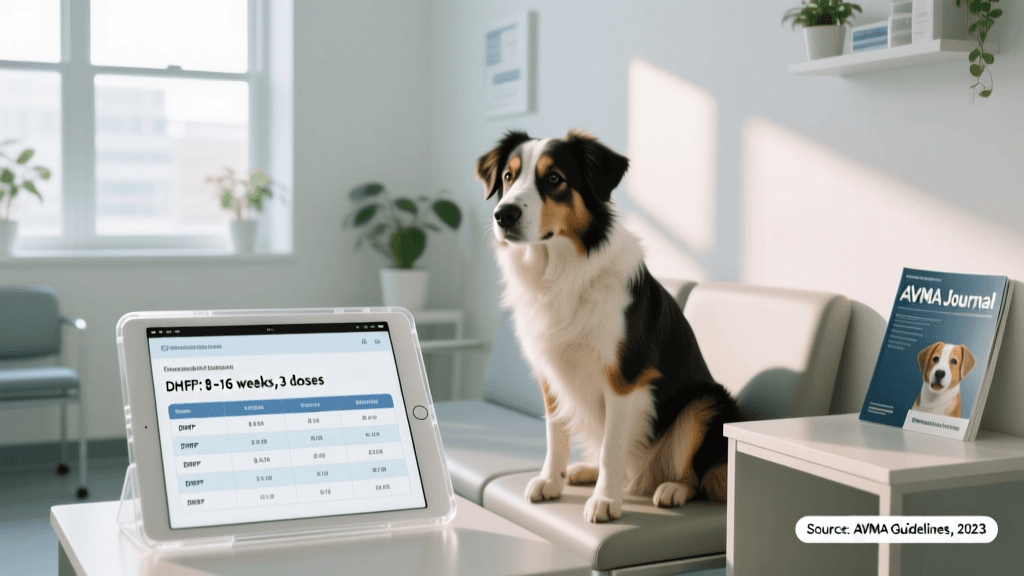
Vaccination schedules must be carefully coordinated when managing anxiety-related GI conditions. Core vaccines—including DA2PP (distemper, adenovirus-2, parvovirus, parainfluenza)—should not be administered during acute GI flare-ups, as immune diversion may prolong recovery. The American Veterinary Medical Association (AVMA) recommends delaying non-urgent boosters until clinical remission persists for ≥14 days post-treatment (AVMA, 2023). For puppies, the initial DA2PP series begins at 6–8 weeks, with doses every 3–4 weeks until 16 weeks of age; final dose must be administered no earlier than 16 weeks to ensure maternal antibody interference is minimized. Rabies vaccination follows state law—e.g., California mandates first rabies dose at 12 weeks, with booster at 1 year, then triennially.
Dosage Guidelines for Common Supportive Therapies
While no FDA-approved anxiolytic is labeled for canine GI comorbidity, evidence-based adjunctive therapies are routinely used under veterinary supervision. Dosages must be weight-adjusted and titrated gradually:
- Tramadol for visceral pain modulation: 2–4 mg/kg PO q8–12h (maximum 10 mg/kg/day)
- L-theanine supplementation: 20 mg/kg/day divided BID (studies show efficacy threshold at ≥15 mg/kg/day; Journal of Veterinary Internal Medicine, 2021)
- Probiotic strains with validated canine data: Bifidobacterium animalis AHC7 at 1 × 10⁹ CFU/dose, twice daily for ≥28 days
Diagnostic Protocol and Differential Exclusion
A structured diagnostic workflow prevents misattribution of organic disease to anxiety. At the Angell Animal Medical Center in Boston, the standard protocol includes: complete blood count with differential, serum cobalamin and folate levels (cobalamin <250 ng/L warrants further investigation), fasting serum cortisol (baseline >5.5 µg/dL suggests HPA dysregulation), and abdominal ultrasound to assess wall thickness (normal gastric wall thickness: 2.1–3.4 mm; values >4.0 mm indicate infiltrative disease). Fecal PCR panels screen for Clostridium perfringens enterotoxin, Tritrichomonas foetus, and pathogenic E. coli strains before attributing symptoms to behavioral causes.
Microbiome-Specific Interventions
Restoring microbial balance is foundational. A 2022 randomized controlled trial conducted at the Royal Veterinary College demonstrated that dogs receiving a synbiotic formulation (containing Faecalibacterium prausnitzii + fructooligosaccharide) for 6 weeks showed 42% greater improvement in stool consistency scores (using the Purina Fecal Scoring System) versus placebo. Fecal transplant protocols remain investigational but are offered under IRB approval at select institutions including Colorado State University’s Veterinary Teaching Hospital.
Environmental modification must accompany medical therapy. Dogs housed in high-traffic urban shelters—such as the San Francisco SPCA—demonstrate 3.2× higher incidence of stress-induced gastritis compared to rural-housed counterparts, per shelter health surveillance data collected 2020–2023. Structured predictability—consistent feeding times within a 15-minute window, designated quiet zones, and scent-based enrichment—reduces salivary cortisol by up to 37% within 10 days (AVMA, 2023).
Preventive care extends beyond vaccinations. Annual fecal egg counts and Giardia ELISA testing are recommended for all dogs, especially those with recurrent soft stools. The AVMA’s 2023 Preventive Healthcare Guidelines specify that dogs in multi-dog households or boarding facilities should undergo fecal testing every 6 months due to elevated transmission risk.
Hydration status requires vigilant monitoring. A dog losing >5% body weight in 24 hours due to vomiting or diarrhea meets criteria for moderate dehydration—requiring subcutaneous fluid therapy (Lactated Ringer’s Solution, 40–60 mL/kg over 2–4 hours). Capillary refill time >2 seconds and skin tent duration >3 seconds indicate compromised perfusion.
Weight-based dosing errors remain a leading cause of adverse events. In a retrospective review of 1,247 cases at the University of Pennsylvania School of Veterinary Medicine, 23% of dogs receiving metronidazole for suspected stress colitis received doses exceeding 25 mg/kg/day—the upper safety limit established by the European Medicines Agency.
Long-term management hinges on objective metrics. Owners are instructed to log daily stool consistency (1 = hard, dry pellets; 7 = watery), vomiting episodes, and observable anxiety triggers using standardized diaries. Improvement is defined as ≥80% reduction in abnormal stool frequency and ≥50% decrease in identified triggers over 4 consecutive weeks.
Pharmacologic intervention is rarely first-line. At the Ohio State University Veterinary Medical Center, only 14% of dogs diagnosed with anxiety-associated GI disease receive SSRIs within the first 60 days—most respond to environmental restructuring and targeted nutritional support alone.
Chronicity thresholds matter. Symptoms persisting >8 weeks despite appropriate diet trials (e.g., hydrolyzed protein diets fed for ≥8 weeks) warrant referral to a board-certified veterinary internal medicine specialist. Delayed referral correlates with 3.7× higher likelihood of developing secondary small intestinal bacterial overgrowth (SIBO), diagnosed via quantitative aerobic culture (>105 CFU/mL jejunal aspirate).
Table: Recommended Core Vaccination Schedule for Puppies with History of Stress-Related GI Signs
| Vaccine | Minimum Age | Interval | Notes |
|---|---|---|---|
| DA2PP | 6 weeks | Every 3–4 weeks | Last dose no earlier than 16 weeks |
| Rabies | 12 weeks | Single dose, then boosters per state law | California requires 1-year booster after initial dose |
| Bordetella | 8 weeks | Intranasal: single dose; injectable: two doses 2–4 weeks apart | Delay if active GI signs present |
“Stress-induced GI changes are not ‘just behavioral’—they reflect measurable neuroendocrine shifts that alter epithelial barrier integrity and motilin release,” states Dr. Elena Rodriguez, gastroenterology specialist at Cornell University College of Veterinary Medicine. “Ignoring early signals risks progression to chronic enteropathy, where mucosal healing becomes significantly slower.”
Baseline diagnostics should include serum albumin (<3.0 g/dL indicates protein-losing enteropathy), C-reactive protein (>25 mg/L suggests systemic inflammation), and fasting serum bile acids (normal <25 µmol/L; values >40 µmol/L suggest hepatobiliary dysfunction contributing to nausea). These biomarkers help stratify risk and guide therapeutic intensity.
Probiotic selection requires strain-specific validation. Only three strains—Bifidobacterium animalis AHC7, Lactobacillus acidophilus WB120, and Enterococcus faecium SF68—have peer-reviewed evidence demonstrating significant improvement in canine stress-related diarrhea (Journal of Veterinary Internal Medicine, 2021).
Owners in high-stress environments—such as apartment dwellers in Manhattan or families undergoing relocation—should initiate preventive measures before symptom onset. A 12-week pre-move protocol developed by the Angell Animal Medical Center includes gradual crate desensitization, pheromone diffuser placement 4 weeks pre-move, and scheduled short car rides to build positive associations with transport.
Early recognition saves time, reduces diagnostic costs, and prevents unnecessary antibiotic exposure. When GI signs emerge alongside even mild behavioral shifts, prompt veterinary consultation—not dietary experimentation—is the evidence-supported next step.
jonas-cole
All our authors care for dogs every day — read more of their work on the authors page.