Budget-Friendly Puppy Teething Relief and DIY Chew Toys
Discover budget-friendly puppy teething relief strategies and easy DIY chew toys to soothe your pup's gums without breaking the bank.
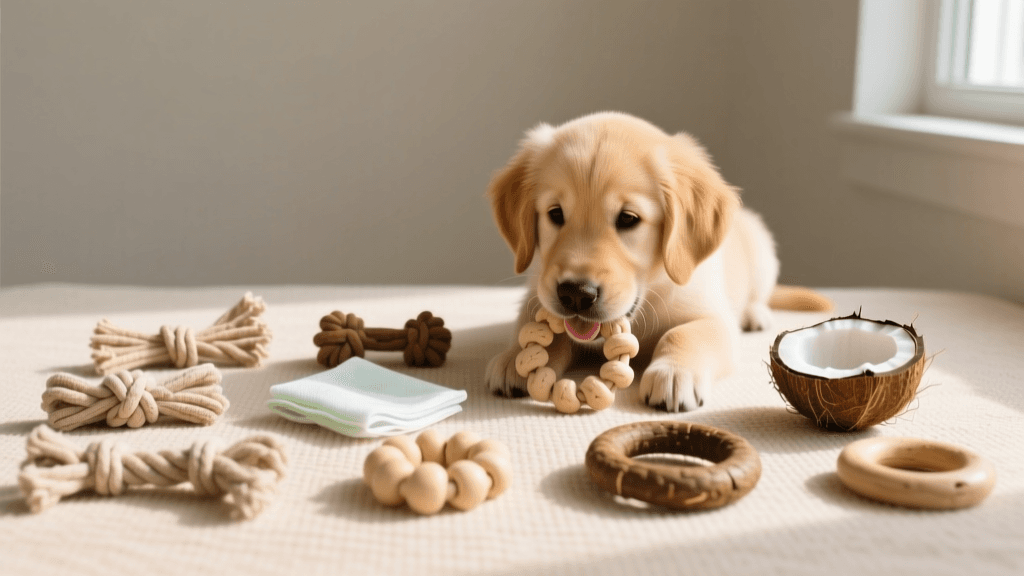
Bringing a new puppy home is an exhilarating experience, but it often comes with an unexpected and painful developmental milestone: teething. Between the ages of three and six months, your adorable furball will transform into a relentless chewing machine. While the pet industry is quick to market expensive gadgets and premium toys to combat this phase, you do not need to drain your savings account to provide effective relief. In this comprehensive guide, we will explore budget-friendly puppy teething relief strategies, including highly effective DIY chew toys, affordable commercial alternatives, and cost-saving puppy-proofing techniques that protect both your puppy's gums and your wallet.
Understanding the Puppy Teething Timeline
To effectively manage your puppy's chewing habits, it is crucial to understand the biological timeline of their dental development. Puppies are born entirely toothless. According to VCA Animal Hospitals, the first deciduous (baby) teeth begin to erupt at around three to six weeks of age. By the time your puppy is eight weeks old, they will typically have all 28 of their baby teeth.
The most intense teething phase occurs between three and six months of age. During this window, the adult teeth push through the gums, causing the baby teeth to fall out. This process is often accompanied by excessive drooling, mild bleeding, whining, and significant discomfort. You might even notice your puppy eating slower or hesitating before picking up dry kibble. Your puppy chews not out of malice, but because the counter-pressure provides immense relief to their sore, inflamed gums. By the time they reach seven months, most puppies have their full set of 42 adult teeth. Understanding this timeline helps you practice patience and implement the right soothing strategies exactly when your puppy needs them most.
The Hidden Costs of the Chewing Phase
Many new dog owners underestimate the financial impact of the teething phase. A single chewed-up pair of designer sneakers can cost upwards of $150 to replace. Furthermore, the temptation to constantly buy new commercial toys to keep the puppy occupied can easily add $30 to $50 to your monthly pet budget. Worse still, if a puppy swallows a piece of an inappropriate or poorly made cheap toy, it can lead to a gastrointestinal blockage, resulting in emergency veterinary bills that can exceed $2,000. Therefore, investing time in safe, budget-friendly, and durable teething solutions is not just about saving a few dollars on toys; it is about protecting your home and avoiding catastrophic vet bills.
Smart Budget-Friendly Commercial Options
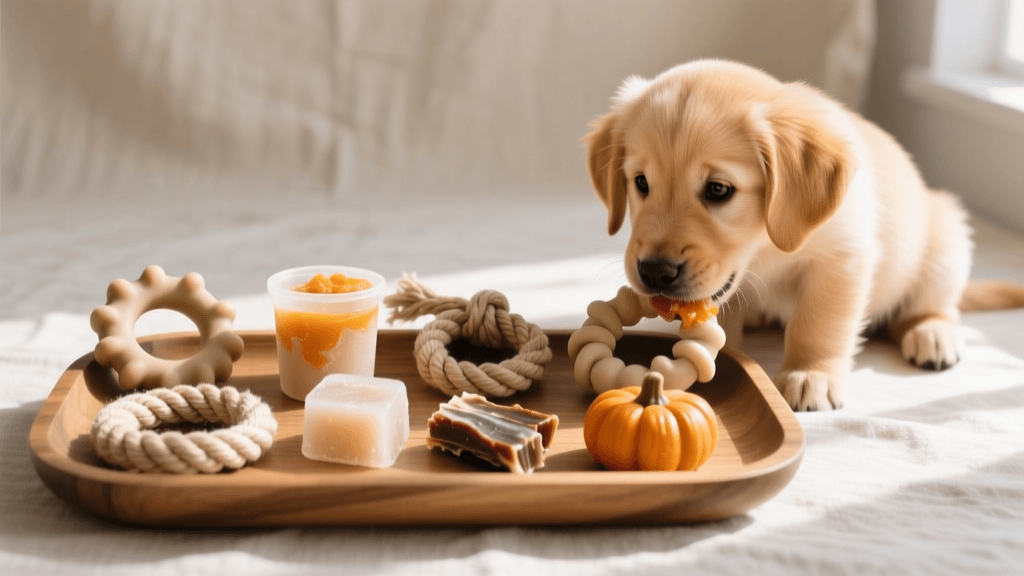
While DIY toys are fantastic, having one or two reliable commercial options is wise for times when you cannot supervise your puppy, such as during crate training. The KONG Classic (Red) typically costs between $8.00 and $12.00. It is virtually indestructible for puppies and can be stuffed with budget-friendly fillers like mashed banana or plain pumpkin puree, then frozen for extended, soothing play. Another excellent option is the Nylabone Puppy Chew, which usually retails for $5.00 to $8.00 and features gentle nubs designed specifically to clean erupting teeth without damaging soft gums.
Top 3 DIY Puppy Teething Toys (Under $1)
You likely already have the materials needed to create highly effective, soothing teething toys right in your kitchen or closet. Here are three veterinarian-approved DIY concepts that cost pennies compared to retail options.
1. The Frozen Broth Towel
This is arguably the most effective and cheapest DIY teething toy you can make. The cold temperature reduces gum inflammation, while the textured fabric massages the erupting teeth.
- Take an old, clean washcloth or small hand towel (ensure it has no loose threads, tags, or buttons).
- Twist the towel tightly into a rope shape.
- Soak it in low-sodium, onion-free, and garlic-free chicken or beef broth. (Always check the label to ensure there are no toxic ingredients like onion powder).
- Wring out the excess liquid, place the twisted towel in a ziplock bag, and freeze it for at least four hours.
- Supervise your puppy while they chew on the frozen towel, and discard or wash it once it thaws or begins to tear.
2. The Braided T-Shirt Rope
Instead of throwing away old cotton t-shirts, upcycle them into a durable tug-and-chew rope. Cut the shirts into long, two-inch-wide strips. Braid three or four strips together as tightly as possible, knotting both ends securely. The thick cotton provides excellent resistance for aggressive chewers, and the varying textures help scrape away plaque. Best of all, the cost is entirely free if you use clothes destined for the donation bin or trash.
3. Frozen Whole Carrots
For an edible, nutritious, and incredibly cheap option, look no further than your refrigerator's crisper drawer. A large, whole carrot—peeled and frozen overnight—serves as a fantastic teething stick. It is large enough that it poses minimal choking risk, and the crunchiness provides the exact pressure puppies crave. At roughly $0.10 to $0.20 per carrot, this is one of the most economical teething solutions available. Plus, it is packed with beta-carotene and fiber, making it a healthy low-calorie treat.
Comparison Chart: Commercial vs. DIY Teething Solutions
| Item Type | Estimated Cost | Durability | Best Used For |
|---|---|---|---|
| KONG Classic (Red) | $8.00 - $12.00 | High | Unsupervised crate time, stuffing with treats |
| Nylabone Puppy Chew | $5.00 - $8.00 | Medium-High | Light to moderate chewers, flavor variety |
| Frozen Broth Towel | $0.50 (Broth cost) | Low (Single use) | Acute gum inflammation, intense soothing |
| Braided T-Shirt Rope | $0.00 | Medium | Interactive play, gentle chewing |
| Frozen Whole Carrot | $0.15 | Low (Edible) | Healthy snacking, mild teething relief |
Budget-Friendly Puppy-Proofing and Deterrents
Saving money during the teething phase is just as much about protecting your belongings as it is about buying cheap toys. The American Kennel Club emphasizes that management and redirection are the cornerstones of stopping inappropriate chewing.
Commercial bitter apple sprays can cost $10 to $15 a bottle. You can easily create a budget-friendly DIY deterrent spray at home. Mix one part white vinegar or apple cider vinegar with two parts water in a spray bottle. Lightly mist the legs of your furniture, baseboards, or any cords you cannot hide. The sour taste is highly aversive to dogs but completely safe and non-toxic. Always test a small, hidden area of your furniture first to ensure the vinegar does not stain or damage the finish.
Safety First: What to Avoid on a Budget
When trying to save money, it is vital never to compromise on your puppy's safety. Never give your puppy cooked bones from your dinner table. Cooked bones become brittle and can splinter, causing severe internal lacerations or fatal intestinal blockages. Similarly, avoid giving puppies sticks or wood from the yard, as splinters can lodge in their gums or throat.
Furthermore, when creating DIY edible treats or soaking toys in broth, you must be hyper-vigilant about ingredients. Onions, garlic, chives, and xylitol (an artificial sweetener found in some broths and peanut butters) are highly toxic to dogs. Always consult the ASPCA's list of toxic people foods before introducing any human food or kitchen scrap to your puppy's teething regimen.
Pro-Tip: Always supervise your puppy with any DIY or commercial chew toy. If a toy begins to break apart, or if a DIY towel starts to fray and shed strings, remove it immediately to prevent accidental ingestion and subsequent emergency vet visits.
Training and Redirection: The Ultimate Money Saver
The most budget-friendly tool in your arsenal is proper training. When you catch your puppy chewing on a shoe or a piece of furniture, do not yell or punish them, as this only creates fear and confusion. Instead, use the 'trade-up' method. Calmly interrupt the behavior, offer a high-value, appropriate chew toy (like your frozen broth towel), and praise them enthusiastically when they bite the toy instead.
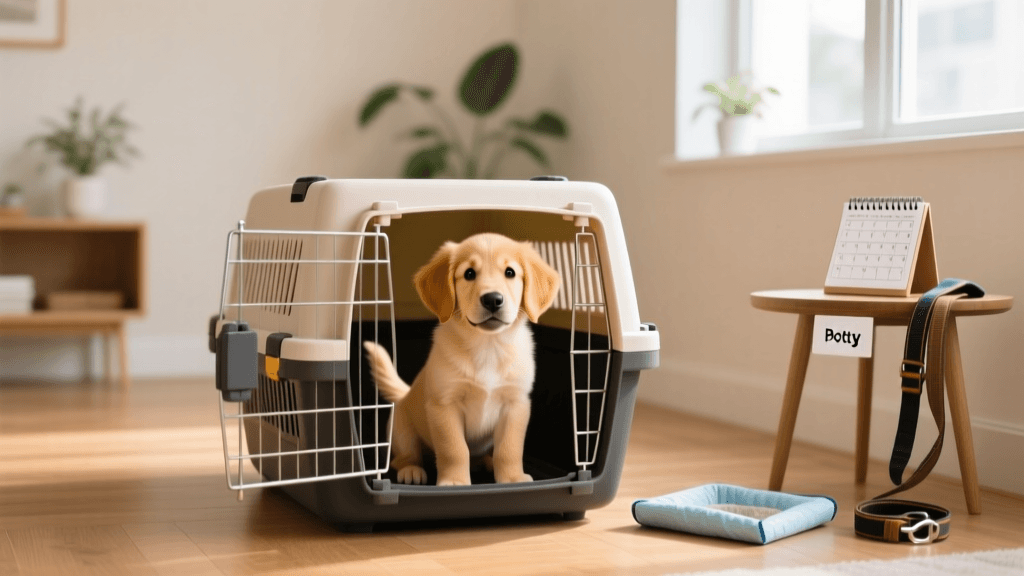
Consistency is key. Ensure all family members are on the same page regarding what is acceptable to chew. Keep your home tidy; a shoe left in the middle of the hallway is an invitation for a teething puppy. Utilize a crate or a puppy playpen when you cannot actively supervise them. This prevents costly household damage and keeps your puppy safe from ingesting dangerous items like electrical cords or toxic houseplants. By managing your environment and consistently redirecting your puppy to their budget-friendly DIY toys, you will preserve your belongings, save hundreds of dollars, and help your puppy navigate this uncomfortable developmental milestone with ease.
Conclusion
Puppy teething is a temporary but intense phase of your dog's first year. By understanding the biological timeline, utilizing safe household items to create DIY soothing toys, and employing cost-effective puppy-proofing strategies, you can provide top-tier care on a strict budget. Your puppy does not care how much money you spent on their toys; they only care that their sore gums are relieved and that you are there to guide them through it. Embrace these budget-friendly methods, and you will sail through the teething months with your sanity, your shoes, and your bank account fully intact.
priya-sutaria
All our authors care for dogs every day — read more of their work on the authors page.