Budget Dog Training: DIY Obedience and Tricks at Home
Discover budget-friendly dog training methods. Learn DIY obedience, cheap treat recipes, and at-home socialization tips to save money without skipping skills.
The True Cost of Professional Dog Training
When bringing a new puppy or rescue dog home, obedience training is not optional; it is a fundamental aspect of responsible pet ownership. However, the financial barrier to entry can be staggering. Professional board-and-train programs frequently range from $1,500 to $3,500 for a multi-week stay. Private in-home trainers typically charge between $100 and $200 per hour, while standard six-week group classes at local pet stores or private facilities usually cost $150 to $300. For families practicing budget-friendly dog care, these numbers can easily derail a household budget.
The good news? Dogs do not care about the price tag on your training equipment or the certification hanging on a trainer's wall. They respond to clear communication, consistency, and high-value rewards. By leveraging positive reinforcement techniques and utilizing household items, you can build a robust at-home obedience curriculum for a fraction of the cost. According to the ASPCA's general dog training guidelines, reward-based training is not only the most effective method but also the most accessible for everyday pet owners.
Essential Budget-Friendly Training Gear
You do not need a $60 designer treat pouch or a $40 imported biothane leash to teach your dog manners. Here is how to source professional-grade training gear on a strict budget:
- The Long Line (Recall Training): Instead of buying a specialized $35 training lead, head to your local hardware store. Purchase 30 feet of 550 Paracord (usually around $8) and a brass snap hook ($2). Use a lighter to melt the ends of the cord to prevent fraying, and tie a secure bowline knot to attach the snap. Total cost: $10.
- The Treat Pouch: Upcycle an old fanny pack, a small canvas zipper bag, or even a large pocket in a dedicated training jacket. The only requirement is that it allows you to retrieve treats in under one second.
- The Marker (Clicker): A standard plastic box clicker costs about $2 at most pet stores. If you want to spend absolutely zero dollars, use a consistent verbal marker like the word "Yes!" or a distinct tongue click. The American Kennel Club's training resources note that verbal markers are just as effective as mechanical clickers when delivered with precise timing.
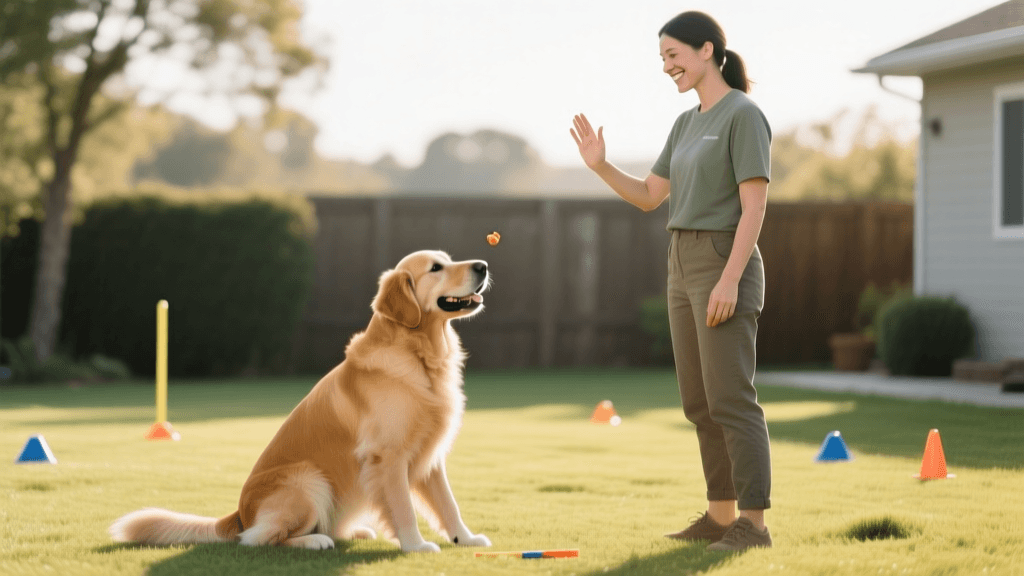
- Target Stick: Use a wooden dowel from the craft store ($1) with a piece of brightly colored tape on the end to teach targeting, spinning, and complex tricks.
High-Value, Low-Cost Reward Systems
Training requires motivation, and for most dogs, that means food. Commercial training treats can cost $8 to $12 for a tiny 10-ounce bag. By preparing your own rewards, you can slash costs while providing healthier, higher-value options.
The DIY Treat Hierarchy
Not all rewards are created equal. Use this tiered system to manage your dog's focus and your budget:
- Low-Value (For easy tasks in low-distraction environments): Your dog's standard daily kibble. Measure out their daily food allowance in the morning and use a portion of it for training. Cost: $0 extra.
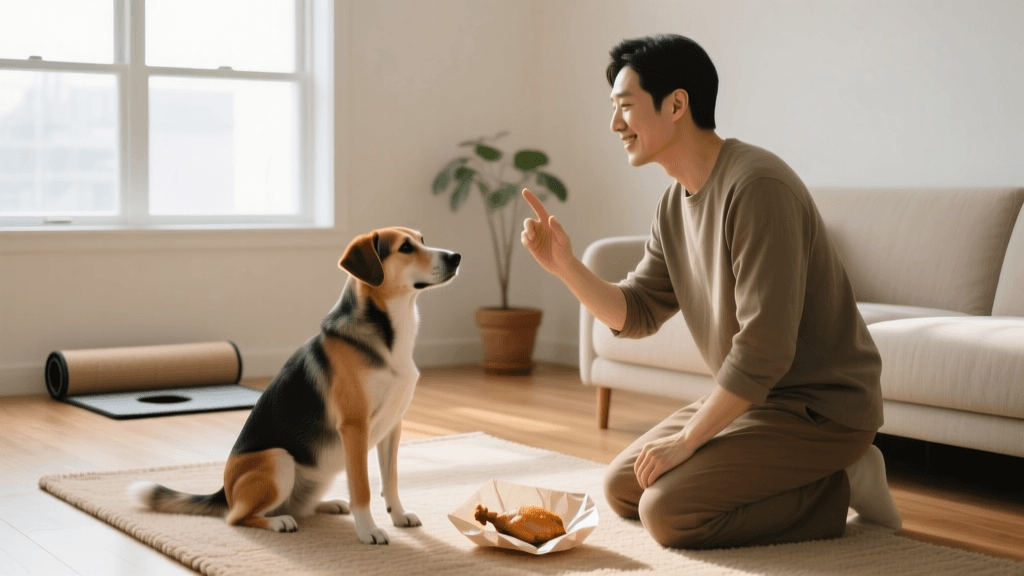
- Medium-Value (For learning new behaviors indoors): Boiled chicken breast or cheap hot dogs. Boil one pound of boneless, skinless chicken breast in four cups of water for 15 minutes. Once cooled, dice the meat into pea-sized pieces (approximately 1/4 inch). Cost: ~$3.00 per pound, yielding hundreds of rewards.
- High-Value (For high-distraction environments or recall training): Freeze-dried beef liver or low-sodium string cheese torn into tiny fragments. Use these sparingly to maintain their novelty. Cost: ~$5.00 per training session.
Pro Tip: Always cut treats into pea-sized pieces. Dogs care about the frequency of the reward, not the volume. A single hot dog can yield up to 40 individual training rewards if diced finely enough.
The 4-Week DIY Obedience Curriculum
Consistency beats duration. Instead of hour-long weekend sessions, commit to three 5-minute sessions per day. Here is a structured, budget-friendly curriculum to build a solid behavioral foundation.
Week 1: Foundation and Engagement
Focus: Name recognition, Sit, and Down.
Action Plan: In a quiet room, say your dog's name. The exact second they make eye contact, mark with "Yes!" and deliver a medium-value treat. Repeat 10 times. Next, lure the 'Sit' by holding a treat at their nose and moving it slowly up and back over their head. As their hindquarters touch the floor, mark and reward. Keep sessions to 5 minutes to prevent frustration.
Week 2: Impulse Control
Focus: Leave It and Drop It.
Action Plan: Place a low-value treat (kibble) on the floor and cover it with your hand. When your dog stops sniffing and pulling at your hand, mark and reward with a different, higher-value treat from your pouch. This teaches them that ignoring a temptation yields a better reward. Practice this with household objects like socks or toys to generalize the behavior.
Week 3: Leash Manners and Pressure
Focus: Loose-leash walking indoors.
Action Plan: Attach the leash inside your home where distractions are minimal. Take one step. If the leash remains slack, mark and reward at your pant seam (the exact spot where you want their head to be). If the leash goes tight, become a tree. Stop walking completely. Do not yank the leash. Wait for the dog to look back at you or take a step toward you to create slack, then mark, reward, and resume walking.
Week 4: Distance and Duration
Focus: Stay and Recall.
Action Plan: Use your DIY paracord long line in a fenced yard or open park. Ask for a 'Sit', take one step back, and immediately return to reward. Gradually increase the distance by one foot per successful repetition. For recall, call your dog's name cheerfully, run backward to trigger their prey drive, and reward heavily with high-value treats when they catch you.
Free and Low-Cost Socialization Strategies
Socialization is often misunderstood as simply letting dogs play together. True socialization is about teaching your dog to remain calm and neutral in the presence of novel stimuli. You do not need expensive puppy daycare to achieve this.
- Hardware Stores: Large home improvement stores like Home Depot and Lowe's generally have dog-friendly policies. Walking your dog down the wide, brightly lit aisles provides excellent exposure to strange noises, heavy machinery, and diverse people.
- The Parking Lot Protocol: Visit a busy grocery store or park, but stay in the car or stand 50 feet away from the entrance. Feed your dog high-value treats every time they look at a passing stranger, shopping cart, or loud truck. This builds positive associations from a safe distance.
- Outdoor Cafes: Purchase a $2 coffee at a local cafe with outdoor seating. Spend 45 minutes practicing 'Down-Stay' under your table while people and dogs walk by. The cost is minimal, but the real-world distraction training is invaluable.
Cost Comparison: Professional Classes vs. DIY Training
To illustrate the financial impact of taking a hands-on approach to your dog's education, review the cost breakdown below:
| Training Method | Average Cost | Time Investment | Best For |
|---|---|---|---|
| Board and Train | $1,500 - $3,500 | 2-4 Weeks (Drop-off) | Severe behavioral issues; owners with zero free time |
| Private In-Home Trainer | $600 - $1,200 (6 sessions) | 1 Hour/Week + Homework | Specific behavioral modification; personalized pacing |
| Group Classes (Pet Store) | $150 - $300 (6 weeks) | 1 Hour/Week + Homework | Basic obedience; mild distraction training |
| DIY At-Home Training | $15 - $40 (Gear & Treats) | 15 Mins/Day (Owner-led) | Budget-conscious owners; foundational obedience; bonding |
As the table demonstrates, transitioning to a DIY model saves hundreds, if not thousands, of dollars. The primary trade-off is the owner's time and the necessity for self-education, which is easily mitigated by utilizing free resources from reputable veterinary and canine organizations online.
Final Thoughts on Budget Dog Care
Effective dog training is rooted in psychology, patience, and repetition, none of which require a massive financial investment. By crafting your own long lines, utilizing your dog's daily kibble alongside DIY boiled chicken treats, and leveraging free community spaces for socialization, you can raise a polite, well-adjusted dog on a strict budget. Remember that the greatest asset in your training toolkit is not a premium gadget, but your own consistency and dedication to your dog's lifelong learning journey.
jonas-cole
All our authors care for dogs every day — read more of their work on the authors page.