Nutrition Strategies For Effective Dog Training Sessions
Discover how to balance your dog's diet and training treats. Learn caloric limits, high-value reward nutrition, and top healthy treat options.
The Intersection of Canine Nutrition and Behavioral Conditioning
When we think about dog training, we often focus on timing, leash pressure, marker words, and repetition. However, behavioral conditioning is an intensely cognitive process. Your dog is not just learning physical movements; they are engaging in complex problem-solving, impulse control, and memory retention. This mental exertion requires significant biological fuel. From a health and nutrition perspective, the treats you use during obedience training and trick teaching are not just rewards—they are the neurological building blocks and energy sources that dictate your dog's ability to focus, learn, and retain new skills.
Many dog owners fall into the trap of using high-calorie, low-nutrient commercial treats during intensive training sessions. Over a few months, this leads to canine obesity, joint stress, and metabolic issues, which in turn decrease a dog's willingness to work and physically execute commands. By approaching training through a clinical nutrition lens, you can optimize your dog's cognitive function, maintain a healthy body condition score (BCS), and accelerate the learning curve without compromising their long-term health.
Fueling the Canine Brain: Nutrients That Enhance Trainability
Before diving into caloric management, it is crucial to understand what nutrients actually support the canine brain during learning phases. The brain relies heavily on specific fatty acids and antioxidants to maintain neural plasticity—the ability to form new synaptic connections when learning a new command like 'stay' or 'heel'.
- Docosahexaenoic Acid (DHA): An Omega-3 fatty acid critical for brain development in puppies and cognitive maintenance in adult dogs. Studies show that puppies fed DHA-enriched diets perform significantly better in trainability and problem-solving tasks. You can supplement training diets with high-quality wild Alaskan salmon oil or incorporate small amounts of sardines packed in water (no salt added) as high-value rewards.
- Medium-Chain Triglycerides (MCTs): Found in coconut oil and specialized diets like Purina Pro Plan Bright Mind, MCTs bypass normal fat digestion and are converted directly into ketones by the liver. Ketones cross the blood-brain barrier and provide an alternative, highly efficient energy source for the brain. This is particularly useful for senior dogs experiencing cognitive decline or working dogs requiring sustained focus during long agility or scent-work sessions.
- Antioxidants (Vitamin E, Vitamin C, and Flavonoids): Mental stress and intense focus create oxidative stress in the brain. Incorporating antioxidant-rich training rewards, such as fresh blueberries or small pieces of steamed spinach, can help neutralize free radicals and keep your dog's mind sharp during repetitive drilling.
The 10 Percent Rule: Managing Caloric Intake During Treat-Based Training
The most common nutritional mistake in positive reinforcement training is ignoring the caloric density of training rewards. According to guidelines established by the World Small Animal Veterinary Association (WSAVA) Global Nutrition Committee, treats, chews, and table scraps should never exceed 10 percent of a dog's total daily caloric intake. The remaining 90 percent must come from a complete and balanced commercial or veterinarian-formulated diet to prevent severe micronutrient deficiencies.
Let us break down the mathematics of the 10 percent rule for an average dog. A moderately active 30-pound (13.6 kg) dog requires approximately 700 to 800 calories per day to maintain an ideal Body Condition Score (BCS) of 4 or 5 out of 9. Therefore, the maximum daily treat allowance is 70 to 80 calories. While this may sound restrictive, the volume of treats you can provide depends entirely on your product selection.
As noted by veterinary nutritionists at Tufts University Cummings Veterinary Medical Center, owners often underestimate the caloric impact of seemingly small human foods or dense commercial biscuits. A single slice of hot dog or a large milk bone can contain upwards of 40 to 60 calories, meaning your entire training budget is exhausted in just one or two repetitions. Conversely, purpose-made training treats like Zuke's Mini Naturals or Charlie Bear Crunchies contain only 2 to 3 calories per piece, allowing for dozens of repetitions during a single shaping session without tipping the caloric scales.
Reward Tiers: Nutritional Profiles and Cost Breakdown
Effective behavioral conditioning requires a hierarchy of rewards. Low-value rewards are used for known behaviors in low-distraction environments, while high-value rewards are reserved for high-stress environments, recall training, or introducing entirely new concepts. Below is a structured comparison of training rewards based on nutritional value, caloric density, and economic cost.
| Reward Tier | Best Used For | Product / Food Examples | Caloric Density (Approx.) | Estimated Cost per Ounce |
|---|---|---|---|---|
| Low-Value | Shaping, luring, known commands in the home. | Dog's regular kibble, Charlie Bear Crunchies | 2 - 3 kcal per piece | $0.40 - $0.60 |
| Medium-Value | Leash walking, basic obedience in the yard, mild distractions. | Zuke's Mini Naturals, Blue Buffalo Bits, diced carrots | 3 - 5 kcal per piece | $0.80 - $1.20 |
| High-Value | Recall, counter-conditioning, vet visits, high-distraction environments. | Freeze-dried beef liver, boiled chicken breast, low-fat string cheese | 5 - 15 kcal per piece | $1.50 - $3.00 |
Note: Always adjust the size of the reward to match the dog's size and the difficulty of the task. For high-value rewards, use pieces no larger than a pea to minimize chewing time and maximize training momentum.
The Kibble Subtraction Method: A Step-by-Step Guide
To adhere to the 10 percent rule without driving yourself crazy with daily caloric calculations, professional dog trainers and veterinary nutritionists recommend the 'Kibble Subtraction Method.' This ensures your dog remains highly motivated by food while maintaining a lean, athletic physique.
- Calculate the Daily Ration: Determine your dog's exact daily caloric requirement based on their resting energy requirement (RER) and activity multiplier. Check the feeding guidelines on your dog food bag, but ideally, consult your veterinarian for a precise measurement in grams.
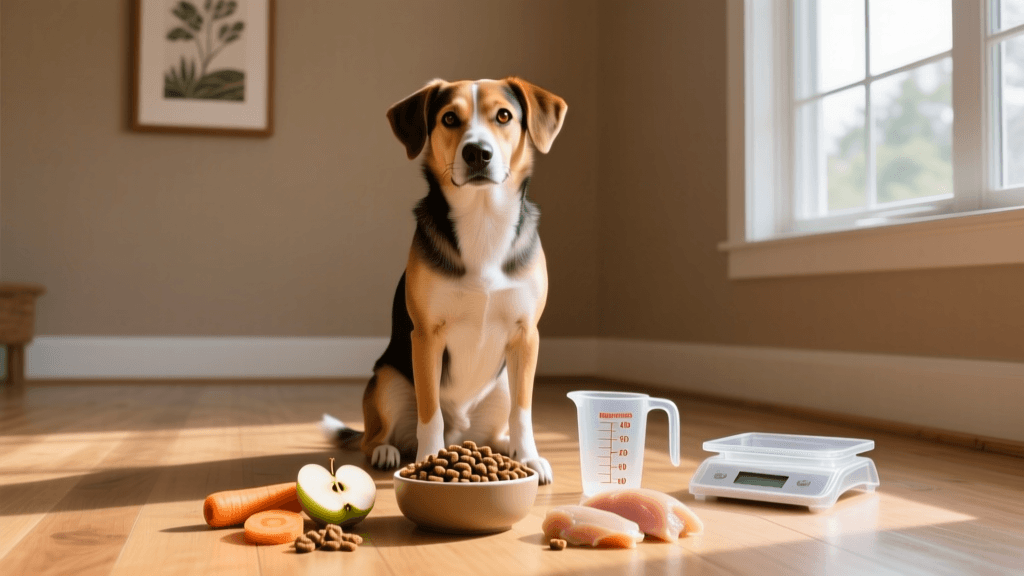
- Measure the Morning Meal: Using a digital kitchen scale, weigh out the dog's breakfast. Deduct 10 percent of the total daily food volume and place it into a separate training treat pouch.
- Enhance the Pouch (Optional): If your dog is highly food-motivated, their regular kibble might suffice. If not, mix the kibble in the pouch with a small amount of freeze-dried liver dust or a dash of bone broth (onion and garlic-free) and let it marinate in the refrigerator overnight. This elevates the kibble to a medium-value reward without adding significant calories.
- Train and Adjust: Use the contents of the pouch exclusively for training sessions. If you have kibble left over in the pouch at the end of the day, simply add it to the dinner bowl. If you require more high-value treats for a specific session, physically remove an equivalent caloric amount of kibble from the dinner bowl to compensate.
The American Kennel Club (AKC) strongly advocates for this type of proactive dietary management, noting that obesity is a leading preventable cause of joint degradation and reduced lifespan in domestic dogs. By treating training calories as a line item in the daily dietary budget, you protect your dog's orthopedic health while maintaining their drive to work.
Timing, Digestion, and Gastric Health
The timing of training sessions in relation to meals is a critical, yet frequently overlooked, aspect of canine health and safety. Training a dog immediately after a large meal can lead to lethargy, poor focus, and in severe cases, life-threatening gastrointestinal emergencies.
For deep-chested breeds such as Great Danes, Standard Poodles, German Shepherds, and Weimaraners, exercising or engaging in intense physical training on a full stomach significantly increases the risk of Gastric Dilatation-Volvulus (GDV), commonly known as bloat. GDV occurs when the stomach fills with gas and twists on its axis, cutting off blood supply. To mitigate this risk, you must wait at least 90 minutes to 2 hours after a meal before engaging in rigorous obedience training, agility, or fetch.
Conversely, training a dog when they are ravenously hungry can lead to frustration, poor impulse control, and 'mugging' behavior (jumping, nipping, or snatching treats aggressively). The optimal window for cognitive learning is when the dog is slightly hungry but not starving. Scheduling training sessions roughly 30 to 45 minutes before their scheduled dinner leverages their natural biological drive to seek food, resulting in heightened focus, faster response times to cues, and a more productive conditioning session.
Hydration and the Hidden Toll of Dry Treats
Most commercial training treats, including freeze-dried proteins and baked biscuits, possess a moisture content of less than 10 percent. During an active 30-minute training session, especially outdoors in warm weather, a dog consuming dozens of dry treats will experience a rapid depletion of oral and systemic moisture. Dehydration directly impacts cognitive function, leading to slower processing speeds and apparent 'stubbornness' that is actually just mental fatigue.
Always carry a collapsible water bowl and fresh water during training sessions. Furthermore, consider incorporating high-moisture, low-calorie rewards into your rotation. Small cubes of seedless watermelon, cucumber slices, or blueberries provide excellent crunch and high-value novelty while actively contributing to the dog's hydration status. This is particularly beneficial for dogs prone to urinary tract issues or those on restricted moisture diets.
Conclusion
Effective dog training is not just a matter of psychology; it is deeply rooted in physiology and nutrition. By selecting brain-supporting nutrients, strictly adhering to the 10 percent treat rule, utilizing the kibble subtraction method, and respecting the biological timing of digestion, you set your dog up for success. A well-nourished, lean, and properly fueled dog will not only learn commands faster but will also enjoy a longer, healthier, and more vibrant life by your side. Treat your training pouch with the same nutritional scrutiny as your dog's dinner bowl, and watch their focus and physical vitality soar.
robin-maitland
All our authors care for dogs every day — read more of their work on the authors page.