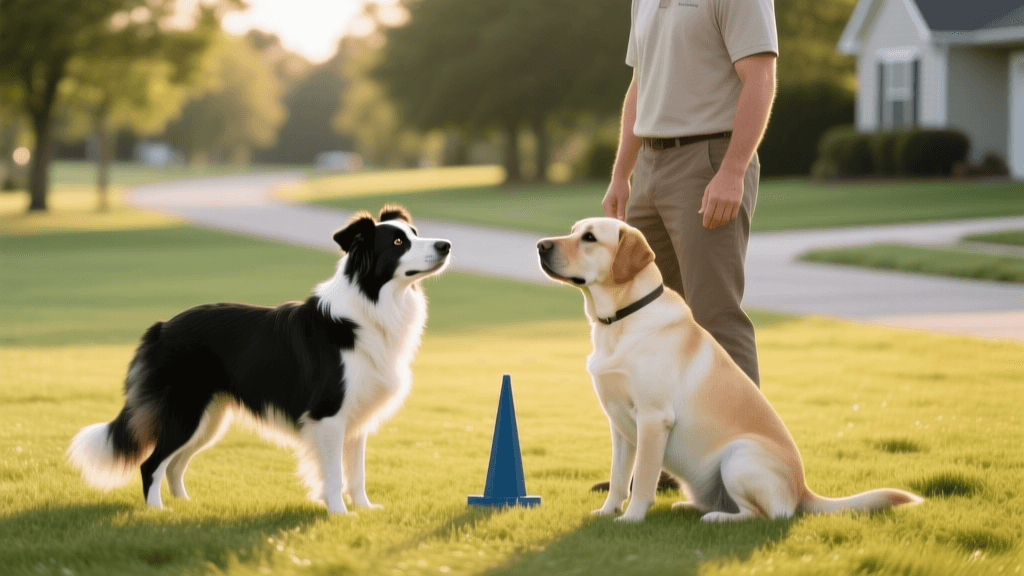
Border Collie vs Golden Retriever Training Needs Compared
Compare Border Collie and Golden Retriever training needs. Discover obedience tips, socialization strategies, and the best breed for your lifestyle.
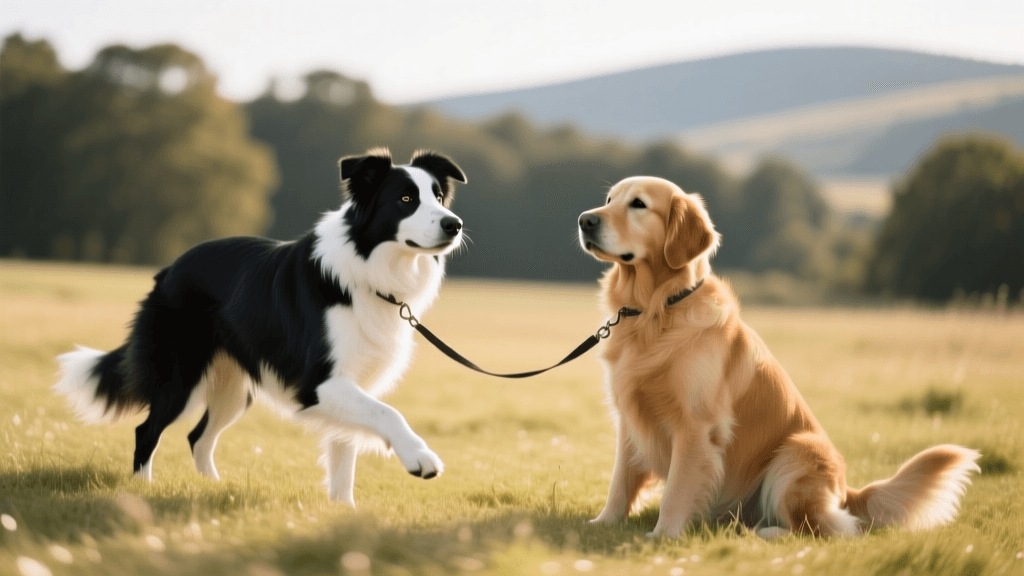
Choosing Between a Border Collie and a Golden Retriever
When selecting a canine companion, many prospective owners fall into the trap of choosing a breed based solely on appearance or popular media representation. However, from a professional dog training perspective, understanding a breed's genetic predispositions, core drives, and cognitive needs is the most critical factor in ensuring a harmonious human-dog relationship. Two of the most popular, yet fundamentally different, breeds in the world are the Border Collie and the Golden Retriever. While both consistently rank at the very top of canine intelligence charts, their trainability manifests in vastly different ways.
According to the American Kennel Club's Border Collie breed standard, this dog is an intense, high-energy herder bred to control livestock with its eyes and body pressure. In contrast, the AKC Golden Retriever profile describes a biddable, eager-to-please gundog bred to softly carry waterfowl back to a hunter. This article breaks down the specific training needs, behavioral conditioning protocols, and financial investments required for both breeds, helping you select the right dog for your lifestyle and training capabilities.
The Psychology of the Drive: Herding vs. Retrieving
To train a dog effectively, you must speak its native genetic language. The Border Collie possesses a modified predatory motor sequence: eye, stalk, chase, grab-bite. The 'kill-bite' and 'dissect' portions of the sequence have been largely bred out, leaving an intense obsession with movement. If a Border Collie does not receive structured training to channel this drive, they will often 'herd' children, chase cars, or develop severe motion reactivity.
The Golden Retriever, on the other hand, has a motor sequence heavily weighted toward the grab-bite and carry phases, with the predatory 'eye' and 'stalk' minimized. Their primary motivation is usually social connection and carrying objects. This makes them highly responsive to food and praise, but prone to behavioral issues like resource guarding, excessive mouthing, and over-excitement when greeting strangers.
Breed Comparison Chart: Trainability Metrics
| Feature | Border Collie | Golden Retriever |
|---|---|---|
| Coren Intelligence Rank | #1 (Brightest) | #4 (Brightest) |
| Primary Motivation | Movement, Toys, Work | Food, Praise, Carrying |
| Daily Mental Exercise | 60-90+ minutes | 30-45 minutes |
| Learning Style | Independent problem solver | Cooperative, biddable learner |
| Common Training Pitfall | Outsmarting the handler, neurotic habits | Distraction by scents/people, jumping |
Obedience Training: Step-by-Step Breed Strategies
Because their motivations differ, the foundational obedience curriculum for a Border Collie should look very different from that of a Golden Retriever.
Border Collie Protocol: Impulse Control and 'Place'
The most vital skill for a herding breed is impulse control. Teaching the 'Place' command (sending the dog to a specific raised cot or mat and requiring them to stay until released) is non-negotiable. It teaches the dog to turn off their brain and settle, preventing neurotic pacing and shadow-chasing.
- Step 1: Lure the dog onto a raised cot (like a Kuranda bed, approx. $120) using a high-value treat like freeze-dried liver.
- Step 2: Mark the behavior with a clicker or the word 'Yes' the moment all four paws are on the cot.
- Step 3: Introduce duration. Start with 5 seconds, gradually increasing by 10-second increments over several weeks.
- Step 4: Add the '3 Ds': Duration, Distance, and Distraction. Practice 'Place' while you bounce a tennis ball nearby to simulate the movement triggers they naturally want to chase.
Golden Retriever Protocol: The 'Trade-Up' and Recall
Golden Retrievers love to carry things, which often leads to them stealing socks, shoes, or even dangerous items. Punishing a Golden for taking an item will often trigger 'resource guarding' or a game of 'keep-away.' Instead, utilize the Trade-Up Game to build a rock-solid 'Drop It' and a reliable recall.
- Step 1: Offer your Golden a low-value chew toy. Let them take it in their mouth.
- Step 2: Present a high-value treat (e.g., Zuke's Mini Naturals, approx. $6 per bag) right at their nose.
- Step 3: The moment they spit out the toy to eat the treat, say 'Drop It' and mark the behavior.
- Step 4: Return the toy after they finish the treat. This teaches the dog that giving up an item results in a reward and the return of the item, eliminating the anxiety of loss.
Socialization and Behavioral Conditioning
Socialization is not merely about letting a dog play with other dogs; it is about teaching them to remain neutral in the presence of environmental stimuli. The American Kennel Club's guide on puppy socialization emphasizes that the critical window for this conditioning closes around 16 weeks of age, making early, structured exposure vital.
Border Collie: Movement Desensitization
Border Collies are notorious for developing reactivity to bicycles, skateboards, and running children. To condition a neutral response, trainers use the 'Look At That' (LAT) game, popularized by canine behaviorist Leslie McDevitt.
The LAT Protocol: Stand at a sub-threshold distance from a moving trigger (e.g., 50 feet from a bike path). The moment your Border Collie looks at the bike, click your clicker and feed a treat. The goal is to change the dog's emotional response from 'I must chase that' to 'Looking at that moving object makes my human give me chicken.'
Golden Retriever: Greeting Manners
Goldens are notoriously friendly, which often translates to launching their 70-pound bodies onto guests. Behavioral conditioning for Goldens must focus on 'Four on the Floor.' Keep a leash attached to your Golden during greetings. If they jump, step on the leash just short enough that they cannot jump, but long enough that they can sit. Reward heavily when all four paws remain on the ground. Consistency from every guest is mandatory for this protocol to succeed.
Recommended Training Gear and Financial Investment
Proper training requires the right tools. Below is a breakdown of the essential gear and estimated costs for setting up both breeds for success.
| Item | Purpose | Best For | Estimated Cost |
|---|---|---|---|
| Snuffle Mat | Foraging and mental exhaustion | Border Collie | $25 - $40 |
| Kong Classic (Red/Black) | Chewing and carrying satisfaction | Golden Retriever | $15 - $20 |
| 30ft Biothane Long Line | Safe recall proofing in open areas | Both Breeds | $30 - $45 |
| Flirt Pole | Directed prey-drive outlet | Border Collie | $25 - $35 |
| 6-Week Group Obedience Class | Foundation skills and distraction work | Both Breeds | $150 - $250 |
While the initial gear investment is relatively low (around $100 to $150), prospective owners must also budget for their time. A Border Collie will require an active handler willing to dedicate 1 to 2 hours daily to advanced training, agility, or herding trials. A Golden Retriever requires about 45 to 60 minutes of daily exercise and training to maintain behavioral balance and prevent obesity.
Which Breed is Right for Your Training Lifestyle?
Selecting between these two highly intelligent breeds ultimately comes down to your personal lifestyle, energy levels, and training goals. The Border Collie is best suited for experienced handlers, runners, hikers, or those interested in competitive dog sports like agility, flyball, or obedience trials. They are a lifestyle choice as much as a pet, demanding rigorous mental engagement to prevent destructive, neurotic behaviors.
Conversely, the Golden Retriever is the quintessential family companion. They are forgiving of novice training mistakes, highly motivated by simple praise and food, and generally content to relax at your feet once their daily exercise needs are met. If you want a dog that is easy to mold into a well-mannered household citizen without needing to manage intense predatory drives, the Golden Retriever is the superior choice. By understanding these fundamental breed differences, you can select a canine partner that aligns perfectly with your training capabilities and life goals.
priya-sutaria
All our authors care for dogs every day — read more of their work on the authors page.