Border Collie vs Australian Shepherd: Instincts and Energy
Discover the psychological differences between Border Collies and Australian Shepherds. Learn about herding instincts, energy needs, and ideal homes.
Introduction
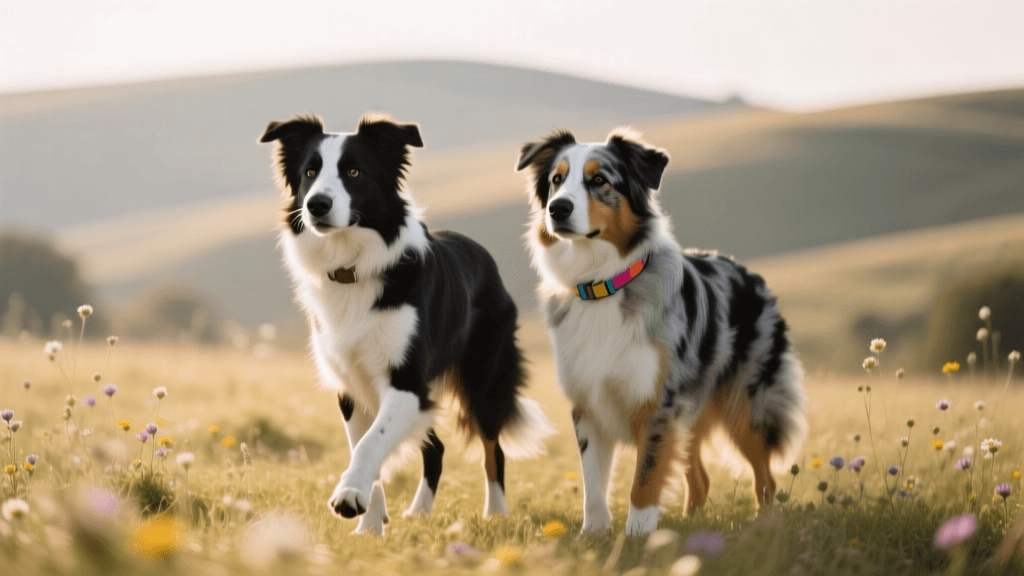
When prospective dog owners begin researching highly intelligent, active breeds, two names inevitably dominate the conversation: the Border Collie and the Australian Shepherd. While both are celebrated as the Einsteins of the canine world and share a historical purpose in herding livestock, their underlying psychological profiles, instinctual drives, and behavioral expressions are distinctly different. Understanding these nuances is not merely an exercise in breed trivia; it is the critical foundation for successful breed selection. Choosing between a Border Collie and an Australian Shepherd requires a deep dive into canine psychology, specifically how the predatory motor sequence has been selectively manipulated over centuries to create the perfect working partner.
The Predatory Motor Sequence: Understanding the Herding Drive
To truly grasp the behavior of herding breeds, one must understand the canine predatory motor sequence. According to veterinary behaviorists and researchers, the sequence of a wolf hunting prey consists of several distinct phases: search, eye, stalk, chase, grab-bite, kill-bite, dissect, and consume. Herding dogs have been selectively bred by humans to exaggerate the early stages of this sequence—specifically the 'eye,' 'stalk,' and 'chase'—while heavily inhibiting the 'grab-bite' and 'kill-bite' phases. As noted by the American Kennel Club, herding is essentially a modified, highly controlled expression of predatory behavior. When you see a herding dog crouching and staring at a flock of sheep (or a toddler running across the lawn), you are witnessing the 'eye' and 'stalk' phases in action. However, the way the Border Collie and the Australian Shepherd express these modified instincts varies dramatically, leading to vastly different daily management requirements for their owners.
The Border Collie: The Psychology of the 'Eye' and High Arousal
The Border Collie is widely considered the most intense of all herding breeds. Originating in the rugged border region between Scotland and England, these dogs were bred to cover vast, unforgiving terrains while managing flighty sheep. Psychologically, the Border Collie relies heavily on the 'eye.' They use an intense, hypnotic stare to control the movement of livestock from a distance. This reliance on visual stimuli means that Border Collies are extraordinarily sensitive to motion. In a modern domestic environment, this translates to a dog that may become obsessed with moving cars, bicycles, shadows, or even the erratic movements of small children.
Arousal and the Missing 'Off-Switch'
Border Collies possess a remarkably high baseline of arousal. They are bred to work tirelessly from dawn until dusk, often making independent decisions far from their handlers. Consequently, they often struggle to self-soothe or relax in a home environment without rigorous, structured training. A Border Collie does not just need physical exercise; they require intense cognitive problem-solving. A simple three-mile run will leave a Border Collie physically tired but mentally unfulfilled, often leading to neurotic behaviors such as light-chasing, fly-snapping, or compulsive digging.
The Australian Shepherd: The Versatile 'Heeler' and Guardian
Despite their name, the Australian Shepherd was actually developed in the Western United States to work with rugged cattle and sheep in diverse, often harsh environments. Unlike the Border Collie, which relies on the silent, distant power of the 'eye,' the Australian Shepherd is a 'heeler' and a 'header.' They are bred to work closer to the handler and the livestock, frequently using their physical bodies to bump or nip at the heels of stubborn cattle to force movement.
Guarding Instincts and Environmental Awareness
Psychologically, the Australian Shepherd possesses a stronger protective and territorial drive than the Border Collie. While a Border Collie might ignore a stranger walking past the farm as long as they are focused on the sheep, an Australian Shepherd is inherently more suspicious of outsiders. This makes them exceptional watchdogs but requires extensive, early socialization to prevent reactivity or fear-based aggression. Furthermore, Australian Shepherds generally possess a more accessible 'off-switch.' While still a high-energy working breed, an Aussie is more likely to settle at your feet after a long hike, whereas a Border Collie might pace the living room waiting for the next task. The AKC Breed Standard highlights the Aussie's versatility and reserved nature with strangers, contrasting sharply with the Border Collie's singular, obsessive focus on work.
Behavioral and Instinctual Comparison Chart
To assist in your breed selection process, the following table breaks down the core psychological and behavioral differences between these two powerhouse breeds.
| Trait / Instinct | Border Collie | Australian Shepherd |
|---|---|---|
| Primary Herding Style | Strong 'Eye' (Stalking/Staring) | Heeling / Bumping / Physical Pressure |
| Prey Drive Expression | High sensitivity to fast movement (cars, bikes) | Moderate; more focused on territorial control |
| Stranger Reaction | Indifferent or friendly if not working | Reserved, watchful, potential guarding instincts |
| Arousal Levels | Extremely high; prone to neurotic pacing | High; generally better at settling indoors |
| Handler Focus | Hyper-focused on handler's cues and body language | Attentive but more independent and environmentally aware |
| Sensitivity to Sound | High (can lead to noise phobias like thunderstorms) | Moderate to High |
Matching Instincts to Your Lifestyle: Costs, Time, and Environment
Selecting between these breeds requires an honest audit of your lifestyle, budget, and living situation. Both breeds are significant investments of time and capital.
Financial Commitments
- Acquisition Costs: Expect to pay between $1,500 and $3,000 for a well-bred puppy from health-tested parents. Avoid backyard breeders, as poor genetics in herding breeds frequently result in severe anxiety and neurological issues.
- Training and Socialization: Budget $500 to $1,500 in the first year for professional obedience and herding instinct tests. Because of the Aussie's guarding tendencies and the BC's motion sensitivity, private behavioral consultations ($150 to $250 per session) are often necessary.
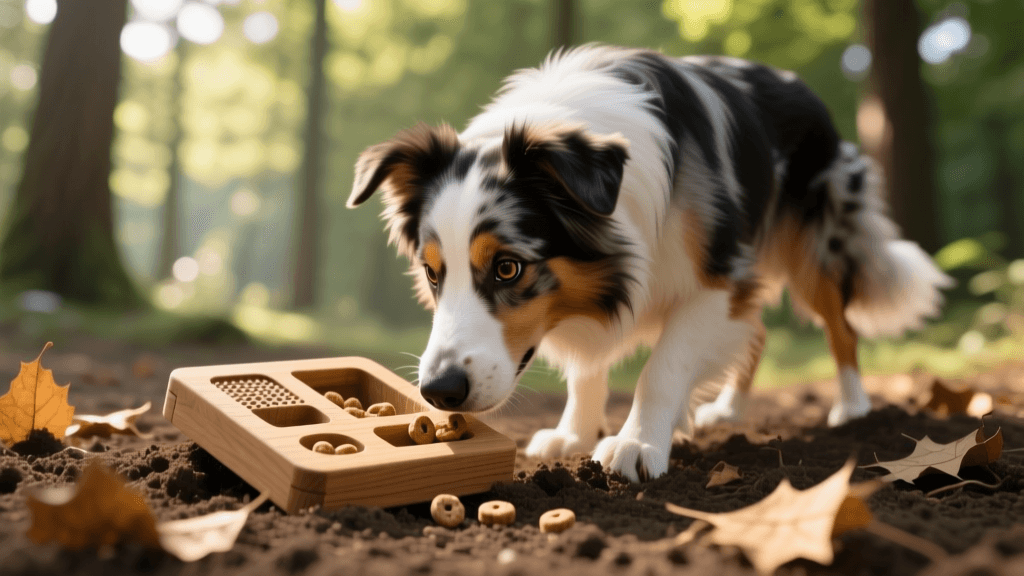
- Enrichment and Gear: You will spend roughly $300 annually on durable puzzle toys (like the Kong Classic or Outward Hound Nina Ottosson puzzles), flirt poles, and long-lines for safe recall training in open spaces.
Time and Environmental Requirements
Both breeds require a minimum of two hours of dedicated, active engagement daily. This is not passive backyard time; it involves structured hiking, agility training, or advanced trick shaping.
- Living Space: Neither breed is suited for apartment living unless the owner is an elite athlete or professional dog trainer. A securely fenced yard (minimum 6-foot fence for Aussies, who are athletic jumpers, and a dig-proof barrier for BCs) is highly recommended.
- Household Dynamics: If you have toddlers or highly active, loud children, the Border Collie's instinct to 'herd' running children by nipping at their heels can be dangerous. The Australian Shepherd may also nip, but their slightly more robust and forgiving nature often makes them marginally better suited for chaotic households, provided they are heavily socialized.
Actionable Enrichment Strategies for Herding Minds
If you are prepared to welcome either of these breeds into your home, you must provide outlets for their ingrained instincts. Failure to do so will result in destructive behavior. The ASPCA emphasizes that many common dog behavior issues, such as excessive barking and chewing, stem directly from boredom and lack of mental stimulation.
1. Treibball (Urban Herding)
If you do not have access to livestock, Treibball is an excellent alternative. This sport involves the dog herding large exercise balls into a soccer goal using only their nose and shoulders. It satisfies the 'gather' and 'drive' instincts of both the Border Collie and the Australian Shepherd without requiring a farm.
2. Flirt Pole Training
A flirt pole (a giant wand toy with a lure attached to a bungee cord) is essential for safely burning off the Border Collie's intense chase drive. Crucial Rule: You must enforce a 'drop' and 'wait' command during play to teach the dog impulse control, preventing them from entering a state of hyper-arousal.
3. Scent Work and Decompression
Because herding dogs are highly visual, engaging their olfactory senses forces their brains to shift gears. Hide high-value treats (like freeze-dried liver) in snuffle mats or scatter them in tall grass during 'decompression walks' on a 15-foot long line. This lowers their heart rate and teaches the vital skill of relaxing.
Conclusion: Choosing the Right Partner
Ultimately, the choice between a Border Collie and an Australian Shepherd comes down to the specific flavor of intensity you are prepared to manage. The Border Collie is a canine athlete with an obsessive, laser-focused drive that demands constant mental engagement and motion management. The Australian Shepherd is a versatile, protective partner who brings a watchful eye and a slightly more grounded temperament to the table. By understanding the deep-seated psychological instincts that drive these magnificent animals, you can make an informed selection that ensures a harmonious, fulfilling life for both you and your future canine companion.
beth-carrasco
All our authors care for dogs every day — read more of their work on the authors page.