Trainability Compared: Border Collie vs German Shepherd Selection
Compare the trainability of Border Collies and German Shepherds. Discover training costs, timelines, and which breed fits your lifestyle and experience.
Introduction to High-Drive Breed Selection
Selecting a dog is an exercise in lifestyle matching, particularly when evaluating highly intelligent, high-drive working breeds. For prospective owners interested in obedience training, behavioral conditioning, and dog sports, the Border Collie and the German Shepherd Dog (GSD) frequently top the list of considerations. Both breeds are globally renowned for their cognitive abilities, but their learning styles, instinctual drives, and behavioral needs differ drastically. Understanding these nuances is critical before making a selection. Choosing the wrong breed for your training capacity can lead to severe behavioral issues, including neuroticism in herding dogs or reactivity in guarding breeds. This comprehensive guide compares the trainability of these two powerhouse breeds, breaking down developmental timelines, socialization requirements, and the real financial costs of raising a well-adjusted working dog.
Understanding Breed Origins and Training Instincts
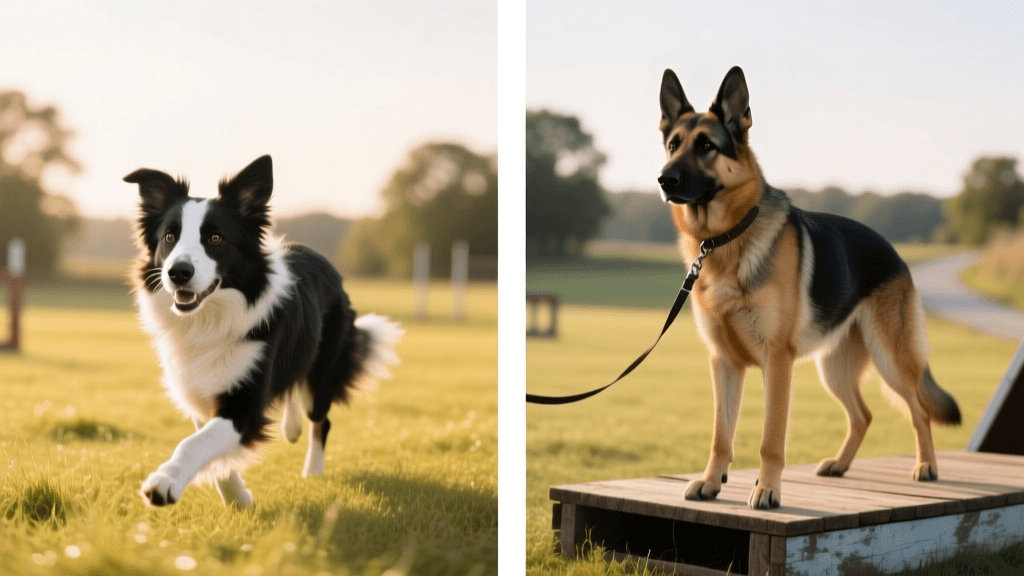
To train a dog effectively, you must understand what it was bred to do. The Border Collie was developed in the Anglo-Scottish border region to herd livestock. Their primary mechanism of control is 'the eye'—a stalking, intense stare used to move sheep without biting. According to the American Kennel Club's Border Collie Profile, this breed possesses an uncanny ability to anticipate the movement of their handler and the flock. Consequently, their training instinct is heavily tied to motion. If a Border Collie is not given a job that satisfies this movement drive, they will invent one, often resulting in the herding of children, cars, or household pets.
Conversely, the German Shepherd was developed by Captain Max von Stephanitz to be the ultimate versatile working dog, capable of herding, guarding, and later, police and military work. The German Shepherd Dog Breed Standard highlights their courage, loyalty, and aloofness with strangers. Unlike the Border Collie, which works somewhat independently at a distance from the handler, the GSD is bred for close handler focus and protection. Their training instinct revolves around bite inhibition, territorial awareness, and deep bonding with their primary handler. While a Border Collie asks, 'What is moving and how do I control it?', a German Shepherd asks, 'Who is my handler, and what is a threat to our territory?'
Trainability and Temperament Comparison Chart
When evaluating these breeds for obedience and trick teaching, it is essential to look at specific behavioral metrics. The following table breaks down their core training profiles:
| Trait | Border Collie | German Shepherd |
|---|---|---|
| Primary Drive | Movement and Herding | Handler Focus and Prey/Defense |
| Biddability | Extremely High (Eager to work) | High (Requires relationship building) |
| Independence | Moderate (Makes split-second field decisions) | Low to Moderate (Looks to handler for direction) |
| Stimulation Need | Extreme (Mental and physical exhaustion required) | High (Physical exercise and structured obedience) |
| Best Reward Type | Toy/Tug (Movement-based rewards) | Food and Tug (High-value engagement) |
| Sensitivity to Corrections | High (Can become neurotic if over-corrected) | Moderate (Respects firm, fair boundaries) |
Obedience Timelines and Developmental Milestones
Both breeds mature at different rates, which heavily impacts your training schedule. Border Collies tend to mature physically and mentally faster than German Shepherds. A Border Collie can often grasp complex trick sequences and agility obstacles by 10 to 12 months of age. German Shepherds, being larger and heavier-boned, are often mentally clumsy until they reach 18 to 24 months of age.
Months 2 to 4: Foundation and Engagement
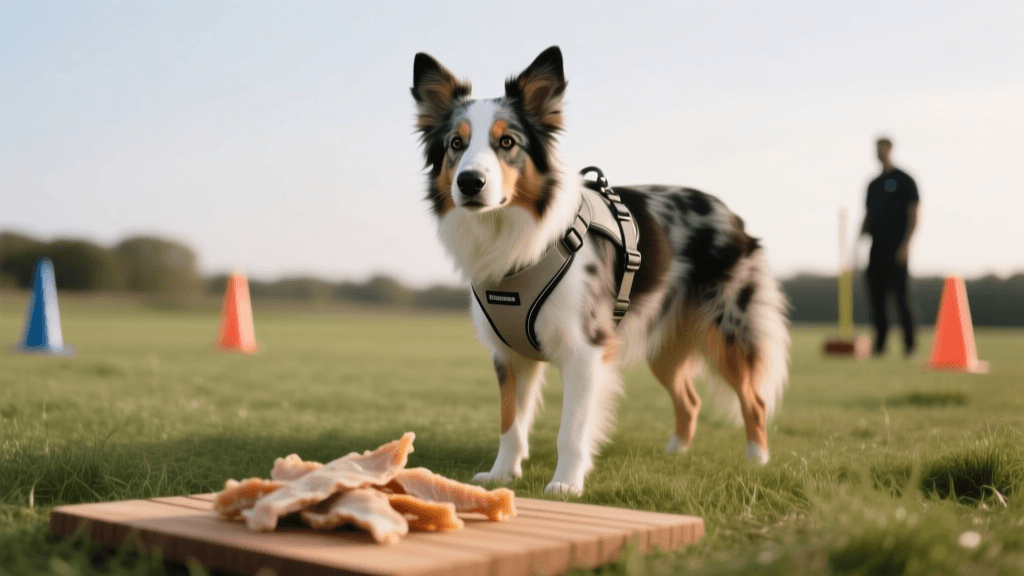
During this window, training should focus exclusively on engagement, name recognition, and basic luring. For both breeds, keep sessions under 10 minutes to prevent mental burnout. Use a 15-foot biothane long line to practice recall in open fields without risking their safety. Border Collies will excel at shaping games (like clicking for a nose target), while GSDs will excel at hand-feeding exercises that build a bond of trust.
Months 5 to 9: Impulse Control and Proofing
This is the adolescent rebellion phase. For the Border Collie, impulse control around movement is paramount. You must teach a solid 'leave it' and 'down-stay' while throwing tennis balls or running past them. For the German Shepherd, this phase requires neutral-dog and neutral-human socialization. You must teach the GSD that strangers and strange dogs are irrelevant, preventing the development of leash reactivity or territorial aggression.
Behavioral Conditioning and Socialization Needs
Socialization is not merely about letting your dog play with others; it is about conditioning them to remain neutral in the presence of environmental stimuli. The AKC Guide to Puppy Socialization emphasizes that the critical socialization window closes around 16 weeks of age. Missing this window with either of these high-drive breeds can result in lifelong behavioral deficits.
For the Border Collie, behavioral conditioning must address sound sensitivity and shadow-chasing. Many herding dogs develop obsessive-compulsive behaviors, such as staring at light reflections or snapping at flies. Owners must condition their puppies to ignore fast-moving visual stimuli by rewarding them heavily for maintaining eye contact with the handler when cars or bicycles pass by.
For the German Shepherd, socialization must focus on confidence building and environmental stability. GSDs are prone to fear-based reactivity if not exposed to diverse surfaces, loud noises, and crowds during their fear periods (typically around 8 weeks and again around 6 months). Taking your GSD puppy to hardware stores, outdoor cafes, and busy parks, and rewarding them for calm behavior, is non-negotiable for a stable adult dog.
Trick Teaching and Advanced Dog Sports
If your goal is to compete in dog sports, your breed selection will dictate your path. Border Collies dominate the world of Agility and Disc Dog competitions. Their tight turning radius, explosive speed, and ability to memorize complex course maps make them unparalleled. Trick teaching for a Border Collie should involve spatial awareness exercises, such as 'go to your mat', 'weave through legs', and 'back up'.
German Shepherds shine in sports that require nose work, tracking, and protection. IGP (formerly Schutzhund) is the premier sport for GSDs, testing their tracking, obedience, and protection skills. If you do not wish to do bite work, GSDs also excel in Scent Work and advanced obedience (heelwork). Teaching a GSD complex tricks like 'retrieve a specific named object' or 'hold a scent article' taps into their natural tracking and retrieval instincts.
Common Training Mistakes by Breed
Owners frequently make breed-specific errors that hinder progress. With Border Collies, the most common mistake is relying solely on physical exercise (like endless games of fetch) without mental boundaries. This creates an canine athlete with zero impulse control. You must incorporate 'settle' training, teaching the dog to lie on a mat and do absolutely nothing while the household moves around them.
With German Shepherds, the most frequent mistake is the use of harsh, punitive corrections early in training. GSDs are deeply sensitive to their handler's emotions and tone. Heavy-handed leash pops or yelling can shatter their confidence, leading to a dog that refuses to work or becomes defensively aggressive. Positive reinforcement, combined with clear, fair boundaries, yields a much more reliable and stable working dog.
The Real Costs of Training: Budgeting for Success
Raising a well-trained working dog requires a significant financial investment. Prospective owners should budget for the following training-related expenses during the dog's first two years:
- Puppy Kindergarten and Basic Obedience: $150 to $300 for 6-week group sessions.
- Private Behavioral Consultations: $120 to $250 per hour. This is highly recommended for GSDs showing early signs of leash reactivity or resource guarding.
- Board and Train Programs: $2,500 to $4,500 for a 3-to-4 week intensive immersion program. While useful for foundational obedience, it does not replace the owner's ongoing training commitment.
- Essential Equipment: Budget at least $250 for high-quality gear. This includes a Herm Sprenger prong collar ($25-$40) for safe leash pressure training, a leather bite tug or flirt pole ($30-$50) for drive building, a treat pouch ($15), and a sturdy long line ($30).
- Sport Club Memberships: If you pursue agility or IGP, expect to pay $50 to $100 monthly for club membership and field access.
Making Your Final Breed Selection
Ultimately, the choice between a Border Collie and a German Shepherd comes down to your daily routine and training philosophy. Choose the Border Collie if you are an active runner or hiker who wants a dog to participate in fast-paced, visually stimulating sports like agility. You must be prepared to manage their intense herding instincts and provide rigorous mental puzzles daily.
Choose the German Shepherd if you desire a loyal, handler-focused companion who will act as a natural deterrent and excel in obedience, tracking, or scent work. You must be prepared to invest heavily in early socialization to ensure they remain confident and neutral in public spaces. Both breeds are masterpieces of canine cognition, but they demand an owner who is willing to be a dedicated trainer, leader, and partner every single day.
hannah-wickes
All our authors care for dogs every day — read more of their work on the authors page.