Best Treat Pouches and Clickers for Dog Obedience Training
Discover the best treat pouches and clickers for dog obedience training. Compare top brands, prices, and features to boost your positive reinforcement.
Why the Right Training Gear Matters
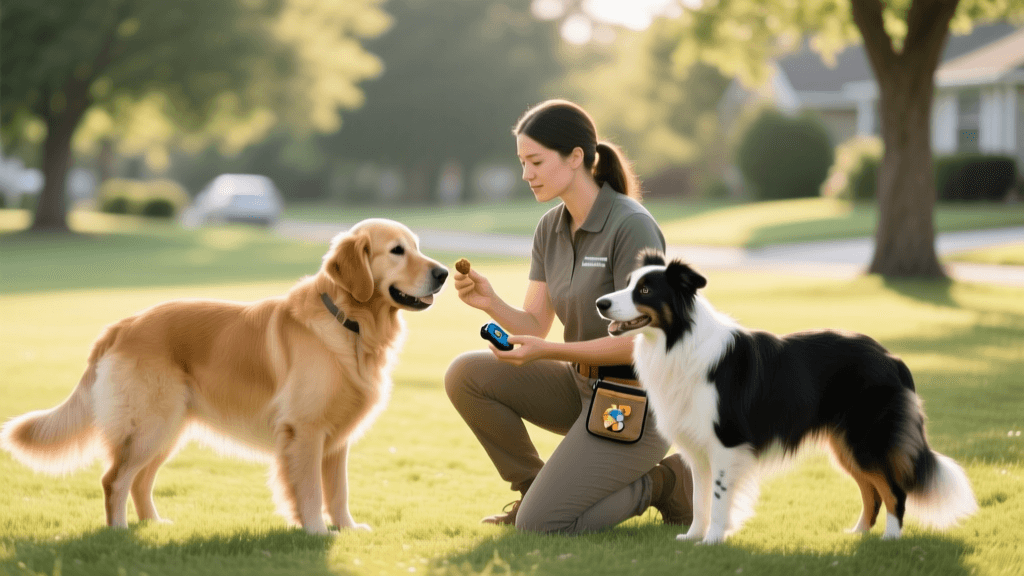
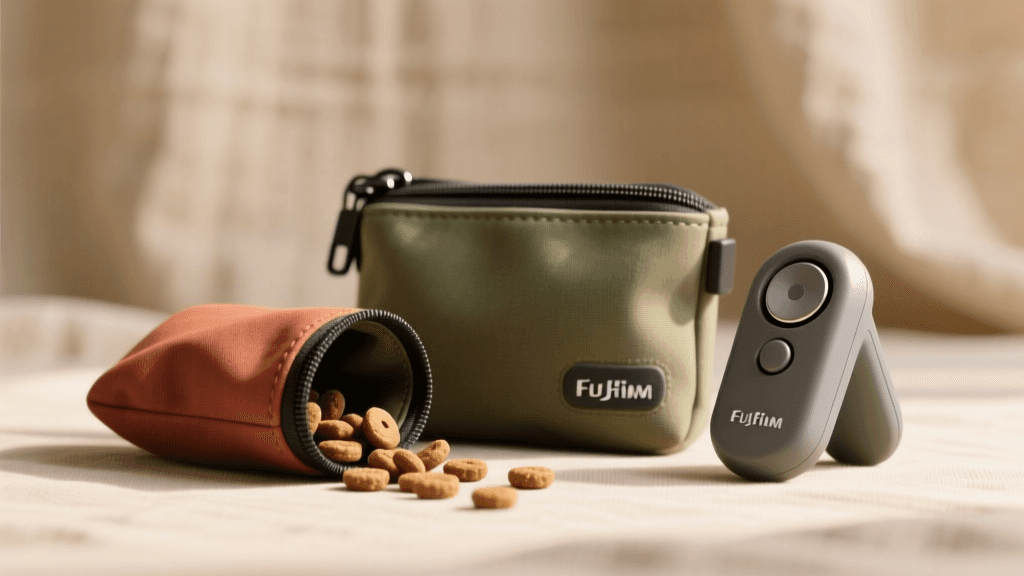
When it comes to positive reinforcement and behavioral conditioning, the speed and precision of your reward delivery can make or break a training session. Dogs operate on immediate associations; if a reward is delayed by even a few seconds, your dog may associate the treat with the wrong behavior. This is where high-quality treat pouches and mechanical clickers become indispensable tools for any serious dog owner or professional trainer.
According to the American Kennel Club (AKC), marker-based training using a clicker bridges the gap between the desired behavior and the delivery of the reward, allowing for crystal-clear communication. However, a clicker is only as effective as your ability to deliver the reward swiftly. Fumbling with a drawstring pouch while your dog breaks a 'stay' command can ruin the conditioning process. In this comprehensive buyer's guide, we review the top treat pouches and clickers on the market, analyzing their capacity, closure mechanisms, ergonomics, and overall value to help you optimize your training toolkit.
Top 3 Treat Pouches for Positive Reinforcement
1. Ruffwear Treat Trader
Price: $39.95 | Capacity: 1.5 Liters | Closure: Magnetic
The Ruffwear Treat Trader is widely considered the gold standard for active trainers and outdoor enthusiasts. Its standout feature is the magnetic closure system, which allows for silent, one-handed access. You simply slide your hand in, grab the treat, and the magnets snap shut automatically. This is crucial for maintaining a quiet training environment and preventing dogs from anticipating the sound of velcro. The 1.5-liter capacity holds roughly 3 to 4 cups of kibble or training treats, and the interior liner is waterproof and removable for easy washing. While it sits on the higher end of the price spectrum, the durability and hands-free convenience justify the investment for daily obedience work.
2. Doggone Good! Training Bag
Price: $25.00 | Capacity: 2.5 Cups | Closure: Hinge Top
A favorite among competitive obedience and agility handlers, the Doggone Good! Training Bag features a unique hinged top that stays wide open when you need it and snaps shut with a gentle squeeze. This design allows you to see exactly how many treats you have left and easily scoop out multiple rewards for a 'jackpot' reinforcement. The bag includes a sturdy clip and a belt loop, ensuring it stays securely attached to your waist during vigorous movement. At 2.5 cups, it offers a balanced capacity that isn't too bulky but holds enough high-value rewards for a solid 20-minute training session.
3. PetSafe Treat Pouch Sport
Price: $14.99 | Capacity: 3 Cups | Closure: Drawstring
For beginners or those working on basic backyard socialization, the PetSafe Treat Pouch Sport is an excellent budget-friendly option. It features a traditional drawstring closure and a built-in poop bag dispenser. While the drawstring requires two hands to open and close efficiently, the 3-cup capacity is generous, and the lightweight nylon material makes it comfortable for extended wear. It is an ideal entry-level pouch for puppy kindergarten classes where the pace of training is slightly more relaxed.
Top 3 Clickers for Behavioral Conditioning
1. Karen Pryor i-Click
Price: $7.95 | Sound Profile: Quiet, crisp | Design: Raised button
Designed by the pioneer of clicker training, the i-Click is engineered for precision and sensitivity. The raised button requires minimal pressure to activate, making it perfect for trainers with arthritis or those who want to click with a subtle thumb movement. The sound is notably quieter than standard box clickers, making it the best choice for sensitive, timid, or noise-reactive dogs who might be startled by a sharp metallic click.
2. PetSafe Clik-R
Price: $9.99 | Sound Profile: Medium volume | Design: Ergonomic with wrist strap
The Clik-R solves a common problem in trick training and shaping exercises: dropping the clicker. The ergonomic, curved body fits naturally into the palm of your hand, and the attached elastic wrist strap ensures the tool stays securely in place even when you are tossing treats or managing a leash. The click is distinct and audible in most suburban environments, striking a great balance between clarity and volume.
3. Starmark Pro-Training Clicker
Price: $4.99 | Sound Profile: Loud, sharp | Design: Stainless steel button
If you are training in high-distraction, noisy environments—such as busy public parks, urban sidewalks, or crowded dog shows—the Starmark Pro-Training Clicker is your best ally. The stainless steel button produces a loud, piercing click that easily cuts through environmental noise, ensuring your dog never misses the marker. It is highly durable and practically indestructible, though it may be too loud for indoor use with noise-sensitive breeds.
Comparison Chart: Best Training Gear at a Glance
| Product | Type | Price | Best For | Key Feature |
|---|---|---|---|---|
| Ruffwear Treat Trader | Pouch | $39.95 | Active Hiking & Outdoors | Silent Magnetic Closure |
| Doggone Good! Bag | Pouch | $25.00 | Obedience & Agility | Open Hinge Top |
| PetSafe Sport Pouch | Pouch | $14.99 | Beginners & Puppies | Drawstring & Poop Bags |
| Karen Pryor i-Click | Clicker | $7.95 | Sensitive & Timid Dogs | Raised Button, Quiet |
| PetSafe Clik-R | Clicker | $9.99 | Trick Training & Shaping | Ergonomic Wrist Strap |
| Starmark Pro-Training | Clicker | $4.99 | Noisy Public Environments | Loud Stainless Button |
How to Time Your Clicks and Treats for Maximum Impact
Owning the best gear is only half the battle; mastering the mechanics of marker-based training is where the real behavioral conditioning happens. The Humane Society of the United States emphasizes that the clicker is an 'event marker,' not a remote control. It must occur at the exact millisecond the desired behavior is achieved.
- The 1-Second Rule: The click must happen immediately as the behavior occurs (e.g., the exact moment your dog's elbows touch the floor during a 'down'). The treat should follow within 1 to 2 seconds of the click.
- Click, Then Treat: Never click while your hand is already in the treat pouch. The sound of your hand rustling the treats will overshadow the clicker, turning the pouch into the marker and the clicker into meaningless noise. Keep your hands neutral until after the click.
- Treat Size Matters: For rapid-fire training sessions, keep treats incredibly small—roughly the size of a pea (about 0.25 inches in diameter). This prevents your dog from spending 10 seconds chewing and losing focus. Soft, high-value treats like freeze-dried liver or small pieces of hot dog are ideal for quick consumption.
Treat Selection: High-Value vs. Low-Value Rewards
Not all treats are created equal. Understanding treat hierarchy is vital for effective socialization and obedience training. Low-value treats (like standard dry kibble) are excellent for practicing known behaviors in low-distraction environments like your living room. However, when introducing a new, complex behavior or training in a high-distraction environment (like a busy park), you must upgrade to high-value rewards.
High-value treats are typically aromatic, soft, and novel. Examples include boiled chicken breast, string cheese, or commercial training pastes. A good rule of thumb is to reserve the highest value treats exclusively for breakthrough moments, such as a successful recall away from a squirrel or a calm reaction to a triggering stimulus during behavioral desensitization. By managing the value of the reward, you maintain your dog's motivation and drive.
Expert Tips for Fading the Treat Pouch
A common concern among new trainers is that their dog will only obey if they are visibly wearing a treat pouch. This is known as being 'lure dependent' or 'bribed.' To prevent this, you must systematically fade the presence of the training gear.
As noted in the ASPCA's dog training guidelines, transitioning from continuous reinforcement to intermittent reinforcement is key. Once your dog reliably performs a command (e.g., sitting on cue 9 out of 10 times), begin hiding the treat pouch. Place treats in hidden pockets, on nearby shelves, or in treat jars around your home. Ask for the behavior, click or use a verbal marker like 'Yes!', and then walk over to retrieve the reward. This teaches the dog that compliance leads to a reward, even if the reward isn't immediately visible on your body. Over time, replace food rewards with life rewards, such as opening the door for a walk, throwing a tennis ball, or offering enthusiastic physical affection, ensuring your dog's obedience remains robust long after the treat pouch is retired.
marcus-aldridge
All our authors care for dogs every day — read more of their work on the authors page.