Best Puppy Breeds for Remote Workers in 2026: Top WFH Dogs
Discover the best puppy breeds for remote workers in 2026. Find quiet, adaptable WFH companions perfect for Zoom calls and home office life.
Why Your WFH Lifestyle Dictates Your Breed Choice in 2026
As remote and hybrid work models have fully solidified in 2026, the home office has become a permanent sanctuary for millions of professionals. With this shift, getting a puppy is no longer just a weekend consideration; it is a profound lifestyle decision that directly impacts your daily productivity, your Zoom call etiquette, and your mental well-being. While the idea of a fluffy companion sleeping under your desk is idyllic, the reality of raising a puppy while managing a full-time remote job requires strategic planning.
Not all puppies are created equal when it comes to home office harmony. A high-drive herding breed might view your delivery driver as a threat to be barked at, while a working breed might demand vigorous exercise right when you are supposed to be leading a virtual quarterly review. According to the American Kennel Club, understanding a breed's historical purpose and baseline temperament is the most critical step in matching a dog to your specific living and working environment.
For remote workers, the ideal puppy breed possesses a unique triad of traits: low vocalization tendencies, moderate to low indoor energy, and the ability to self-soothe. In this comprehensive 2026 guide, we will explore the best puppy breeds for remote workers, how to manage your new dog during deep-work sessions, and the latest home-office pet tech to keep your puppy engaged.
The Top 5 Best Puppy Breeds for Remote Workers
When selecting a puppy for a work-from-home (WFH) lifestyle, you want a dog that is affectionate but not overly demanding, and alert but not alarmist. Here are the top breeds that excel in the home office environment.
1. Cavalier King Charles Spaniel
The Cavalier King Charles Spaniel is widely considered the gold standard for WFH companions. Weighing in at a manageable 13 to 18 pounds, these puppies are exceptionally adaptable and thrive on being near their humans without demanding constant active engagement. They are notoriously quiet dogs, meaning your microphone is unlikely to pick up nuisance barking during virtual meetings. Their moderate energy levels mean a brisk morning walk and a short afternoon play session are usually sufficient to keep them happy. By the time you sit down at your desk, a Cavalier is typically ready to curl up on a nearby dog bed and snooze for hours.
2. Bichon Frise
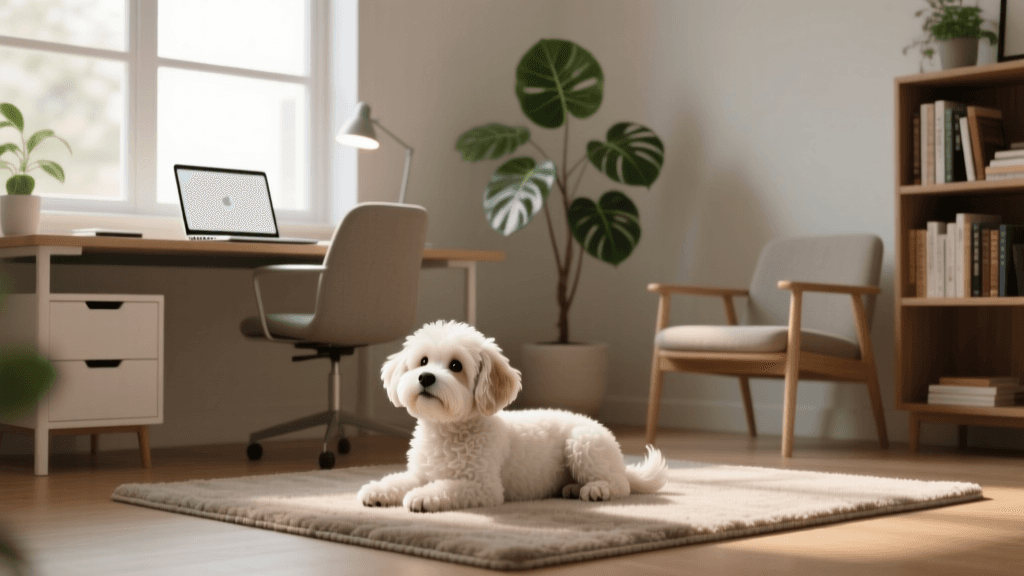
If you work from a smaller apartment or share your home office space with others, the Bichon Frise is a stellar choice. Known for their cheerful disposition and hypoallergenic, low-shedding coats, Bichons are excellent for enclosed spaces where pet dander might otherwise accumulate. While they have a playful streak and enjoy short bursts of 'zoomies,' they are highly trainable and respond beautifully to positive reinforcement. A Bichon puppy can easily be taught to settle on a designated mat with a chew toy while you tackle your inbox. Keep in mind that their beautiful coat requires professional grooming every four to six weeks, which is a budgeting factor to consider in 2026.
3. Havanese
Cuba's national dog is a charming, intelligent, and deeply affectionate breed that forms strong bonds with its owners. Havanese puppies are often described as 'Velcro dogs' because they love to stick close to their people, making them perfect for remote workers who want a constant, quiet shadow. They are highly attuned to their owner's emotional state, often providing comforting presence during stressful workdays. Despite their small size (typically 7 to 13 pounds), they are sturdy and enjoy interactive puzzle toys, which can keep them occupied during your focused work blocks.
4. Shih Tzu
Bred specifically to be royal companions in ancient palaces, the Shih Tzu's entire genetic makeup is geared toward being a loving, low-energy lap dog. They require minimal exercise compared to sporting or terrier breeds, making them ideal for remote workers who live in urban environments without immediate access to large yards. Shih Tzus are generally quiet and prefer lounging to patrolling. However, their stubborn streak can make potty training a bit of a challenge, requiring immense patience and a strict schedule during their first few months in your home office.
5. Pug
Pugs are the comedians of the canine world, offering endless entertainment during your coffee breaks. They are incredibly sociable, deeply devoted, and generally lack the desire to engage in high-impact physical activities. A Pug puppy will happily nap in a sunbeam near your desk while you work. Prospective owners in 2026 must be highly aware of the brachycephalic (flat-faced) health considerations associated with the breed. Ensuring your home office is climate-controlled and avoiding strenuous exercise in warm weather is vital for their well-being.
WFH Puppy Breed Comparison Chart
To help you visualize how these breeds fit into a remote work schedule, review the comparison table below. This data reflects general breed standards and typical behavioral baselines.
| Breed | Adult Weight | Barking Tendency | Daily Exercise Need | Home Office Vibe |
|---|---|---|---|---|
| Cavalier King Charles Spaniel | 13-18 lbs | Low | 30-45 mins | The Silent Sleeper |
| Bichon Frise | 12-18 lbs | Low to Moderate | 30-45 mins | The Cheerful Mat-Dweller |
| Havanese | 7-13 lbs | Low | 30 mins | The Quiet Shadow |
| Shih Tzu | 9-16 lbs | Low | 20-30 mins | The Royal Lounger |
| Pug | 14-18 lbs | Moderate | 20-30 mins | The Comedic Nap-Buddy |
Surviving Zoom Calls: Managing Your Puppy During Deep Work
Even the quietest puppy breeds will have moments of vocalization, teething discomfort, or boredom. Managing your puppy during critical work hours requires a mix of environmental management and enrichment. As noted by the ASPCA, establishing predictable routines and providing appropriate mental stimulation are key to preventing anxiety and destructive behaviors, even when you are just in the next room.
- The Power of Frozen Enrichment: Keep a rotation of Kong toys stuffed with dog-safe peanut butter, plain yogurt, and blueberries in your freezer. Handing your puppy a frozen treat right before a crucial 30-minute video call provides a slow-release distraction that promotes licking, which naturally soothes canine nervous systems.
- Snuffle Mats and Lick Mats: These are invaluable tools for the WFH dog parent. Scattering a portion of your puppy's daily kibble over a snuffle mat engages their olfactory senses and can easily buy you 15 to 20 minutes of pure silence.
- White Noise and Sound Masking: Puppies are easily triggered by doorbells, delivery trucks, or neighbors in the hallway. Running a white noise machine near your home office door, or playing classical music designed for canine relaxation, can drastically reduce alert barking.
- Visual Barriers: If your puppy tends to bark at people walking by your ground-floor window, apply frosted privacy film to the lower half of the glass. Out of sight means out of mind.
Potty Training While Working From Home
Potty training a puppy while managing a full-time job is arguably the most stressful part of the process. In 2026, remote workers have access to excellent indoor solutions that bridge the gap between puppy bladder capacity and back-to-back meetings.
For high-rise apartment dwellers, subscription-based indoor grass patches (such as DoggieLawn or Fresh Patch) are lifesavers. They provide a real-grass surface that reinforces outdoor potty habits without requiring an elevator ride every 45 minutes. If you have a backyard, setting a strict timer on your smartwatch or phone to take the puppy out every 60 to 90 minutes is non-negotiable. Consistency is the bedrock of housebreaking. Routine veterinary care and wellness checks, as outlined by the American Veterinary Medical Association, are also essential during this developmental stage to ensure there are no underlying urinary tract issues complicating your training efforts.
2026 Home Office Tech for Puppy Parents
The pet tech industry has evolved dramatically, offering remote workers unprecedented peace of mind. If you need to step away from your desk for a longer errand or an in-person lunch meeting, modern smart pet cameras with treat-tossing capabilities and two-way audio allow you to check in, reward calm behavior, and monitor your puppy's nap cycles. Furthermore, lightweight smart collars with advanced health tracking can monitor your puppy's daily activity levels and sleep quality, syncing directly to your smartphone to ensure your WFH lifestyle isn't inadvertently leading to a sedentary, overweight dog.
Final Thoughts on Choosing Your WFH Companion
Getting a puppy as a remote worker is a deeply rewarding experience that enhances your work-life balance, reduces stress, and forces you to take healthy screen breaks. By selecting a breed that naturally aligns with the quiet, structured environment of a home office—like the Cavalier, Bichon, Havanese, Shih Tzu, or Pug—you set the stage for a harmonious relationship. Remember that every puppy is an individual, and early socialization, positive reinforcement training, and patience will ultimately shape your dog into the perfect co-worker you have been dreaming of.
jonas-cole
All our authors care for dogs every day — read more of their work on the authors page.