Best Dog Breeds for Remote Workers in 2026: Top 5 Picks
Discover the best dog breeds for remote workers in 2026. Find quiet, low-maintenance companions perfect for your home office setup and daily Zoom calls.
The Rise of the Home Office Hound in 2026
As we navigate the professional landscape of 2026, remote and hybrid work models have permanently reshaped our daily routines. With millions of professionals operating from dedicated home offices, the demand for the perfect canine co-worker has never been higher. However, not every dog is suited for the quiet, focused environment of a home office. While high-energy working breeds might demand constant attention and disrupt your virtual meetings, the right companion can provide stress relief, encourage healthy screen breaks, and offer silent support during deep work sessions. Integrating a pet into your remote workday significantly lowers cortisol levels and boosts overall productivity, but choosing a breed that aligns with your professional schedule is critical for a harmonious household.
Essential Traits of a Remote Work Dog
Before diving into specific breeds, it is important to understand what makes a dog well-suited for a home office environment. The ideal remote work dog possesses a specific matrix of traits that allow them to thrive while you meet deadlines:
- Low Vocalization: Barking at the doorbell, delivery drones, or passing cars will ruin your professional calls. Quiet breeds are essential for maintaining a professional audio environment.
- Moderate to Low Energy: While all dogs need daily exercise, a dog that requires miles of running a day will distract you from your work. You want a dog that is content to lounge while you type.
- Independence: Clingy dogs that suffer from separation anxiety when you step into the kitchen for coffee can be disruptive. A dog that can happily relax on a nearby bed is ideal.
- Adaptability: The ability to adjust to the sounds of mechanical keyboards, virtual presentations, and occasional household noises without becoming stressed or reactive.
Top 5 Dog Breeds for Remote Workers in 2026
1. Cavalier King Charles Spaniel
The Cavalier King Charles Spaniel is widely considered the ultimate lap dog and a favorite among remote workers. They are incredibly affectionate but lack the high-strung energy of other toy breeds. Cavaliers are known for their gentle disposition and tendency to sleep quietly at their owner's feet for hours. According to the American Kennel Club, their adaptable nature makes them equally happy going for a morning walk or curling up on a rug during a long spreadsheet session. They rarely bark without a significant reason, making them perfect for unmuted conference calls.
2. Basset Hound
If your home office lacks square footage and you need a dog that is practically a piece of furniture, the Basset Hound is an outstanding choice. Famous for their low-slung bodies and soulful eyes, Bassets are notoriously low-energy indoors. They require a moderate daily walk to keep their joints healthy, but once inside, they are content to snore softly beneath your standing desk. Their stubborn nature means they are more likely to ignore the delivery driver at the door than bark aggressively, preserving your professional focus.
3. Greyhound
Often misunderstood as high-energy racing dogs, retired Greyhounds are actually famously known as "45-mph couch potatoes." In a 2026 home office setting, a Greyhound will typically claim a large orthopedic bed in the corner of your room and remain completely stationary for the duration of your workday. They are exceptionally quiet, rarely barking, and their short coats mean minimal shedding on your office chair. A quick sprint in a fenced yard or a brisk neighborhood walk before you log on is all they need to remain perfectly content while you work.
4. Shiba Inu
For the remote worker who prefers a more independent, feline-like companion, the Shiba Inu is a stellar option. Shibas are fastidiously clean, quiet, and highly independent. They do not demand constant physical affection and are perfectly happy observing you from across the room. While they can be vocal if provoked, a well-socialized Shiba in a calm home office environment will typically keep to themselves. Their cat-like demeanor means they respect your physical boundaries while you are typing, making them excellent companions for deep-focus work blocks.
5. Bichon Frise
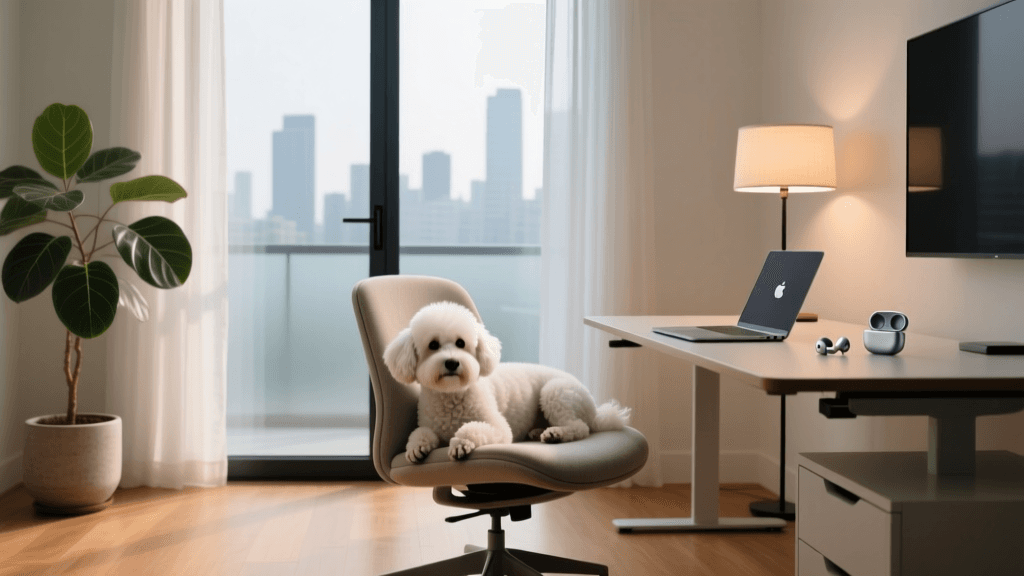
If you suffer from allergies or prefer a pristine home office environment, the Bichon Frise is a top-tier choice. Their hypoallergenic, hair-like coat sheds very little, keeping your keyboard and monitors free of pet dander. Bichons are cheerful, adaptable, and highly trainable. While they have bursts of playful energy (often called the "Bichon Blitz"), they easily settle down with a long-lasting chew toy while you tackle your afternoon emails. Their alert nature means they will quietly notify you if someone is at the door without raising a massive ruckus.
Home Office Breed Comparison Chart
| Breed | Energy Level | Barking Tendency | Space Required | Shedding |
|---|---|---|---|---|
| Cavalier King Charles | Low to Moderate | Low | Small to Medium | Moderate |
| Basset Hound | Low | Low (Howls occasionally) | Medium | High |
| Greyhound | Low (Indoors) | Very Low | Medium to Large | Low |
| Shiba Inu | Moderate | Low to Moderate | Small to Medium | High (Seasonal) |
| Bichon Frise | Moderate | Moderate | Small | Very Low |
Optimizing Your 2026 Home Office for Your Dog
Creating a dog-friendly workspace goes beyond choosing the right breed; it requires intentional office design. In 2026, smart home integration for pets has reached new heights, allowing remote workers to monitor and manage their pets seamlessly. Consider installing a smart pet door that reads your dog's microchip, allowing them access to a secure outdoor run without you having to break your focus to open the door.
Ergonomics apply to your dog, too. Invest in a high-quality, orthopedic memory foam bed designed to support their joints during long hours of lounging. Place the bed in a quiet corner of your office, away from direct sunlight and the glare of your monitors, to give them a designated "workspace" of their own.
When decorating your home office, be highly mindful of greenery. Many popular desk plants, such as pothos, snake plants, and peace lilies, are highly toxic to dogs if chewed. Always consult the ASPCA's Toxic and Non-Toxic Plants list before bringing new foliage into your workspace. Opt for pet-safe alternatives like spider plants, calatheas, or parlor palms to keep your office vibrant and safe.
Structuring the Midday Routine
Even the most low-energy dog breeds require a structured midday routine to prevent stiffness and boredom. The key to a successful remote work day with a dog is integrating their needs into your existing schedule. Utilize the 20-20-20 rule for screen time—every 20 minutes, look at something 20 feet away for 20 seconds—and use every third or fourth cycle to check in on your dog, offer a quick pet, or toss a treat.
Block out 30 to 45 minutes on your digital calendar every day around noon specifically for a midday walk. This not only fulfills your dog's physical and olfactory enrichment needs but also forces you to step away from your desk, reducing eye strain and mental fatigue. For mental stimulation while you are in deep-focus mode, utilize puzzle feeders or frozen enrichment toys. These tools keep your dog quietly occupied for up to an hour, ensuring that both you and your canine co-worker can enjoy a highly productive, peaceful workday in 2026.
marcus-aldridge
All our authors care for dogs every day — read more of their work on the authors page.