Best Pet Cameras to Monitor Dog Separation Anxiety
Discover the best pet cameras to monitor and soothe dog separation anxiety. Compare top features, treat tossers, and bark alerts to understand your pup.
The Psychology of Separation Anxiety: What Are You Really Seeing?
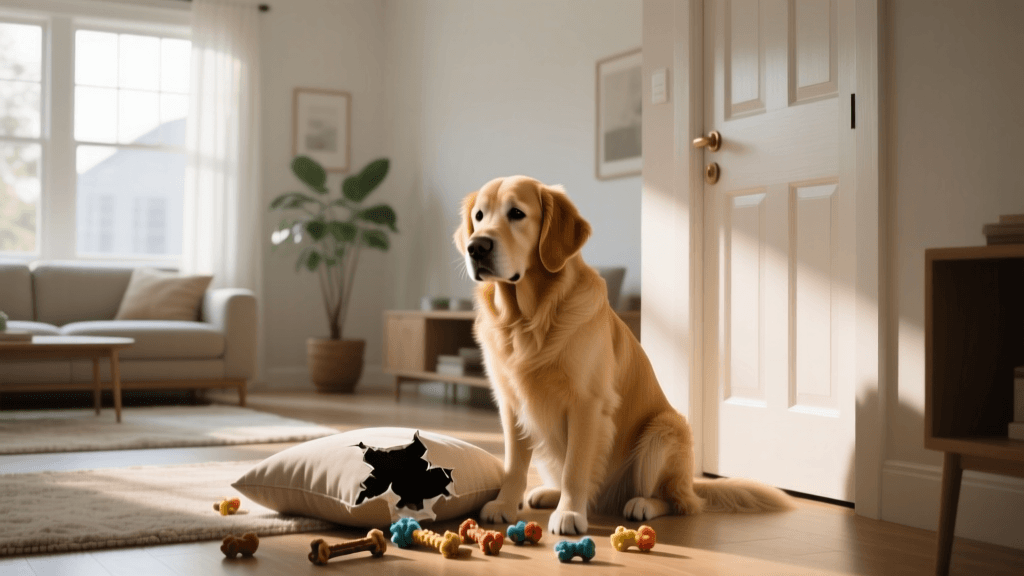
As dog owners, we often assume our pets are simply sleeping while we are away. However, for dogs suffering from separation anxiety, the moment the front door closes marks the beginning of intense psychological distress. Understanding your dog's behavior requires more than just observing them when they are happy and relaxed; it requires witnessing their unfiltered reactions to stressors. According to the ASPCA, separation anxiety is triggered when a dog becomes upset because of separation from their guardians, leading to destructive behaviors, vocalization, and house soiling.
Before the advent of smart pet cameras, owners only saw the aftermath of anxiety: chewed doorframes or indoor accidents. Today, high-definition pet cameras act as vital behavioral diagnostic tools. They allow us to observe subtle canine stress signals that precede destructive outbursts. The VCA Animal Hospitals notes that canine stress often manifests through subtle body language long before a dog begins to bark or destroy property. By using a camera, you can identify early warning signs such as:
- Excessive Panting: When not hot or exercising, panting is a primary physiological response to cortisol release.
- Lip Licking and Yawning: Displacement behaviors that indicate internal conflict and rising anxiety.
- Pacing Patterns: A dog tracing the exact same path repeatedly is exhibiting a stereotypic behavior linked to chronic stress.
- Whale Eye: Showing the whites of the eyes while looking toward the door, indicating hyper-vigilance.
By identifying these signals via a live feed, you can accurately map your dog's anxiety threshold and tailor your behavioral modification plan accordingly.
Diagnostic Features: Choosing a Camera for Behavioral Analysis
Not all smart home cameras are built for canine behavioral analysis. When shopping for a device to help you understand and manage your dog's separation anxiety, you must look beyond basic video quality and focus on features that facilitate interaction and environmental monitoring.
Field of View (FOV) and Pacing Tracking
Anxious dogs rarely sit still. They pace, patrol, and hide. A standard 130-degree fixed lens might miss your dog retreating to a corner or pacing behind furniture. Cameras with a 360-degree pan-and-tilt function or ultra-wide lenses are essential for capturing the full scope of your dog's spatial behavior, allowing you to see if they are guarding the door (barrier frustration) or hiding (fear response).
The Double-Edged Sword of 2-Way Audio
Many cameras advertise 2-way audio as a way to "comfort" your dog. However, from a behavioral psychology standpoint, hearing your voice without seeing you can actually increase anxiety in some dogs. It creates a state of cognitive dissonance and frustration, as the dog searches the house for you. When using 2-way audio, it is best used for issuing a familiar, calm cue (like "place" or "settle") rather than engaging in high-pitched, emotional baby talk, which can elevate the dog's arousal levels.
Treat Tossing and Classical Conditioning
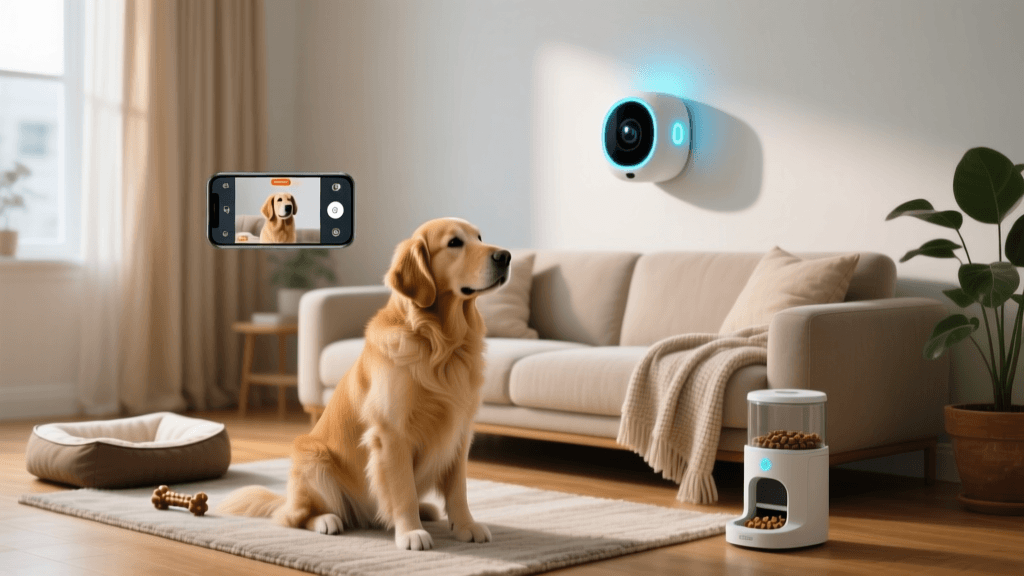
Cameras equipped with treat dispensers are invaluable for remote counter-conditioning. By pairing your departure with a high-value reward delivered via the camera, you can begin to change your dog's emotional response to being alone. This transforms the camera from a passive observation tool into an active training device.
Top 3 Pet Cameras for Behavioral Monitoring
1. Furbo 360° Dog Camera (Best for Pacing and Active Intervention)
Price: ~$210
Key Behavioral Feature: 360-degree rotating view and Smart Dog Alerts.
The Furbo 360 is widely considered the gold standard for separation anxiety monitoring. Its motorized base rotates to follow your dog's movement, ensuring you never lose sight of their pacing patterns. The "Smart Dog Alerts" utilize AI to differentiate between standard barking, crying, and even vomiting, sending push notifications to your phone. This allows you to intervene with a treat toss or a calming verbal cue before the dog's anxiety escalates into a full-blown panic attack.
2. Wyze Cam v3 (Best Budget Option for Sound and Night Monitoring)
Price: ~$50
Key Behavioral Feature: Sound detection and Starlight Sensor.
While it lacks a treat dispenser, the Wyze Cam v3 is an exceptional diagnostic tool for owners on a budget. Its sound detection feature can be calibrated to alert you specifically to whining or barking. Furthermore, its color night vision is crucial for understanding your dog's nighttime behavior. Many dogs with separation anxiety also suffer from nighttime restlessness; the Wyze Cam allows you to monitor their sleep cycles and settling behaviors in pitch-black rooms without the glare of infrared lights.
3. Petcube Bites 2 Lite (Best for Food-Motivated Desensitization)
Price: ~$100
Key Behavioral Feature: Precision treat scheduling and laser pointer.
The Petcube Bites 2 Lite offers a highly reliable treat-tossing mechanism that can be scheduled. For dogs whose anxiety is tied to a lack of routine, scheduling remote treat drops at specific intervals can create a sense of predictability. The built-in laser pointer can also be used to redirect a dog's focus away from the front door and toward an interactive game, though this should only be used with dogs who do not exhibit obsessive-compulsive light-chasing behaviors.
Comparison Chart: Best Cameras for Anxious Dogs
| Product | Est. Price | Field of View | Treat Dispenser | Best Behavioral Use Case |
|---|---|---|---|---|
| Furbo 360° | $210 | 360° Pan | Yes | Tracking pacing patterns & active counter-conditioning |
| Wyze Cam v3 | $50 | 130° Fixed | No | Budget vocalization monitoring & sleep cycle analysis |
| Petcube Bites 2 | $100 | 138° Fixed | Yes | Scheduled routine building & attention redirection |
A Camera-Based Desensitization Protocol
Purchasing the right camera is only the first step. To truly understand and help your dog, you must use the device to execute a structured behavioral modification plan. The American Kennel Club emphasizes that treating separation anxiety requires systematic desensitization and counter-conditioning. Here is how to use your new camera to execute this protocol:
Step 1: The Baseline Observation (Days 1-3)
Do not use the 2-way audio or treat tosser during your first few days of using the camera. Simply record your dog's behavior from the moment you leave until you return. Note the exact minute their anxiety behaviors begin. Do they panic the second the door clicks, or do they settle for ten minutes before beginning to pace? This baseline data is crucial for understanding their specific trigger point.
Step 2: Identifying Departure Cues
Many dogs begin to exhibit stress signals before you even leave the house. Use your camera's motion alerts to review footage of your morning routine. You may notice your dog panting or trembling when you put on your shoes or pick up your keys. Understanding these "pre-departure cues" allows you to desensitize your dog to these triggers by performing them randomly throughout the day without actually leaving.
Step 3: Remote Counter-Conditioning
Once you know your dog's threshold (e.g., they begin to whine at the 5-minute mark), use the camera's treat dispenser to intervene before the anxiety peaks. If your dog is calm at minute 3, toss a high-value treat. You are teaching the dog that being alone predicts good things. Gradually increase the time between treats as your dog's confidence grows.
Step 4: Evaluating Audio Interventions
Test your dog's reaction to the 2-way audio. Speak in a calm, monotone voice and observe their body language via the feed. If their ears perk up, they stop pacing, and they take the treat gently, the audio is soothing. If they begin frantically searching the room, barking at the speaker, or refusing treats, the audio is causing frustration. In the latter case, disable the speaker and rely solely on environmental enrichment and treat tossing.
Conclusion
Understanding your dog's separation anxiety requires empathy, patience, and accurate data. A high-quality pet camera bridges the gap between your absence and your dog's experience, transforming guesswork into actionable behavioral science. By selecting a camera with the right diagnostic features—such as 360-degree tracking, sound alerts, and remote treat dispensing—you empower yourself to read your dog's subtle stress signals and guide them toward a calmer, more confident state of mind.
jonas-cole
All our authors care for dogs every day — read more of their work on the authors page.