Herding vs Sporting Breeds: Matching Canine Instincts
Discover the psychological differences between herding and sporting breeds. Learn how to match canine instincts, energy levels, and drives to your lifestyle.
The Psychology of Breed Groups: Why Instincts Matter
When prospective dog owners begin their search for a canine companion, they often focus on superficial traits such as coat color, size, or the shape of the dog's ears. However, true compatibility between a human and a dog is deeply rooted in canine psychology, breed instincts, and neurological hardwiring. Selecting a dog without understanding the underlying psychological drives of their breed group is one of the leading causes of behavioral relinquishment in modern households. To build a harmonious relationship, we must look beyond aesthetics and examine the historical jobs these dogs were bred to perform.
A landmark 2022 study published by the National Institutes of Health (NIH) and researchers at UMass Chan Medical School revealed that while breed does not entirely dictate an individual dog's personality, it does significantly influence specific behavioral traits and instinctual drives. According to the NIH research on canine genetics and behavior, traits like biddability, prey drive, and human-directed sociability are highly heritable. This means that understanding the fundamental differences between major breed groups—specifically the Herding and Sporting groups—is essential for matching a dog's psychological needs to your daily lifestyle, environment, and budget.
Herding Breeds: The Control-Driven Thinkers
Herding breeds, such as the Border Collie, Australian Shepherd, Belgian Malinois, and Pembroke Welsh Corgi, were developed to control the movement of livestock over vast distances. Psychologically, these dogs are the control-driven thinkers of the canine world. Their behavior is governed by a modified version of the predatory motor sequence. In a wild predator, the sequence is: eye, stalk, chase, grab-bite, kill-bite, and consume. Herding dogs have been selectively bred to hyper-exaggerate the 'eye', 'stalk', and 'chase' phases, while heavily inhibiting the 'grab-bite' and 'kill-bite' phases.
This neurological modification results in a dog that is intensely sensitive to movement. A herding dog's brain is essentially wired to detect and react to anything that moves quickly, including bicycles, running children, cars, and even falling leaves. This movement sensitivity can manifest as nipping at heels, barking at passing traffic, or severe barrier frustration when looking out a window. According to the American Kennel Club's Herding Group Guide, these dogs possess an intense need for a 'job' and thrive on complex problem-solving rather than just mindless physical exercise.
Actionable Advice and Costs for Herding Breeds:
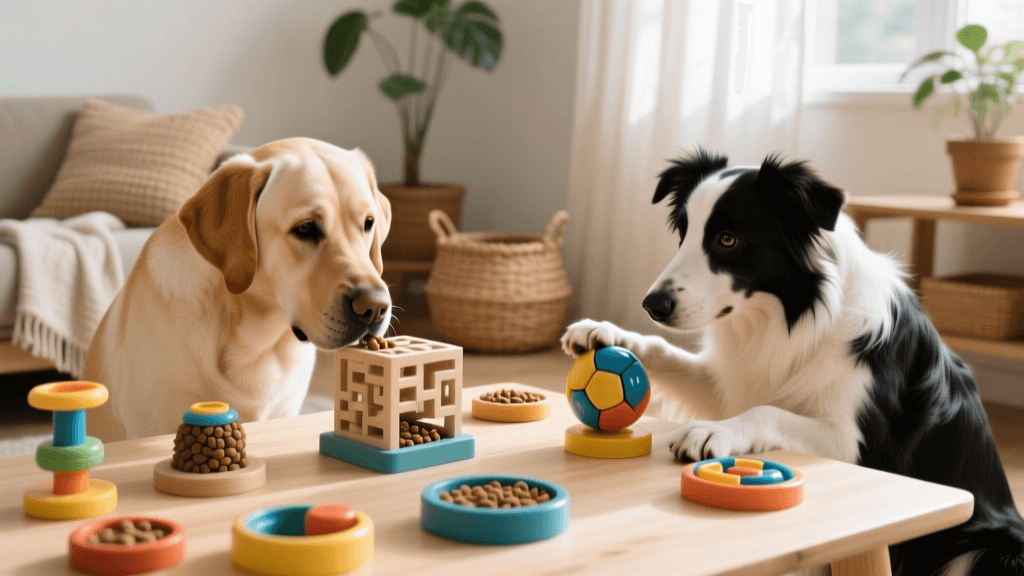
- Mental Enrichment: Physical exercise alone will not tire a herding dog; it will only build a canine athlete with endless stamina. You must tax their brain. Budget approximately $50 to $100 per month on advanced puzzle toys (such as the Outward Hound Nina Ottosson Dog Brick), snuffle mats, and scent-work kits.
- Impulse Control Training: Because of their high arousal levels, herding dogs require rigorous impulse control training. Expect to spend $150 to $250 on specialized behavioral classes focusing on 'leave it', 'place' commands, and neutrality training around moving triggers.
- Environmental Management: Herding dogs are highly susceptible to visual overstimulation. If you have a yard, a standard chain-link fence will cause chronic stress as the dog tries to 'herd' passing cars. You must invest in a 6-foot solid privacy fence, or add privacy slats to your existing fence, which can cost between $400 and $800 depending on your yard size.
Sporting Breeds: The Reward-Driven Athletes
Sporting breeds, including the Labrador Retriever, Golden Retriever, German Shorthaired Pointer, and English Springer Spaniel, were bred to assist hunters in locating, flushing, and retrieving game. Psychologically, sporting dogs are generally more biddable, soft-tempered, and reward-driven than their herding counterparts. Their predatory motor sequence is heavily focused on the 'search' and 'fetch' (carry) phases. They are hardwired to use their noses to locate hidden objects and their soft mouths to carry items back to their handler without damaging them.
Unlike the hyper-vigilant, visually stimulated herding dog, the sporting dog is primarily olfactory and tactile. They are less likely to develop neurotic behaviors related to moving shadows or passing cars, but they are highly prone to destructive chewing and counter-surfing if their desire to carry and forage is not met. The American Kennel Club's Sporting Group Overview notes that these dogs are inherently social, eager to please, and generally possess a lower threshold for stress, making them highly adaptable to family life provided their physical and retrieving needs are met.
Actionable Advice and Costs for Sporting Breeds:
- Structured Retrieval: Simply throwing a tennis ball in the backyard can lead to obsessive, adrenaline-fueled behavior. Instead, invest $40 to $70 in a structured bumper launcher (like the Chuckit! Pro SlingShot) and practice blind retrieves in tall grass or wooded areas to engage their scent-tracking psychology.
- Foraging and Chewing: To satisfy their oral fixation and desire to carry, budget $30 to $50 monthly for high-quality, durable chew items like Yak cheese chews, stuffed Kongs, and edible dental chews. Avoid leaving shoes or socks around, as their 'retrieve' instinct does not differentiate between a hunting dummy and your favorite sneakers.
- Physical Outlets: Sporting breeds require sustained cardiovascular exercise. If you work long hours, budget $35 to $50 per day for a reputable doggy daycare where they can engage in structured, supervised group play, which satisfies both their physical stamina and their innate pack sociability.
Comparative Analysis: Herding vs. Sporting Instincts
To help you visualize the psychological and practical differences between these two popular breed groups, review the comparison chart below. This table breaks down their instinctual drives, ideal environments, and the specific type of fatigue they require to remain psychologically balanced.
| Behavioral Trait | Herding Breeds (e.g., Border Collie, Aussie) | Sporting Breeds (e.g., Labrador, GSP) |
|---|---|---|
| Primary Sensory Drive | Visual (highly sensitive to fast movement) | Olfactory (highly driven by scent and tracking) |
| Predatory Sequence Focus | Eye, Stalk, Chase (inhibited bite) | Search, Flush, Fetch (soft-mouth carry) |
| Reaction to Strangers | Aloof, observant, sometimes suspicious | Overly friendly, eager to greet, biddable |
| Primary Cause of Anxiety | Visual overstimulation, lack of a 'job' | Isolation, lack of physical/olfactory outlet |
| Ideal Exercise Type | Agility, advanced obedience, trick training | Hiking, swimming, structured retrieval, dock diving |
| Estimated Monthly Enrichment Cost | $80 - $150 (Puzzles, specialized training) | $50 - $100 (Chews, retrieval gear, daycare) |
Actionable Selection Guide: Matching the Dog to Your Lifestyle
Choosing between a herding and a sporting breed requires an honest assessment of your daily routine, your living environment, and your willingness to engage in specific types of training. Below is a practical guide to help you make an informed, psychologically sound decision.
1. Assess Your Time and Energy Levels
If you are an active runner or hiker who wants a companion to join you on outdoor adventures, but you prefer to relax and watch television in the evenings without engaging in continuous training sessions, a Sporting breed is likely the better fit. They will run for miles beside you and then happily sleep at your feet. Conversely, if you are a hobbyist who enjoys spending 45 minutes every evening teaching complex tricks, setting up indoor agility courses, and engaging in continuous mental stimulation, a Herding breed will thrive under your dedicated, structured leadership.
2. Evaluate Your Living Environment
Herding dogs are notoriously sensitive to their environment. They do best in quieter suburbs or rural areas where visual triggers (like heavy foot traffic or dense city noise) can be controlled. If you live in an apartment or a home with large, unfenced street-facing windows, a herding dog may develop chronic barking issues and barrier frustration. Sporting dogs are generally more adaptable to varied environments, including bustling suburbs, provided they have access to nearby parks or trails for daily scent-work and off-leash exploration in designated areas.
3. Consider the Household Dynamics
Households with very young, running children should be cautious when bringing home a herding breed. The instinct to 'herd' running children by nipping at their heels is a deeply ingrained neurological reflex, not a sign of aggression, but it can be terrifying and dangerous for toddlers. Sporting breeds, with their soft mouths and tolerant, biddable nature, are generally much better suited for homes with chaotic, active children, as they are more likely to view the children as playmates rather than livestock that needs to be controlled.
Conclusion
Understanding your dog begins long before you bring them home. By recognizing the profound psychological differences between herding and sporting breeds, you can avoid the heartbreak of a mismatched relationship. Whether you choose the intense, control-driven intellect of a herding dog or the joyful, reward-driven athleticism of a sporting breed, aligning their ancestral instincts with your modern lifestyle is the ultimate key to a fulfilling, lifelong bond. Always prioritize behavioral compatibility over physical appearance, and you will be rewarded with a canine companion who is truly in their element.
beth-carrasco
All our authors care for dogs every day — read more of their work on the authors page.