Understand Canine Calming: Step-by-Step Mat Training Guide
Learn the psychology behind canine settling and follow our step-by-step mat training guide to teach your dog the place command for a calmer home.

The Psychology Behind the 'Place' Command
In the realm of canine behavior, one of the most common misconceptions is that obedience is merely about control. In reality, teaching your dog to settle on a mat—often called the 'place' or 'bed' command—is fundamentally about emotional regulation. Dogs, especially high-drive or adolescent dogs, often lack the innate ability to self-soothe when their arousal levels spike. High arousal triggers the release of cortisol and adrenaline, keeping the dog in a sympathetic nervous system state (fight or flight). Mat training acts as a behavioral anchor, signaling the brain to shift into the parasympathetic nervous system (rest and digest).
According to the American Kennel Club, the 'place' command is a foundational behavior that provides dogs with a safe, designated zone where they can observe their environment without feeling the need to interact with every stimulus. By understanding the psychology of canine settling, you are not just teaching a trick; you are giving your dog a vital coping mechanism for anxiety, excitement, and overstimulation.
Essential Gear for Success
Before beginning your step-by-step training protocol, you must curate the right environment and equipment. The physical texture and elevation of the mat matter significantly to a dog's spatial awareness. An elevated cot provides a clear tactile boundary, making it easier for the dog to understand exactly where they need to be.
| Equipment | Specific Product Recommendation | Avg. Cost | Behavioral Purpose |
|---|---|---|---|
| Elevated Cot | Kuranda PVC Chewproof Dog Cot (35x22 inches) | $130.00 | Provides distinct tactile boundaries and keeps the dog cool, reducing physical discomfort that can hinder settling. |
| Flat Mat (Travel) | RuffWear Highlands Sleeping Bag / Mat | $70.00 | Used for generalizing the behavior to different environments like cafes or vet waiting rooms. |
| Treat Pouch | RuffWear Treat Trader | $25.00 | Allows for rapid, silent treat delivery without the crinkling noise of plastic bags that can spike arousal. |
| High-Value Treats | Zuke's Mini Naturals (cut into pea-sized pieces) | $8.00 | Low-calorie, high-scent rewards that maintain motivation without causing rapid satiation. |
| Marker Tool | Box Clicker or Verbal Marker ('Yes') | $3.00 | Provides precise, consistent feedback within 0.5 seconds of the desired behavior. |
Step-by-Step Mat Training Protocol
Training a reliable 'place' command requires breaking the behavior down into manageable micro-steps. We will use a method called 'shaping,' which involves rewarding successive approximations of the final goal. Keep training sessions short—no more than 3 to 5 minutes at a time—to prevent cognitive fatigue.
Step 1: Shaping the Approach (Days 1-3)
Place the mat on the floor in a low-distraction room. Have your treat pouch loaded with pea-sized Zuke's Mini Naturals. Stand near the mat and wait. Do not lure the dog with a treat in your hand. The moment your dog looks at the mat, click your clicker (or say 'Yes!') and toss a treat directly onto the center of the mat. This builds a classical conditioning association: the mat predicts good things. Repeat this 15-20 times until the dog is confidently stepping onto the mat to search for treats.
Step 2: Adding Duration (Days 4-7)
Once your dog is readily stepping onto the mat, delay your marker. Wait for all four paws to be on the mat, then count one second in your head before clicking and treating. Gradually increase this duration to 3 seconds, then 5 seconds. Crucial Psychology Tip: Deliver the treat low to the mat, between the dog's front paws. Feeding at chest level encourages the dog to stand up and lean forward, whereas feeding low encourages a downward shift in weight, promoting a 'down' or settled posture.
Step 3: The 'Down' and the Deep Sigh (Days 8-14)
We want the dog to lie down on the mat, not just stand on it. If your dog already knows a 'down' cue, give it once they are on the mat. If not, lure them into a sphinx position. The ultimate goal of mat training is the 'deep sigh'—a visible exhalation where the dog's elbows splay out and their head rests on their paws. When you see this physical release of tension, immediately mark and reward with a 'jackpot' (3-4 treats fed one by one). This heavily reinforces the parasympathetic state.
Step 4: Distance and the 3 Ds (Weeks 3-4)
In dog training, the '3 Ds' stand for Duration, Distance, and Distraction. Never increase more than one 'D' at a time. Once your dog can stay on the mat for 2 minutes while you stand next to them, begin adding Distance. Take one step back, return immediately, mark, and reward. Slowly increase to taking three steps back, then walking out of the room for one second. If the dog breaks the mat, you have increased the criteria too quickly. Return to the last successful step.
Reading Your Dog's Stress Signals During Training
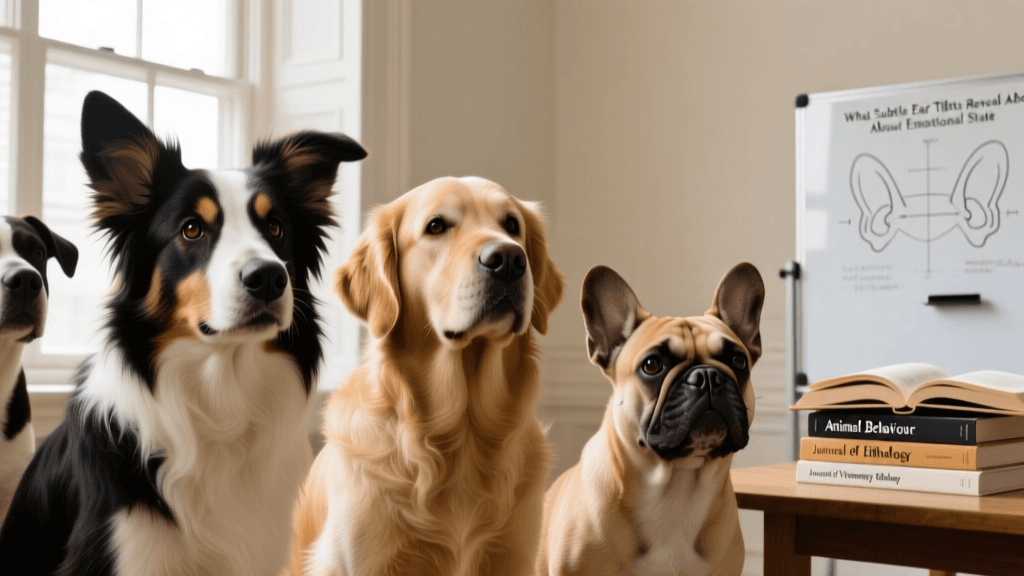
Understanding your dog's body language is critical to knowing when to push forward and when to end a session. If a dog is over threshold, learning cannot occur. According to the ASPCA's guide to canine body language, dogs communicate stress through subtle 'calming signals' before they escalate to overt reactivity.
While on the mat, watch for the following signs of cognitive overload or frustration:
- Lip Licking and Yawning: If your dog repeatedly yawns or licks their lips when not tired or eating, they are attempting to self-soothe and signal stress.
- Whale Eye: Showing the whites of their eyes while keeping their head pointed forward indicates high anxiety and a potential freeze response.
- Shaking Off: A full-body shake (as if wet) after a training repetition is a physiological reset mechanism to shed adrenaline.
As noted by veterinary behaviorists at Texas A&M College of Veterinary Medicine, recognizing these early warning signs allows owners to adjust the environment before the dog resorts to barking, pacing, or biting. If you see these signals, lower your criteria, offer a simple cue they know well, reward heavily, and end the session on a positive note.
Troubleshooting Common Behavioral Roadblocks
Even with a solid understanding of canine psychology, you will encounter roadblocks. Here is a structured guide to troubleshooting the most common mat training issues.
- The Dog Anticipates and Breaks the Stay: If your dog jumps off the mat right after receiving a treat, they view the treat as a 'release' cue. Solution: Feed 3-5 treats in rapid succession while they remain down, creating a continuous reinforcement history that staying put is more rewarding than leaving.
- The Dog Whines or Paws at You: This is an 'extinction burst.' The dog is frustrated that their previous attention-seeking behaviors are no longer working. Solution: Completely ignore the whining (no eye contact, no sighing). Wait for exactly 3 seconds of silence, then mark and reward the quiet.
- The Dog Falls Asleep and Wakes Up Startled: While falling asleep is the ultimate sign of success, some dogs wake up disoriented and immediately break the boundary. Solution: Introduce a gentle, low-level release cue like 'All done' or 'Free' before they wake up fully, pairing it with a scatter of treats on the floor away from the mat to encourage a calm transition.
Generalizing the Behavior to the Real World
A dog that understands 'place' in the living room does not automatically understand it at a bustling outdoor cafe. Canine brains are highly contextual. To generalize the behavior, you must systematically introduce the travel mat to new environments. Start on your front porch, then move to the driveway, then to a quiet park. Bring your Kuranda cot or travel mat to the vet's waiting room and ask for a 'place' before the dog has a chance to pace and rehearse anxious behaviors. By proactively managing your dog's environment and giving them a clear, rewarding job, you empower them to navigate the world with confidence and calm.
priya-sutaria
All our authors care for dogs every day — read more of their work on the authors page.