Diagnosing Dog Separation Anxiety: Signs and Solutions
Is your dog destroying the house or just bored? Learn how to diagnose true separation anxiety and apply proven, step-by-step behavioral solutions today.
The Great Misdiagnosis: Panic vs. Boredom
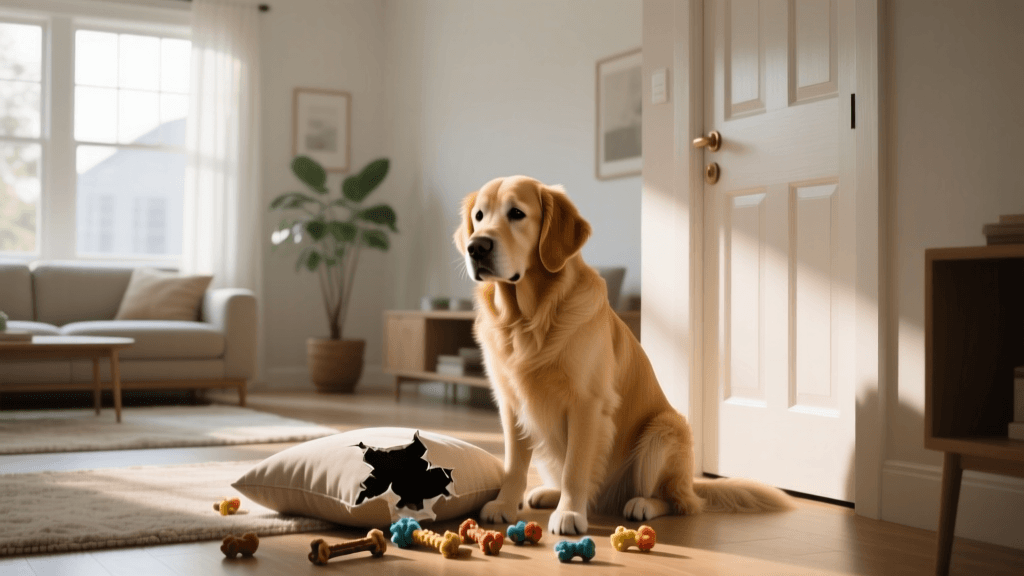
Coming home to a shredded sofa, scratched doorframes, or a puddle on the rug is incredibly frustrating for any dog owner. The immediate assumption is often that the dog is suffering from separation anxiety. However, canine behaviorists warn against this blanket diagnosis. While true separation anxiety is a severe psychological panic disorder, a vast majority of destructive behaviors exhibited when owners are away are actually the result of under-stimulation, boredom, or mild isolation distress. Understanding the profound psychological difference between a bored dog and a panicked dog is the first critical step toward rehabilitating your pet's behavior and restoring peace to your household.
According to the ASPCA's guide on Separation Anxiety, true separation anxiety is characterized by extreme distress and panic that occurs specifically when the dog is separated from their primary attachment figure. A bored dog, on the other hand, is simply looking for an outlet for their pent-up physical and mental energy. Treating a bored dog with anxiety protocols is ineffective, and treating a truly anxious dog with basic puzzle toys will only exacerbate their panic. Accurate diagnosis is paramount.
Diagnosis Chart: True Separation Anxiety vs. Boredom
To accurately diagnose your dog's behavior, you must observe how and when they act out. Setting up a pet camera is highly recommended to capture this data. Below is a structured comparison to help you differentiate between True Separation Anxiety (TSA) and Boredom/Isolation Distress.
| Behavior Metric | True Separation Anxiety (TSA) | Boredom / Isolation Distress |
|---|---|---|
| Destructive Focus | Directed at exit points (doors, window sills, door frames) or owner's scented items. | Indiscriminate. Couches, shoes, trash cans, and baseboards are all fair game. |
| Vocalization Timing | Begins immediately (within seconds to minutes) of the owner's departure and is continuous. | May start immediately but usually fades into periods of quiet, interspersed with occasional barking. |
| Escape Attempts | Frantic digging, chewing, and scratching at doors/crates, often resulting in self-injury (broken teeth, torn nails). | Rarely attempts to escape the home; destruction is exploratory or play-driven. |
| Potty Habits | Inappropriate urination/defecation occurs despite being fully house-trained, driven by loss of bowel/bladder control due to panic. | Accidents usually only happen if the dog was not walked long enough before the owner left. |
| Greeting Behavior | Hyper-aroused, frantic, seemingly unable to settle for long periods after the owner returns. | Happy and excited, but settles down relatively quickly once the owner is home. |
Step-by-Step Solutions for Isolation Distress and Boredom
If your dog's behavior aligns more closely with the right side of the chart, your dog is likely under-stimulated. The solution here is not behavioral desensitization, but rather environmental enrichment and physical exhaustion.
1. Implement the 'Sniffari' and Physical Metrics
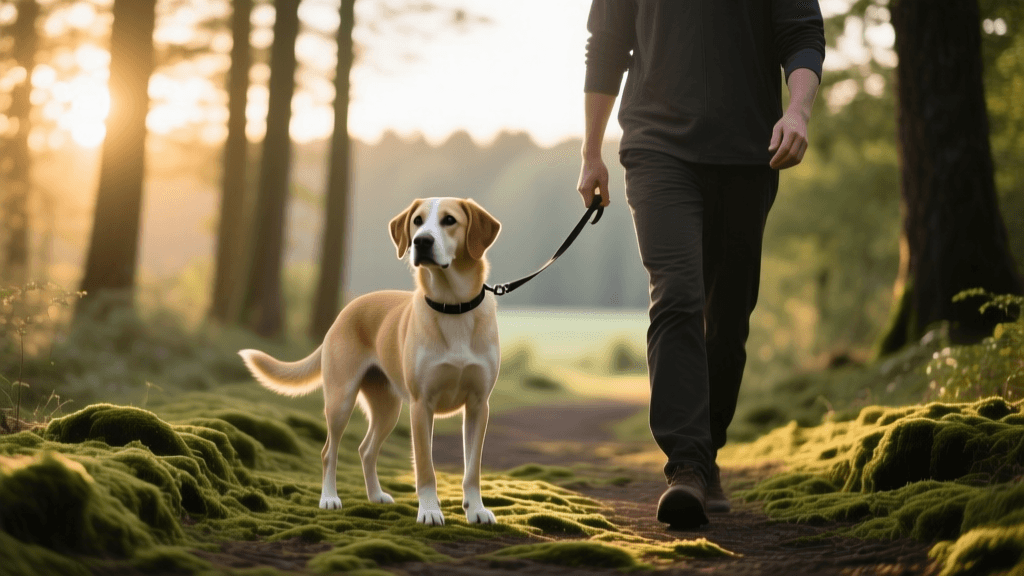
Dogs experience the world primarily through their olfactory system. A 30-minute 'Sniffari'—a walk where the dog is allowed to stop and sniff every bush, tree, and pole at their own pace—has been shown to lower a dog's heart rate and provide immense mental fatigue. In fact, 30 minutes of intensive sniffing can tire a dog out more effectively than two miles of brisk leash walking. Schedule a Sniffari 45 minutes before you leave for work to ensure your dog is ready to sleep during your absence.
2. Upgrade Mental Enrichment (Product Guide)
Leaving a dog alone with no job to do is a recipe for destroyed furniture. You must provide high-value, long-lasting enrichment that is only available when you leave. This creates a positive association with your departure.
- The Kong Classic (Red or Black): Costing between $15 and $20, this is a staple. Do not just fill it with dry kibble. Layer it with plain canned pumpkin, plain greek yogurt, and kibble, then freeze it for 4 to 6 hours. A properly frozen Kong can occupy a dog for 30 to 45 minutes.
- Outward Hound Nina Ottosson Dog Brick (Level 2): Priced around $15, this puzzle toy requires the dog to slide, lift, and flip compartments to find treats. It engages their problem-solving instincts and slows down treat consumption.
- Snuffle Mats: A $20-$30 investment in a high-quality fleece snuffle mat allows you to scatter a meal, forcing the dog to forage for their food, mimicking natural wild behaviors.
Protocol for True Separation Anxiety (TSA)
If your dog exhibits the signs of True Separation Anxiety, punishment is entirely counterproductive and will only increase their panic. The American Kennel Club's training advice emphasizes that TSA requires a systematic, patient approach focused on desensitization and counter-conditioning. Here is a structured protocol to help your dog build independence.
Phase 1: Desensitizing Departure Cues
Dogs with TSA begin panicking before you even leave the house. They recognize your 'departure cues'—picking up your keys, putting on your shoes, or grabbing your coat. You must strip these cues of their predictive power.
- Week 1: Pick up your keys, then sit back down on the couch and watch TV. Do this 10 to 15 times a day.
- Week 2: Put on your shoes, then take them off and make a cup of coffee.
- Week 3: Put on your coat, walk to the door, touch the handle, and then walk away.
The goal is to make these actions so mundane that your dog no longer spikes in cortisol when they occur.
Phase 2: Graded Absences
Once departure cues no longer trigger panic, you must practice leaving the dog alone in micro-increments. This is where a pet camera, such as the Furbo 360 Dog Camera ($150-$200), becomes an invaluable diagnostic tool. You need to see your dog's body language in real-time to ensure you do not push them past their threshold.
- Step 1: Step out the front door, close it, and immediately open it (1 second absence). Return calmly. Do not greet the dog enthusiastically.
- Step 2: Gradually increase the time: 5 seconds, 10 seconds, 30 seconds, 1 minute, 5 minutes.
- Step 3: If your dog shows signs of stress on camera (panting, pacing, whining) at the 3-minute mark, you have pushed too far. Drop back to 1-minute absences and proceed more slowly.
Trainer's Rule of Thumb: Never leave a dog with true separation anxiety alone for longer than they have been successfully trained to handle. If your dog's threshold is currently 5 minutes, you cannot leave them to go to the grocery store. You must utilize doggy daycare, a pet sitter, or take them with you while you undergo the graded absence protocol.
Phase 3: Environmental and Chemical Support
While training is the foundation, supplemental aids can help lower your dog's baseline anxiety, making them more receptive to learning. According to resources from Fear Free Pets, managing the environment is crucial for anxious animals.
- Adaptil Calm Home Diffuser ($25): This plug-in diffuser releases synthetic dog-appeasing pheromones (DAP) that mimic the comforting pheromones of a nursing mother dog. Plug it in the room where the dog spends the most time.
- Acoustic Therapy: Play bio-acoustically designed classical music, such as the 'Through a Dog's Ear' playlist, which is proven to lower canine heart rates.
- Compression Wraps: Products like the Thundershirt ($40-$50) apply gentle, constant pressure to the dog's torso, which can have a calming effect on the nervous system for some dogs.
When to Call a Professional
Severe separation anxiety is a medical and psychological condition that often requires pharmacological intervention alongside behavioral modification. If your dog is injuring themselves, destroying your home despite rigorous enrichment, or if you have been practicing graded absences for months with no progress, it is time to seek professional help.
Consulting a boarded Veterinary Behaviorist (DACVB) or a certified applied animal behaviorist (CAAB) typically costs between $250 and $400 for an initial consultation. These professionals can prescribe anti-anxiety medications such as Fluoxetine (a daily SSRI to lower baseline panic) or Trazodone (an event-specific medication to keep the dog calm during your absence). Medication is not a 'cop-out'; it is often the vital bridge that alters your dog's brain chemistry enough to allow the behavioral training to actually take root.
Conclusion
Diagnosing the root cause of your dog's destructive behavior is an act of deep empathy. By carefully observing whether your dog is acting out of boredom or true psychological panic, you can tailor your solutions to meet their specific needs. Whether it requires a frozen Kong and a 30-minute Sniffari, or a meticulously planned graded absence protocol supported by veterinary medicine, understanding your dog's mind is the ultimate key to a harmonious, stress-free household.
priya-sutaria
All our authors care for dogs every day — read more of their work on the authors page.