Puppy vs. Adult Dog: Best Choice for First-Time Owners
Deciding between a puppy or adult dog? Compare costs, training time, and lifestyle fits to find the perfect first-time canine companion for your home.
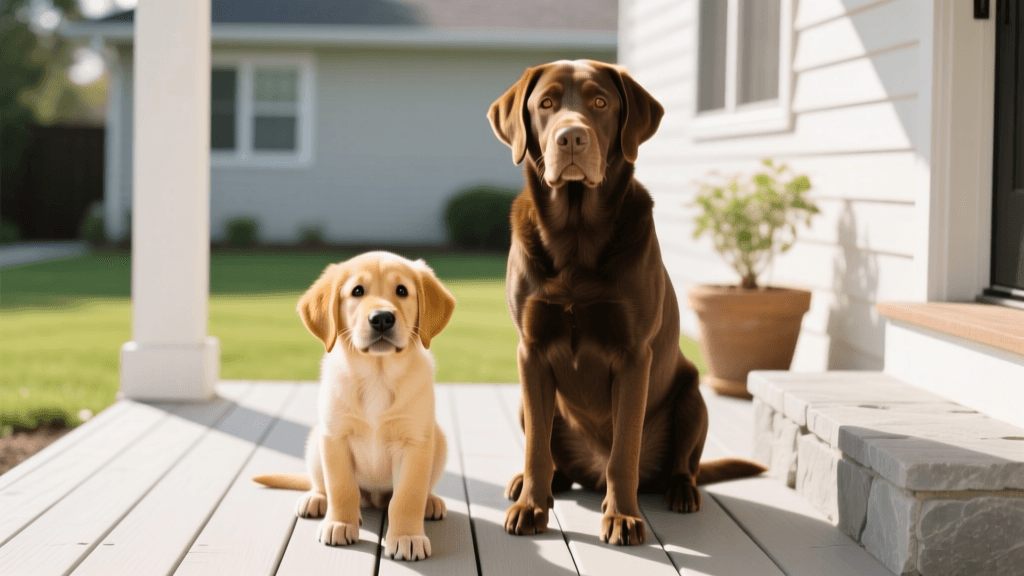
The First Big Decision: Puppy or Adult Dog?
Bringing a dog into your life is one of the most rewarding decisions you will ever make. However, for first-time owners, the sheer volume of choices can be overwhelming. Before you even begin looking at specific breeds or rescue profiles, you must answer one fundamental question: Should you get a puppy or adopt an adult dog?
Both options offer incredible joys, but they demand vastly different levels of time, financial investment, and emotional patience. There is no universally "correct" answer, but there is a right answer for your specific lifestyle. In this comprehensive guide, we will break down the realities of raising a puppy versus welcoming an adult dog, complete with cost comparisons, time commitments, and actionable advice to help you make the best choice for your household.
The Reality of Raising a Puppy
There is nothing quite like the charm of a floppy-eared, clumsy puppy. However, behind those adorable puppy-dog eyes lies a demanding developmental phase that will test your patience, your sleep schedule, and your carpets.
The Socialization Window and Training
Puppies go through a critical socialization period that typically closes around 14 to 16 weeks of age. During this window, they must be safely exposed to a wide variety of people, environments, sounds, and other animals to prevent future behavioral issues. According to the American Kennel Club (AKC), proper socialization is just as vital as early vaccinations. This means you will need to dedicate significant daily time to structured socialization outings and enroll in puppy kindergarten classes, which typically cost between $150 and $300 for a six-week course.
Potty Training and Teething
Puppies lack bladder control. A general rule of thumb for potty training is that a puppy can hold their bladder for one hour per month of age, plus one. This means an 8-week-old puppy needs to go outside every two to three hours, including throughout the night. You will also need to invest in high-quality enzymatic cleaners like Nature’s Miracle Advanced Stain and Odor Eliminator to completely break down uric acid crystals and prevent repeat accidents.
Furthermore, between 12 and 24 weeks, puppies lose their baby teeth. This teething phase results in an intense urge to chew. First-time owners must puppy-proof their homes by hiding electrical cords, securing baseboards, and providing appropriate alternatives like the KONG Puppy Teething Stick or frozen carrot sticks to soothe sore gums.
The Joys and Realities of Adopting an Adult Dog
An adult dog is generally considered to be between the ages of one and seven years old. Adopting an adult dog—whether from a local municipal shelter or a breed-specific rescue—is an incredibly fulfilling experience that is often highly recommended for first-time owners.
Established Personalities and Predictability
Unlike puppies, whose adult temperament and size can be a guessing game, adult dogs are largely a "what you see is what you get" proposition. You can evaluate their energy level, reactivity to cats or children, and leash manners before making a commitment. As noted by the Humane Society of the United States, adult dogs often bypass the destructive chewing and intense potty-training phases, allowing you to skip straight to the companionship and bonding.
The 3-3-3 Rule of Rescue Adjustment
When bringing an adult rescue dog home, first-time owners should follow the widely recognized "3-3-3 Rule" to manage expectations:
- 3 Days: The dog may feel overwhelmed, hide, refuse to eat, or test boundaries as they decompress from the shelter environment.
- 3 Weeks: The dog begins to settle in, learn your routine, and show their true personality (and potentially emerging behavioral quirks).
- 3 Months: The dog finally feels secure, builds trust, and recognizes your home as their permanent territory.
To ease this transition, consider using an Adaptil Calm On-the-Go Collar, which releases synthetic dog-appeasing pheromones to reduce stress, or provide a SmartPetLove Snuggle Puppy with a simulated heartbeat to comfort them during their first few nights in a new crate.
Head-to-Head Comparison: Puppy vs. Adult Dog
Use the table below to quickly compare the day-to-day realities of both options.
| Feature | Puppy (8 Weeks - 1 Year) | Adult Dog (1 - 7 Years) |
|---|---|---|
| Daily Time Commitment | High (Frequent potty breaks, training, socialization) | Moderate (Daily walks, mental enrichment, bonding) |
| Potty Training | Required (Expect accidents and nighttime wake-ups) | Usually house-trained (May need minor routine adjustments) |
| Destructive Behavior | High (Teething, boredom, separation anxiety) | Low to Moderate (Depends on individual history and exercise) |
| Training Level | Blank slate (Requires foundational obedience classes) | May know basic commands (Requires reinforcement and un-training bad habits) |
| Sleep Disruption | Severe for the first 2-3 months | Minimal (Usually sleep through the night immediately) |
The Financial Breakdown: First-Year Costs
First-time owners are often shocked by the true cost of dog ownership. While an adult dog is generally less expensive in the first year, puppies require a heavy upfront investment in veterinary care and training. According to data referenced by the ASPCA, routine annual care is just the baseline; the first year with a puppy includes significant setup costs.
Estimated First-Year Costs
- Puppy Initial Vet Care: $200 - $400 (Series of DHPP and Rabies vaccines, deworming, fecal tests).
- Spay/Neuter Surgery: $300 - $600 (Usually performed between 6 and 9 months of age).
- Puppy Training Classes: $150 - $300.
- Adult Dog Adoption Fee: $50 - $350 (Typically includes spay/neuter, microchip, and initial vaccines, saving you hundreds of dollars upfront).
- Essential Supplies (Both): $250 - $400 (Includes a 36-inch or 42-inch wire crate, stainless steel food bowls, a 6-foot leather or biothane leash, a martingale collar, and high-quality age-appropriate kibble).
Takeaway: Expect to spend $1,200 to $2,000 in a puppy's first year, compared to $600 to $1,000 for an adult dog's first year.
Matching the Dog to Your Daily Lifestyle
To make your final decision, audit your daily routine honestly.
Choose a Puppy If:
- You work from home or have a flexible schedule that allows you to return home every 2-3 hours for potty breaks.
- You have the patience to handle sleep deprivation, nipping, and repetitive training.
- You want to mold a dog's behavior from the ground up and are committed to attending weekly training classes.
- Your household is quiet, and you have the time to carefully manage a puppy's exposure to the world.
Choose an Adult Dog If:
- You work a standard 8-to-5 job outside the home (an adult dog can comfortably hold their bladder for 6-8 hours, whereas a puppy cannot).
- You live in an apartment or rental where strict noise and potty-training rules apply.
- You want a running or hiking companion immediately; puppies cannot safely run on hard surfaces until their growth plates close at 12-18 months.
- You have young children and want a dog with a proven, tolerant temperament rather than a puppy's sharp "needle" teeth.
Final Thoughts for the First-Time Owner
Whether you choose the chaotic charm of a puppy or the grateful companionship of an adult rescue, the key to success is preparation. First-time owners thrive when they set realistic expectations. If you choose a puppy, stock up on enzymatic cleaners, enroll in positive-reinforcement classes early, and puppy-proof your home. If you choose an adult dog, give them the grace of the 3-3-3 rule, establish a predictable routine, and invest in a comfortable crate to give them a safe sanctuary.
Ultimately, both paths lead to the same beautiful destination: a lifelong, unconditional bond with your new best friend. Take your time, evaluate your lifestyle honestly, and trust that the right dog will find its way to you.
aaron-whyte
All our authors care for dogs every day — read more of their work on the authors page.