Best Dog Breeds For First Time Owners
Learn about best dog breeds for first time owners with expert tips and data-backed advice.
What Makes a Breed Right for a First-Time Owner?
Bringing a dog into your home for the first time is one of the most rewarding decisions you can make — and one of the most consequential. The wrong match between owner and breed can lead to frustration, rehoming, and a dog that never quite thrives. The right match, on the other hand, creates a bond that lasts a decade or more. Before looking at specific breeds, it helps to understand what characteristics actually make a dog manageable for someone without prior experience.
Trainability, energy level, size, grooming demands, and temperament all play a role. A breed that scores well across most of these dimensions for a novice owner tends to be eager to please, tolerant of mistakes during training, adaptable to different living situations, and not prone to extreme anxiety or aggression. The American Kennel Club (AKC) recognises over 200 breeds, and while many are wonderful dogs, a significant number require experienced handling to reach their potential.
The Dogs Trust, the UK's largest dog welfare charity, reported in 2023 that approximately 47,000 dogs were handed into rescue centres across the UK in a single year — a figure that underscores how often mismatched expectations lead to dogs losing their homes. Choosing carefully from the start is the single most effective thing a new owner can do for their dog's long-term welfare.
Top Breeds Recommended for New Owners
The following breeds consistently appear on veterinary and kennel club recommended lists for first-time owners. Each has a distinct personality, but all share a reputation for being forgiving, sociable, and relatively straightforward to train.
Golden Retriever
The Golden Retriever is arguably the most iconic family dog in the English-speaking world, and for good reason. Bred originally in the Scottish Highlands in the mid-19th century as a gundog, the breed has evolved into one of the most versatile and gentle companions available. Goldens typically weigh between 25 and 34 kg and live for 10 to 12 years on average.
Their eagerness to please makes them highly responsive to positive reinforcement training. They are patient with children, generally good with other animals, and rarely show unprovoked aggression. The main demands they place on owners are exercise — at least 2 hours per day — and grooming, as their dense double coat sheds heavily twice a year. Monthly professional grooming costs typically run between £40 and £70 in the UK.
Labrador Retriever
The Labrador Retriever has held the top spot in the Kennel Club's breed registration rankings for over 30 consecutive years in the UK. In 2022, the Kennel Club registered 39,905 Labradors — more than any other breed. That popularity is not accidental. Labs are robust, adaptable, and have a temperament that tolerates the learning curve of a new owner with remarkable grace.
Available in black, yellow, and chocolate, Labradors weigh between 25 and 36 kg and are known for their food motivation, which makes reward-based training particularly effective. They do have a tendency toward obesity if overfed, so portion control is important from puppyhood. Hip and elbow dysplasia are the most common health concerns; reputable breeders will provide health screening certificates for both parents.
Cavalier King Charles Spaniel
For those living in smaller homes or apartments, the Cavalier King Charles Spaniel offers an excellent balance of affection and adaptability. Weighing just 5 to 8 kg, Cavaliers are gentle, quiet, and deeply attached to their owners. They require around 1 hour of exercise per day and are content to spend much of their time indoors.
The breed does carry a higher-than-average risk of mitral valve disease (MVD), a heart condition that affects a significant proportion of the breed by age 10. The Cavalier Health organisation and the Kennel Club both recommend that prospective buyers only purchase from breeders who follow the MVD Breeding Protocol, which requires heart-testing both parents before breeding.
Breed Comparison at a Glance
| Breed | Average Weight | Daily Exercise | Grooming Needs | Good with Children | Trainability |
|---|---|---|---|---|---|
| Golden Retriever | 25–34 kg | 2 hours | High | Excellent | Very High |
| Labrador Retriever | 25–36 kg | 2 hours | Moderate | Excellent | Very High |
| Cavalier King Charles Spaniel | 5–8 kg | 1 hour | Moderate | Excellent | High |
| Bichon Frise | 3–5 kg | 30–45 min | High | Very Good | High |
| Border Terrier | 5–7 kg | 1–2 hours | Low | Very Good | High |
The Real Cost of Dog Ownership
One of the most common reasons dogs are surrendered to rescue organisations is that owners underestimated the financial commitment involved. The PDSA Animal Wellbeing (PAW) Report 2023 estimated that the lifetime cost of owning a medium-sized dog in the UK ranges from £21,000 to £33,000, depending on health, lifestyle, and location. Breaking that down into annual figures makes the commitment clearer.
- Food: £400–£1,000 per year depending on breed size and food quality
- Veterinary care (routine): £200–£400 per year for vaccinations, flea/worm treatment, and annual health checks
- Pet insurance: £300–£800 per year for a medium breed; higher for breeds with known health conditions
- Grooming: £0–£800 per year depending on coat type and whether professional grooming is needed
- Training classes: £100–£300 for a puppy training course
- Equipment (one-off): £200–£500 for crate, bed, leads, collar, bowls, and toys
- Dog walking or daycare: £15–£25 per walk or £25–£40 per day if required
These figures do not account for unexpected veterinary costs. A single emergency surgery can cost between £1,500 and £5,000 or more. Pet insurance is not optional for most owners — it is a financial necessity. The British Veterinary Association (BVA) consistently recommends insuring dogs from the day they arrive home, before any conditions can be classified as pre-existing.
Adoption vs. Buying from a Breeder
Both routes to dog ownership are valid, and both come with distinct considerations. Rescue dogs are not second-best — many are young, healthy, and in rescue through no fault of their own. Organisations like Battersea Dogs & Cats Home in London, Dogs Trust centres across the UK, and the RSPCA rehome thousands of dogs each year, including puppies and pedigree breeds.
Adopting from a reputable rescue typically costs between £150 and £350, which usually includes neutering, microchipping, vaccinations, and an initial health check. Rescue organisations also conduct thorough assessments of each dog's temperament and will work to match you with a dog suited to your lifestyle and experience level.
"We assess every dog in our care to understand their individual needs, personality, and the type of home they'd thrive in. We're not just rehoming dogs — we're making matches that last." — Battersea Dogs & Cats Home, Rehoming Team
Buying from a breeder gives you more predictability in terms of size, temperament, and health history — provided you use a Kennel Club Assured Breeder or equivalent. In the UK, the Kennel Club's Assured Breeder Scheme requires breeders to meet specific standards around health testing, socialisation, and aftercare. Puppy prices for popular breeds range from £1,000 to £3,500 depending on lineage and demand.
Regardless of route, avoid purchasing from pet shops, online marketplaces without the ability to visit the puppy with its mother, or any seller who offers to deliver a puppy to your door. These are common indicators of puppy farming, which the Dogs Trust and RSPCA have campaigned extensively to eliminate.
Preparing Your Home Before the Dog Arrives
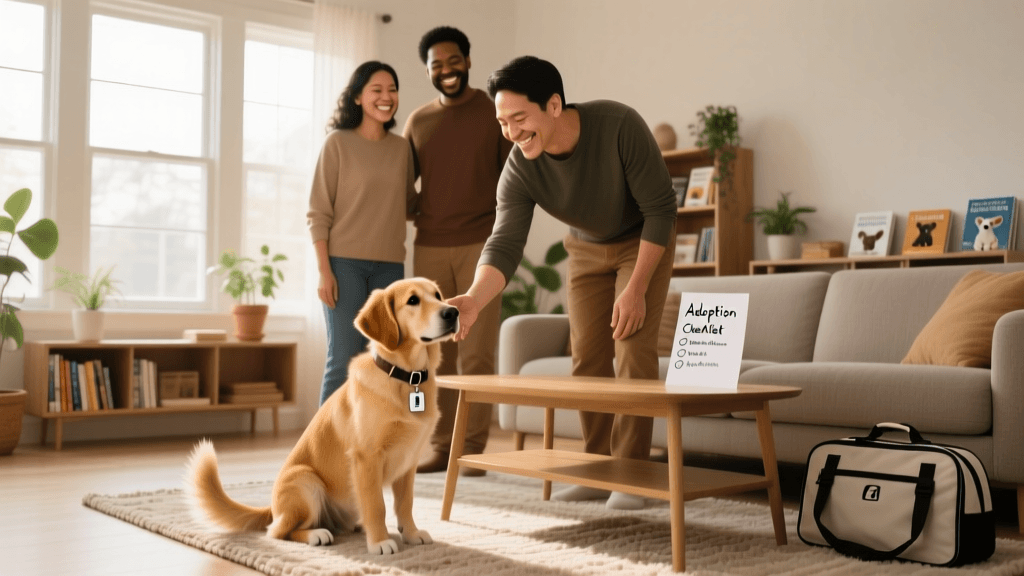
The weeks before a new dog arrives are as important as the first weeks after. A well-prepared home reduces stress for both the dog and the owner, and sets the foundation for good habits from day one.
Essential Equipment Checklist
- Appropriately sized crate with a comfortable bed or blanket inside
- Food and water bowls (stainless steel is easiest to clean and most hygienic)
- Collar with ID tag (legally required in the UK under the Control of Dogs Order 1992), harness, and lead
- Puppy or dog-appropriate food recommended by your vet or breeder
- Enzymatic cleaner for accidents
- A selection of toys including chew toys, tug toys, and puzzle feeders
- Puppy pads if house training a young dog
- Grooming tools appropriate to the breed's coat type
Veterinary Registration
Register with a local veterinary practice before your dog arrives, not after. Many practices have waiting lists for new patients, and you want to have a vet in place for the initial health check within the first 48 to 72 hours of bringing your dog home. This check is important for identifying any health issues early and for establishing a vaccination and parasite prevention schedule.
The Royal College of Veterinary Surgeons (RCVS) maintains a searchable register of all qualified vets and veterinary practices in the UK, which can be accessed through their website. When choosing a practice, consider proximity, out-of-hours emergency cover, and whether the practice has experience with your chosen breed.
Training From Day One
New owners sometimes delay formal training, assuming a puppy needs time to settle before learning begins. In reality, dogs — and puppies especially — are learning constantly from the moment they arrive. Every interaction either reinforces or undermines the behaviours you want to establish. Starting basic training immediately, using positive reinforcement methods, is the most effective approach supported by current canine behaviour science.
The Association of Pet Behaviour Counsellors (APBC) and the Kennel Club both recommend reward-based training over any method that relies on punishment or dominance. Short sessions of 5 to 10 minutes, several times a day, are more effective for puppies than longer, infrequent sessions. Focus first on name recognition, sit, stay, recall, and loose-lead walking — the five foundations that make daily life manageable.
Puppy socialisation classes, typically run by qualified trainers and available through veterinary practices and independent training schools, serve a dual purpose: they provide structured learning and expose puppies to other dogs and people during the critical socialisation window, which closes at around 12 to 16 weeks of age. Missing this window does not doom a dog, but it does make socialisation harder and more time-consuming later.
First-time owners who invest in professional training classes — even just a six-week puppy course — consistently report higher confidence in handling their dog and fewer behavioural problems in the first year. The cost is modest relative to the long-term benefit, and many trainers offer follow-up support between sessions.
Marcus Aldridge
All our authors care for dogs every day — read more of their work on the authors page.