2026 BAT Long Line & Harness Guide for Leash Reactive Dogs
Master leash reactivity in 2026 using Behavior Adjustment Training long lines and the Rabbitgoo harness. Actionable steps and gear reviews inside.
The Psychology of Leash Reactivity in 2026
Leash reactivity remains one of the most stressful challenges for dog owners, but our understanding of canine psychology has evolved dramatically. As of 2026, the veterinary and behavioral science communities have fully moved away from punitive, dominance-based corrections. Instead, modern protocols focus on emotional regulation, threshold management, and empowering the dog to make calm choices. Reactivity—whether manifested as lunging, barking, or freezing—is rarely about "aggression." In most cases, it is a distance-increasing behavior driven by fear, frustration, or anxiety.
When a dog spots a trigger (like another dog, a skateboard, or a delivery truck) while confined to a standard six-foot leash, their natural flight-or-fight response is activated. Because the leash restricts their ability to flee, they often default to a "fight" display to make the scary thing go away. According to the ASPCA, managing this behavior requires giving the dog enough space to feel safe while teaching them that they have control over their environment. This is exactly where Behavior Adjustment Training (BAT) excels.
Essential Gear for BAT 2.0: The 2026 Setup
Behavior Adjustment Training, developed by Grisha Stewart, relies heavily on the dog's ability to move freely and observe triggers from a safe distance. To facilitate this, you need equipment that provides safety without causing physical discomfort or restricting natural body language. Here is the optimal 2026 gear setup for managing leash reactivity.
The 2026 Rabbitgoo No-Pull Dog Harness
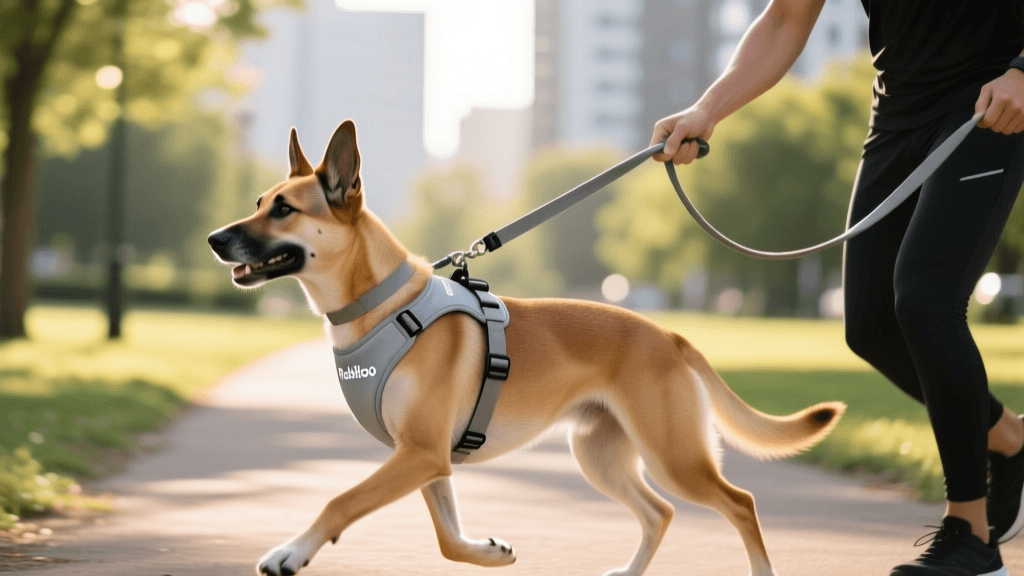
For reactive dogs, a front-clip harness is non-negotiable. The Rabbitgoo No-Pull Dog Harness (2026 Edition) has been updated with aerospace-grade aluminum D-rings and an ultra-breathable 3D air-mesh that prevents chafing during long summer decompression walks. Priced at approximately $28.99, it offers exceptional value.
- Front-Clip Mechanics: When the dog pulls, the front chest attachment gently redirects their momentum back toward you, preventing them from gaining the leverage needed to lunge.
- Escape-Proof Design: Reactive dogs often try to back out of harnesses when panicked. The 2026 Rabbitgoo features a martingale-style loop on the back, which tightens just enough to prevent escape without choking the dog.
- Body Language Visibility: The low-profile chest plate ensures your dog's shoulders remain free, allowing them to offer natural calming signals (like shoulder flicks or head turns) to other dogs.
The 15-Foot Biothane BAT Long Line
Standard retractable leashes are highly dangerous for reactive dogs due to thin cords that can snap, constant tension that keeps the dog in a state of arousal, and bulky handles that are hard to drop in an emergency. The modern standard for BAT is a 15-foot Biothane Long Line (typically 3/8-inch width for dogs under 60 lbs, and 1/2-inch for larger breeds). Expect to invest around $45.00 for a high-quality, handmade Biothane line.
Biothane is a coated webbing material that has completely revolutionized long-line handling in 2026. It is 100% waterproof, does not absorb mud or odors, and most importantly, it glides smoothly through your hands without causing friction burns when a reactive dog suddenly lunges.
Material Comparison: Choosing Your Long Line
Selecting the right long line material is critical for safety and handling ease. Below is a comparison of the most common materials available on the market today.
| Material | Handling & Glide | Weather Resistance | Durability & Maintenance | Best For |
|---|---|---|---|---|
| Biothane | Excellent; smooth glide | 100% Waterproof | Highly durable; wipe clean | BAT, reactive dogs, water |
| Nylon | Poor; causes friction burns | Absorbs water/odor | Fraying over time | Not recommended |
| Cotton | Good grip; can snag | Heavy when wet | Requires washing | Basic yard recall |
| Leather | Good grip; stiff initially | Warps in rain | Needs conditioning | Show rings, tracking |
Step-by-Step BAT Protocol for Street Reactivity
Using your Rabbitgoo harness and Biothane long line, you can begin implementing BAT 2.0. The core philosophy, as detailed by Ahimsa Dog Training, is to use "functional rewards"—specifically, the opportunity to move away from a trigger—as the primary reinforcement for calm behavior.
Step 1: Establish the Threshold
Before you begin, you must find your dog's threshold. This is the distance at which your dog notices the trigger (e.g., another dog) but remains under their stress threshold. At this distance, they can still eat treats, respond to their name, and exhibit relaxed body language. For some dogs, this is 20 feet; for others, it is 100 feet. Never force a dog to work above their threshold.
Step 2: Leash Handling and "Gathering"
Proper leash handling is what keeps you safe and the dog comfortable. Never wrap the long line around your wrist or hand. If a 70-pound reactive dog lunges, a wrapped leash can cause severe degloving injuries or broken bones. Instead, use the "gathering" technique:
- Hold the loop end of the Biothane line in your non-dominant hand.
- Use your dominant hand to pull the line through your non-dominant hand, gathering it in loose folds.
- If the dog moves toward the trigger, simply open your non-dominant hand to let the line slide smoothly, stepping backward to maintain a safe distance without jerking the dog's neck.
Step 3: Mark, Move, and Reward
When your dog looks at the trigger and then voluntarily looks away, sniffs the ground, or offers a calming signal, you "mark" the behavior. In BAT 2.0, you can use a gentle verbal cue like "Yes" or a soft click. Immediately after marking, encourage the dog to move away from the trigger. Moving away is the functional reward because it satisfies the dog's desire for increased distance. Once you have moved 10 to 15 feet away, offer a high-value treat (like freeze-dried liver or boiled chicken) to reinforce the decision.
"Reactivity is not a disobedience problem; it is an emotional regulation problem. Our job as handlers is to manage the environment so the dog can practice making calm choices." — Modern Canine Behavioral Science Consensus, 2026.
Managing Trigger Stacking and Cortisol Recovery
One of the most vital concepts for owners of reactive dogs to understand in 2026 is "trigger stacking" and the cortisol recovery cycle. When a dog experiences a reactive outburst, their body is flooded with stress hormones, including cortisol and adrenaline. It can take anywhere from 48 to 72 hours for a dog's cortisol levels to return to baseline after a single major reaction.
If your dog reacts to a mail carrier on Monday morning, and then you take them to a busy park on Monday evening, they are starting that second walk with an already elevated stress baseline. This is trigger stacking, and it makes reactivity exponentially worse.
The "Decompression Day" Protocol
After a reactive episode, implement a mandatory 48-hour decompression period. During this time:
- Skip the Neighborhood Walk: Avoid areas where you might encounter unpredictable triggers.
- Host "Sniffaris": Take your dog to a quiet, enclosed field or use a Sniffspot (a private dog park rental) on their 15-foot Biothane long line. Sniffing lowers a dog's heart rate and engages the parasympathetic nervous system.
- Mental Enrichment: Replace physical exercise with lick mats, frozen Kongs, and scent-work games indoors to drain their energy without raising their arousal levels.
Final Thoughts on Consistency
Rehabilitating a leash-reactive dog is a marathon, not a sprint. By upgrading to a front-clip harness like the 2026 Rabbitgoo and utilizing a 15-foot Biothane long line, you are giving your dog the physical freedom and safety they need to learn. Combine this gear with the empathy and structured distance-management of Behavior Adjustment Training, and you will see profound shifts in your dog's confidence. Remember to celebrate the micro-victories—a single glance away from a trigger is a massive neurological win for your dog. Stay patient, manage the environment, and prioritize your dog's emotional well-being above all else.
robin-maitland
All our authors care for dogs every day — read more of their work on the authors page.