Decoding Agility Dog Stress vs Arousal Signals in 2026
Learn to decode your dog's body language in agility. Discover the difference between high arousal and stress signals to improve your 2026 competition runs.
The Psychology of the Agility Ring: Arousal vs. Stress
Welcome to the 2026 agility season. Over the past few years, the world of canine sports has undergone a massive paradigm shift. We have moved away from the outdated notion that a 'good' agility dog is simply one that runs fast and jumps high. Today, top-tier handlers and veterinary behaviorists recognize that true competitive excellence is rooted in a deep understanding of canine psychology, body language, and emotional regulation. In the high-stakes environment of the agility ring, the line between optimal drive (arousal) and overwhelming distress (stress) is incredibly thin. Misinterpreting these states can lead to dropped bars, blown contacts, and, most importantly, a compromised human-canine bond.
To excel in 2026, handlers must become fluent in the subtle language of their dogs. The Yerkes-Dodson Law, a psychological principle detailing the relationship between arousal and performance, applies perfectly to our canine athletes. A dog with too little arousal may appear sluggish, distracted, or unmotivated. A dog with optimal arousal is focused, responsive, and in a state of 'flow.' However, when arousal tips over the edge into over-arousal or stress, cognitive function plummets. The dog's brain shifts from the thinking cortex to the reactive amygdala, resulting in frantic behavior, missed cues, and physical tension.
Key Body Language Signals: Decoding Your Dog in Real-Time
Understanding your dog requires observing the micro-signals they exhibit from the moment they leave the crate to the moment they cross the finish line. According to the American Kennel Club, recognizing subtle stress signals early is the key to preventing behavioral shutdowns or reactive outbursts in high-drive sports.
Signs of Optimal Arousal (The 'Flow' State)
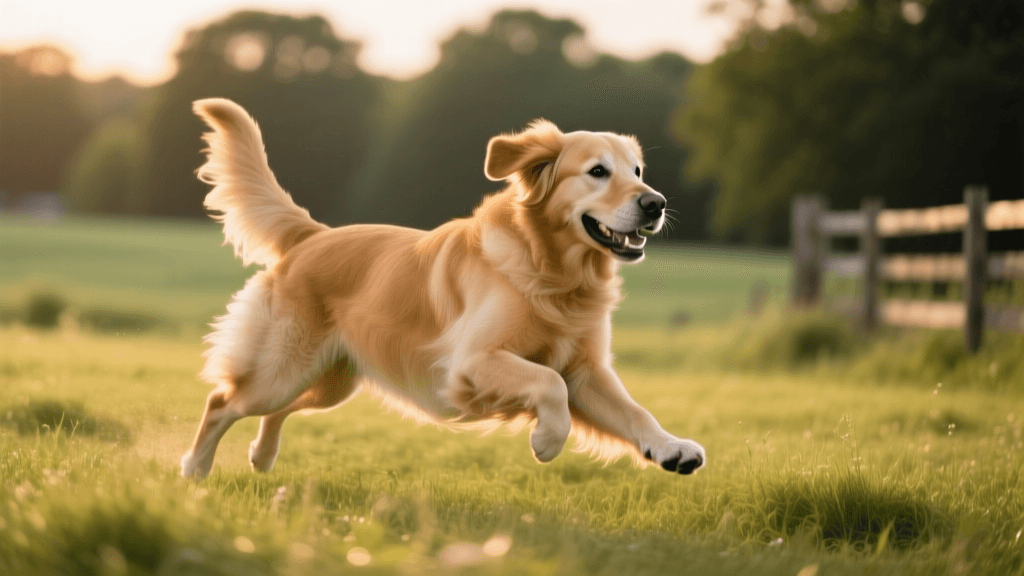
When your dog is in the optimal performance zone, their body language communicates readiness and willingness. Look for the following indicators on the start line and during the run:
- Soft, Bright Eyes: The dog maintains eye contact with the handler without a hard, fixed stare. The brow is relaxed.
- Forward, Mobile Ears: Ears are oriented toward the handler or the first obstacle, flicking back and forth as they process verbal and physical cues.
- Loose, Wiggly Body: The dog's spine is supple. They may offer a 'play bow' or a relaxed shake-off before stepping to the line.
- Responsive to Cues: The dog easily shifts weight or sits quietly when asked, demonstrating impulse control despite high energy.
- Closed, Relaxed Mouth: Or a soft, open panting that matches the ambient temperature and physical exertion, without tension in the commissures (corners of the lips).
Signs of Distress and Over-Arousal
Over-arousal and stress often look similar to the untrained eye—both involve high energy. However, stress is driven by cortisol and adrenaline, leading to a loss of impulse control. Veterinary behaviorists, such as those at Texas A&M College of Veterinary Medicine, emphasize that displacement behaviors are a dog's way of coping with conflicting emotions or environmental overwhelm.
- Whale Eye: The dog turns its head away but keeps its eyes fixed on the handler or obstacle, showing the whites of the eyes. This is a classic sign of anxiety.
- Frantic Barking or Spinning: Unlike rhythmic, excited barking, stress barking is often high-pitched, continuous, and accompanied by spinning or lunging at the end of the leash.
- Displacement Behaviors: Sudden, intense sniffing of the ground, scratching at the collar, or aggressive biting at the leash or handler's clothing.
- Pinned Ears and Tucked Tail: The dog's body becomes rigid, the tail drops below the topline, and the ears are pulled tightly back against the skull.
- Lip Licking and Yawning: When not related to food or fatigue, repetitive lip licking and exaggerated yawning are primary calming signals indicating internal stress.
2026 Agility Competition Data: How Stress Impacts Performance
The integration of biometric tracking collars in 2026 has revolutionized how we understand canine sports performance. Handlers now have access to real-time Heart Rate Variability (HRV) and recovery metrics, proving that emotional states directly correlate with fault rates on the course. The table below illustrates the stark contrast between a dog in optimal drive and one experiencing over-arousal or stress.
| Metric / Observation | Optimal Arousal (Drive) | Over-Arousal / Stress |
|---|---|---|
| Heart Rate Recovery (Post-Run) | Return to baseline in < 2 minutes | Takes > 5 minutes; erratic HRV |
| Course Fault Rate (2026 Data) | 12% average (minor errors) | 45% average (major errors/off-course) |
| Contact Criteria (e.g., 2-on/2-off) | 95% success rate | 30% success rate (blown contacts) |
| Start Line Stays | Rock solid, focused on lead-out | Breaking the stay, creeping, whining |
| Post-Run Behavior | Seeks handler, relaxed shake-off, toy play | Avoidance, frantic spinning, biting leash |
As highlighted in the AKC's guide to dog agility, building a foundation of trust and clear communication is far more valuable than raw speed. A dog that is stressed on the start line is already primed to fail the complex discrimination challenges found in modern Master and Elite courses.
Actionable Protocols: Managing Your Dog's Arousal State
Understanding the signals is only half the battle. As a handler, you must actively manage your dog's nervous system before, during, and after a run. Here are the most effective, science-backed protocols used by elite competitors in 2026.
1. Pre-Run Decompression and Crate Games
Do not pull your dog from a dark crate directly into a chaotic, noisy agility ring. Implement a 15-minute transition protocol. Start with 'Crate Games' to build impulse control and positive associations with confinement. Follow this with a decompression walk on a long line, allowing the dog to engage in sniffing. Sniffing lowers a dog's heart rate and engages the parasympathetic nervous system, bringing an over-aroused dog back to a baseline state of focus.
2. The 'Mat Work' Start Line Routine
Teach your dog to settle on a specific mat or towel while you walk the course. This creates a portable 'safe zone' in the chaotic warm-up area. When you approach the start line, use a structured routine: unclip the leash, cue your start line behavior (sit or down), and reward calmly. If your dog exhibits stress signals (whale eye, lip licking) on the line, abort the run. Walking away from the ring to play a low-stakes game of tug or scatter-feeding teaches the dog that their emotional state dictates the continuation of the game.
3. Post-Run Reward and Recovery
How you end the run dictates how the dog feels about the next one. If your dog blew a contact due to over-arousal, do not correct them at the end of the run; the learning window has closed. Instead, reward the effort with a high-value toy, then immediately transition to a decompression activity like chewing a lick mat or engaging in deep-pressure massage. Chewing and licking release endorphins that naturally soothe the canine nervous system.
The Handler's Role: Emotional Contagion in Dog Sports
Perhaps the most difficult pill for agility handlers to swallow is the concept of emotional contagion. Dogs are exquisitely attuned to human body language, heart rate, and pheromones. If you are anxious about qualifying, frustrated by a previous run, or tense on the start line, your dog will read these micro-signals and interpret the environment as unsafe. This triggers their stress response, regardless of their actual training level.
In 2026, sports psychologists working with canine athletes heavily emphasize handler mindfulness. Techniques such as box breathing (inhale for 4 seconds, hold for 4, exhale for 4, hold for 4) while walking to the start line can physically lower your own heart rate. Your dog will sense this physiological shift and mirror your calm, focused state. Remember, your dog does not care about the ribbon, the qualifying score, or the spectators. They care about the relationship and the clarity of your communication.
Conclusion: Prioritizing the Canine Mind
Agility is a beautiful, complex dance between two species. But it is our responsibility as humans to ensure our dogs are willing, happy partners in that dance. By learning to decode the subtle differences between optimal arousal and toxic stress, you protect your dog's mental health and unlock their true athletic potential. As you head into your next trial, look beyond the stopwatch. Watch the ears, the eyes, the tail, and the tension in the spine. Your dog is always talking to you; the key to a successful 2026 season is finally learning how to listen.
tom-renshaw
All our authors care for dogs every day — read more of their work on the authors page.