Decoding Dog Calming Signals: 7 Stress Cues To Watch In 2026
Learn to decode your dog's calming signals in 2026. Discover 7 vital stress cues, body language secrets, and actionable steps to reduce canine anxiety.
The Evolution of Canine Communication in 2026
As we navigate the increasingly dense urban environments and busy social landscapes of 2026, our dogs face more environmental stressors than ever before. From crowded apartment complexes to bustling off-leash parks, the modern dog must constantly process complex social and environmental data. While this year has brought us remarkable advancements in pet technology—from AI-driven home cameras that monitor vocalizations to biometric smart collars that track heart rate variability (HRV) and respiratory rates—technology still cannot replace the nuanced, split-second visual cues your dog uses to communicate. Understanding your dog requires looking beyond the data on your smartphone app and learning to read their physical language in real-time.
At the core of canine communication is a concept that remains as vital in 2026 as when it was first introduced to the mainstream: calming signals. Coined by Norwegian dog trainer and behaviorist Turid Rugaas, calming signals are a repertoire of subtle body language cues dogs use to de-escalate tension, self-soothe, and communicate peaceful intentions to other dogs and humans. According to resources from the American Veterinary Society of Animal Behavior (AVSAB), recognizing these early indicators of stress is the single most effective way to prevent behavioral escalation, reactivity, and chronic anxiety in companion dogs.
What Exactly Are Calming Signals?
Unlike aggressive displays (such as baring teeth or stiffening) or overt fear responses (like cowering or tucking the tail), calming signals are often incredibly subtle. They are the canine equivalent of a human taking a deep breath, holding up their hands in a peaceful gesture, or using a calming tone of voice during an argument. Dogs use these signals in two primary ways: to calm themselves down when they feel stressed, and to calm down the person, animal, or situation they are interacting with. When we miss or ignore these signals, we force our dogs to escalate to louder, more obvious behaviors like barking, lunging, or biting.
7 Essential Calming Signals Every Owner Must Recognize
1. Yawning (Out of Context)
While yawning is naturally associated with waking up or feeling tired, a stress yawn occurs in completely different contexts. If your dog yawns when a stranger approaches, when you are reprimanding them, or while sitting in a bustling veterinary waiting room, they are not sleepy. They are experiencing a spike in cortisol and are using the yawn to self-soothe and signal to the perceived threat that they mean no harm. In 2026, veterinary behaviorists emphasize that forcing a yawning dog into a stressful interaction is a primary trigger for fear-based reactivity.
2. Lip Licking and Nose Flicking
Often referred to as a 'nose flick,' this signal involves a quick, darting movement of the tongue over the nose or lips. It happens so fast that it is easily missed by untrained eyes. Dogs exhibit this behavior when they feel uncomfortable, confused, or mildly threatened. For example, if you lean over your dog to pet them and they rapidly flick their tongue, they are politely asking for more personal space. The Fear Free Pets initiative frequently highlights lip licking as a primary indicator of handling stress during grooming and medical exams.
3. Turning the Head or Body Away
In human culture, turning away is often seen as rude or dismissive. In canine culture, it is the ultimate sign of politeness and de-escalation. Direct, sustained eye contact is considered a challenge or a threat among dogs. If your dog turns their head away from you, another dog, or a camera, they are actively trying to lower the emotional temperature of the interaction. If a dog turns their entire body away, they are signaling a strong desire to disengage from the current situation entirely.
4. The Displacement Sniff
Have you ever called your dog, only for them to suddenly become fascinated by a completely uninteresting patch of grass? Or perhaps you are walking toward another dog, and your dog abruptly drops their nose to the pavement. This is a displacement behavior known as the calming sniff. By breaking eye contact and focusing on the ground, the dog is signaling peaceful intentions and attempting to avoid a direct, confrontational encounter. Punishing a dog for 'ignoring' you during a displacement sniff severely damages trust and increases anxiety.
5. Slow Movements and Freezing
Predators move quickly and directly; peaceful foragers move slowly. When a dog feels threatened by an approaching person or animal, they may deliberately slow their movements to a crawl or freeze entirely. This is an attempt to appear non-threatening and avoid triggering the prey drive or aggression of the approaching entity. If you call your dog in a harsh tone and they walk back to you in extreme slow motion, they are not being stubborn; they are using a calming signal to appease your perceived anger.
6. Curving the Approach Path
Walking in a straight line directly toward another dog is considered highly confrontational in canine body language. Polite, well-socialized dogs will naturally curve their approach, walking in an arc to greet others. In our modern, leash-restricted urban environments of 2026, dogs are often forced into head-on, straight-line greetings on narrow sidewalks, which naturally triggers leash reactivity. Allowing your dog to approach new stimuli in a curve is a fundamental aspect of respectful canine communication.
7. Play Bows as Pacifiers
The classic 'play bow'—front elbows on the ground, rear end in the air—is universally recognized as an invitation to play. However, dogs also use this posture as a pacifying signal to de-escalate tension. If a dog is being approached by an overly enthusiastic or slightly aggressive dog, they may drop into a play bow to communicate, 'I am friendly, please do not hurt me.' Misinterpreting this as a desire to play can lead to disastrous off-leash interactions.
Signal vs. Escalation: A 2026 Response Guide
Understanding the signal is only half the battle; knowing how to respond is where true advocacy for your dog begins. Below is a structured guide to help you translate your dog's calming signals into immediate, supportive action.
| Calming Signal | Dog's Internal State | Incorrect Human Reaction | Correct 2026 Response |
|---|---|---|---|
| Yawning / Lip Licking | Mild to moderate anxiety; feeling pressured | Continuing to hug, restrain, or force interaction | Release physical pressure, step back, and offer a treat scatter |
| Turning Head Away | Discomfort with direct eye contact or proximity | Forcing the dog to look at you or the trigger | Avert your own gaze, turn your shoulder to the dog, give space |
| Displacement Sniffing | Attempting to avoid confrontation; feeling awkward | Yanking the leash or repeating commands loudly | Allow the sniff, wait for the dog to disengage voluntarily |
| Curving / Slow Movement | De-escalating a perceived threat; showing polite intent | Pulling the dog into a straight, head-on greeting | Use a long line to allow natural arcing paths and slow approaches |
Actionable Steps: How to Respond and De-escalate
To truly support your dog's emotional well-being in 2026, you must integrate your understanding of calming signals into your daily routines. Here are three highly effective, actionable strategies recommended by modern behaviorists:
1. Ditch the Short Leash for Decompression Walks
Standard 4-to-6-foot leashes force dogs into the straight-line, head-on approaches that trigger stress. Invest in a 15-to-30-foot biothane long line. When walking in open areas, allow your dog to use their natural curving approaches and engage in displacement sniffing without feeling the tension of a short leash. This simple gear swap dramatically reduces leash reactivity by allowing the dog to communicate politely with the environment.
2. Practice the 'Shoulder Check' and Curve
When greeting your dog, especially after returning home or when they are resting, do not loom over them with direct eye contact. Instead, approach in a slight curve, turn your body sideways, and offer your shoulder or hip. This mimics polite canine greeting rituals and immediately lowers the dog's heart rate. As noted by resources from The Humane Society of the United States, respecting a dog's physical boundaries and greeting preferences is crucial for preventing handling sensitivities.
3. Implement Snuffle Mats and Scatter Feeding
When you notice your dog exhibiting rapid lip licking or yawning in a stressful environment (like a busy patio or a vet clinic), immediately initiate a calming activity. Tossing a handful of high-value treats into the grass or onto a portable snuffle mat encourages the dog to drop their head and sniff. Sniffing is a naturally self-soothing behavior that lowers the canine pulse rate and redirects their brain from the amygdala (fear center) to the olfactory cortex.
The Role of Modern Tech vs. Visual Observation
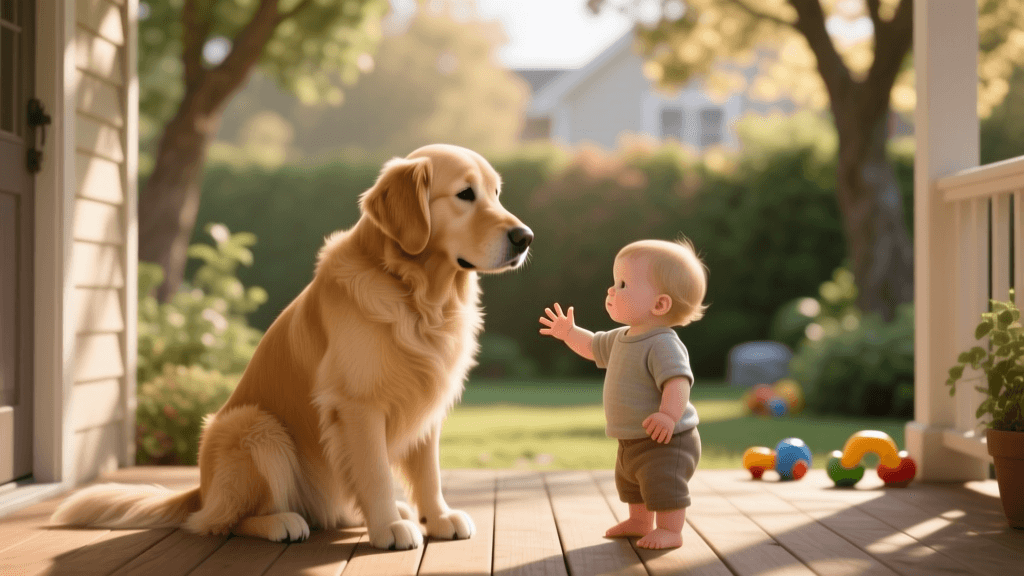
While the smart collars and AI behavioral monitors of 2026 are fantastic tools for tracking long-term trends in your dog's sleep quality and baseline anxiety, they cannot replace your eyes. A smart collar might alert you that your dog's heart rate spiked, but it cannot tell you that the spike was caused by a toddler rushing at them while they were desperately trying to signal peace through a play bow and a head turn. Technology is a supplement, not a substitute, for empathetic observation.
Conclusion
Decoding your dog's calming signals is the ultimate act of cross-species empathy. By learning to recognize yawning, lip licking, curving, and displacement sniffing, you transition from being a mere owner to a true advocate. In the fast-paced world of 2026, giving your dog the space to communicate their stress—and honoring that communication—is the foundation of a lifelong, trusting bond.
beth-carrasco
All our authors care for dogs every day — read more of their work on the authors page.