2026 Azawakh Recall Training: Master Sighthound Obedience
Discover expert 2026 Azawakh recall training and socialization techniques. Master sighthound obedience with specialized gear and positive reinforcement.
Understanding the Exotic Azawakh: A Unique Training Paradigm
The Azawakh is a striking, exotic sighthound originating from the Sahel region of West Africa, specifically Mali, Niger, and Burkina Faso. Bred for centuries by the Tuareg people to guard camps and hunt fast-moving desert prey, this breed possesses a temperament that is fiercely independent, deeply aloof with strangers, and driven by an intense visual prey drive. As of 2026, the Azawakh remains one of the rarest and most fascinating international breeds in the Western world, but their unique psychological makeup makes standard obedience training largely ineffective.
Unlike traditional gundogs or herding breeds that were selectively bred for biddability and a desire to please their handlers, the Azawakh operates on a partnership model. They do not obey simply because you asked them to; they obey because they respect you and see value in the interaction. According to the American Kennel Club's Azawakh Breed Profile, these dogs are deeply bonded to their families but can be highly reserved with outsiders. This means that training an Azawakh, particularly when it comes to off-leash recall and urban socialization, requires a highly specialized, patience-driven approach that honors their primitive instincts while ensuring their safety in modern environments.
The Psychology of the Sighthound Recall
When an Azawakh spots a fleeing squirrel, rabbit, or even a plastic bag blowing across a park, their brain undergoes a chemical shift. The predatory motor sequence—eye, stalk, chase, grab, kill—is triggered. In that moment, their auditory processing essentially shuts down. Calling an Azawakh who is already in full pursuit is a futile exercise that only serves to teach the dog that your recall cue is meaningless. Therefore, the 2026 consensus among veterinary behaviorists is that recall training for sighthounds must focus entirely on prevention, engagement, and impulse control before the chase sequence begins.
Essential 2026 Gear for Azawakh Training
Because Azawakhs are incredibly fast (capable of reaching 40 mph in seconds) and possess a deep chest and narrow neck, standard walking gear is often unsafe or ineffective. Investing in the right equipment is non-negotiable for this breed. Below is a comparison of the most effective training tools recommended by sighthound specialists this year.
| Training Tool | Specifications | 2026 Estimated Cost | Primary Use Case |
|---|---|---|---|
| Biothane Long Line | 15-meter length, 10mm width, waterproof | $65 - $85 | Safe outdoor recall proofing without drag friction |
| Fi Series 4 GPS Collar | Escape-proof martingale design, cellular tracking | $149 + subscription | Off-leash security in fully enclosed, designated areas |
| Ruffwear Treat Trader | Magnetic closure, silicone inner liner | $45 | High-speed reward delivery for split-second recalls |
| Freeze-Dried Camel Milk | Single-ingredient, high-value, novel protein | $28 per bag | Premium motivation for aloof, low-food-drive dogs |
| Y-Shaped Harness | Padded, non-restrictive shoulder movement | $70 - $95 | Safe tethering on long lines to prevent neck injury |
The 90-Day Azawakh Recall Conditioning Protocol
Building a reliable recall with an exotic sighthound is not a weekend project. It requires a structured, 90-day conditioning protocol that rewires the dog's emotional response to your recall cue. The Humane Society's Guide to Recall Training emphasizes the importance of high-value rewards and never punishing a dog when they return, a rule that is doubly critical for the sensitive Azawakh.
Phase 1: Indoor Engagement and Name Recognition (Days 1-30)
Before you ever attempt a recall outdoors, your Azawakh must view you as the most rewarding element in their environment. Begin in a low-distraction indoor space. Equip your Treat Trader pouch with novel, high-value rewards like freeze-dried camel milk or venison lung.
- The Name Game: Say your dog's name exactly once. The moment they make eye contact, mark the behavior with a clicker or a verbal 'Yes!' and deliver a high-value treat within one second.
- Restrained Recalls: Have a partner gently hold your Azawakh's harness. Walk away, turn around, and enthusiastically call their name followed by your recall cue (e.g., 'Azouk, Come!'). The partner releases the dog, and you reward heavily when they arrive.
- Timing: Keep sessions to 5 minutes, twice a day. Azawakhs bore easily with repetitive drills.
Phase 2: The 15-Meter Biothane Long Line (Days 31-60)
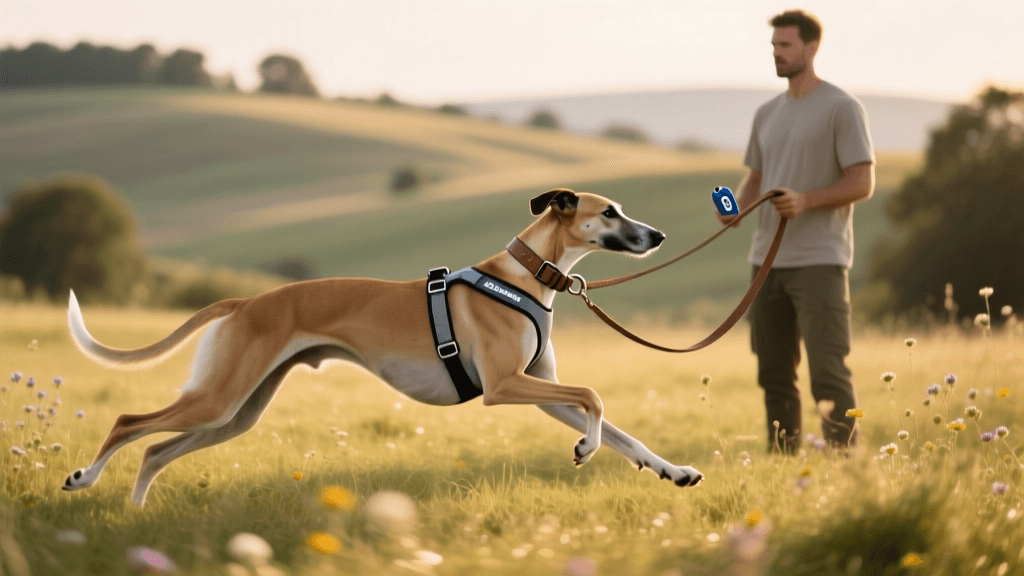
Transition to a secure, fenced outdoor area or an empty tennis court. Attach the 15-meter Biothane long line to a well-fitted Y-shaped harness. Biothane is essential here; unlike nylon or cotton, it does not absorb water, mud, or sand, and it glides through grass without creating friction burns on your hands or the dog's legs.
- The Check-In Reward: Allow your Azawakh to explore the end of the line. Whenever they voluntarily turn their head to look at you, immediately mark and toss a treat toward them. You are rewarding them for 'checking in' without you even asking.
- Interrupting the Stalk: If your dog spots a bird or squirrel and begins to stiffen (the 'eye' phase of the prey sequence), do not yell. Use a gentle 'smooch' sound or a kiss noise to break their visual lock. When they look back at you, cue the recall and reward massively.
- Never Reel Them In: The long line is a safety net, not a fishing reel. If your Azawakh ignores your recall cue, do not pull them in. Instead, walk calmly toward them, gently secure their harness, and reset the exercise. Pulling them in teaches them that coming to you is a forced, negative experience.
Phase 3: Environmental Proofing and Premack (Days 61-90)
The Premack Principle states that a high-probability behavior (chasing a scent) can be used to reinforce a low-probability behavior (coming when called). In a secure, enclosed sighthound run, practice calling your Azawakh away from a low-level distraction. When they return to you, reward them not just with food, but by releasing them with a 'Go Sniff!' or 'Go Play!' cue. This teaches the dog that returning to you does not mean the end of their fun; it is simply a pit stop before more freedom.
Socializing an Aloof Guardian: The 'Look At That' Game
Socialization for the Azawakh is vastly different from socialization for a Labrador Retriever. The goal is neutrality, not friendliness. Forcing an Azawakh to interact with strangers or unfamiliar dogs will trigger their defensive guarding instincts and erode their trust in you. In 2026, force-free behaviorists strongly advocate for the 'Look At That' (LAT) protocol for primitive guardian breeds.
When walking your Azawakh and a stranger or strange dog approaches, stop at a distance where your dog notices the trigger but remains under their reactivity threshold (usually 30 to 50 feet for this breed). The moment your Azawakh looks at the trigger, click or say 'Yes,' and feed a treat. You are teaching the dog that seeing a stranger predicts a reward from you, effectively changing their emotional response from suspicion to positive anticipation. Over weeks of practice, you will gradually decrease the distance, building a dog that can calmly ignore the chaos of the modern world without feeling the need to guard against it.
Common Mistakes to Avoid with Exotic Sighthounds
'The greatest mistake owners make with primitive breeds is assuming that a dog who obeys in the living room will obey in the park. For the Azawakh, the environment dictates the behavior. You must proof every single cue in ten different environments before you can trust them off-leash.' — 2026 International Sighthound Symposium Keynote.
- Using Aversive Collars: Shock collars or prong collars are highly contraindicated for Azawakhs. Their pain tolerance when in a prey drive state is incredibly high, meaning a shock will not stop a chase. Worse, if the shock hits them while they are looking at a stranger, they will associate the pain with the stranger, leading to severe fear-based aggression.
- Over-Facing the Dog: Taking an Azawakh puppy to a crowded farmer's market or a busy dog park is a recipe for trauma. Their nervous systems are easily overwhelmed by chaotic, loud environments. Socialization must be slow, deliberate, and heavily controlled.
- Repeating the Cue: If you say 'Come, come, come, come,' you are teaching the dog that the word 'come' is just background noise. Say it once. If they do not respond, use your long line to manage the situation and reassess your training criteria.
Conclusion: Patience and Partnership
Training an Azawakh is a profound journey into the mind of a primitive, ancient survivor. They will never offer you the robotic, unquestioning obedience of a border collie, but what they offer instead is far more rewarding: a deep, mutual partnership built on trust, respect, and shared understanding. By utilizing modern 2026 training methodologies, investing in specialized sighthound gear, and honoring their unique psychological needs, you can cultivate a safe, reliable, and profoundly bonded relationship with one of the world's most magnificent exotic breeds.
anouk-beaumont
All our authors care for dogs every day — read more of their work on the authors page.