Adaptive Training for Dogs With Osteoarthritis: 2026 Guide
Discover how to safely modify obedience training for dogs with osteoarthritis in 2026. Learn low-impact exercises and joint-friendly commands.
The Intersection of Osteoarthritis Treatment and Training in 2026
Canine osteoarthritis (OA) is a progressive, degenerative joint disease that affects a significant portion of the aging dog population, as well as younger dogs with orthopedic injuries or genetic predispositions. As of 2026, veterinary consensus has shifted dramatically away from simply prescribing rest and painkillers. Today, comprehensive canine osteoarthritis treatment heavily incorporates adapted physical therapy, mental conditioning, and modified obedience training. Training a dog with OA is not about achieving perfect competition-level heel work; it is about maintaining muscle mass, preserving joint mobility, and providing essential mental stimulation without exacerbating joint inflammation.
When a dog experiences chronic joint pain, traditional obedience training often breaks down. A dog that suddenly refuses to perform a rapid 'sit' or a brisk 'recall' is rarely being stubborn; they are communicating physical discomfort. The World Small Animal Veterinary Association (WSAVA) Global Pain Council emphasizes that chronic pain management requires multimodal approaches, including environmental modifications and adapted physical rehabilitation. By adjusting our training expectations and techniques, we can turn daily training sessions into a vital component of our dog's osteoarthritis treatment plan.
Setting Up a Joint-Friendly Training Environment
Before introducing any new commands or rehabilitation exercises, you must optimize your training environment. Dogs with osteoarthritis lack the stabilizing muscle strength to compensate for slippery surfaces. Training on hardwood, tile, or laminate floors can cause micro-slips that lead to acute pain flare-ups and further joint degradation.
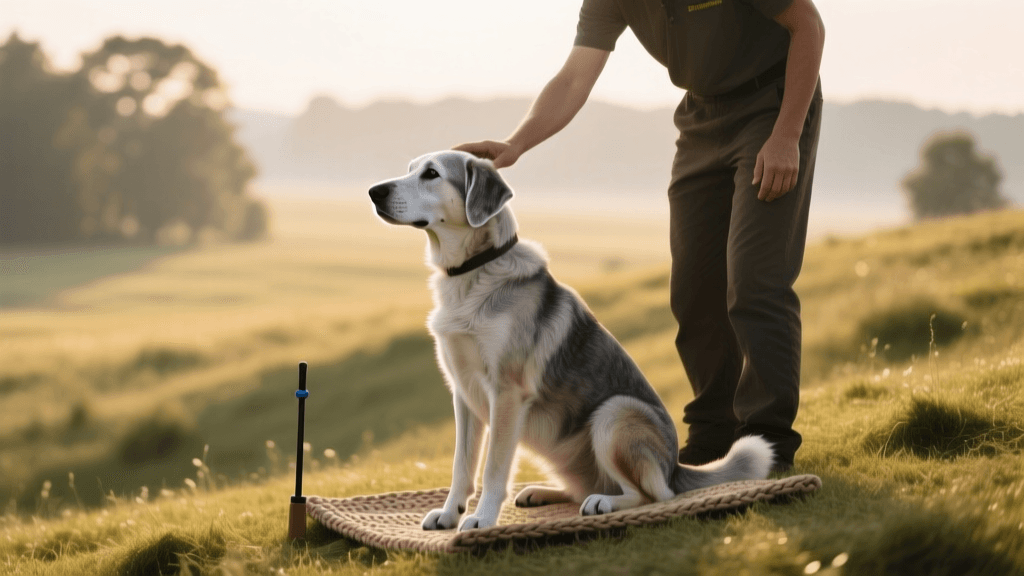
- Orthopedic Traction Mats: Invest in high-density EVA foam interlocking mats or specialized rubber-backed yoga mats for your training area. These provide the necessary grip for your dog to plant their paws securely during weight-bearing exercises.
- Elevated Treat Stations: Constantly bending down to take treats from your hand or the floor puts immense strain on the cervical spine and shoulder joints of large breed dogs. Use a wall-mounted or adjustable treat station positioned at your dog's natural chest height to encourage a neutral spine posture during reward delivery.
- Ramps and Steps: Eliminate the need for jumping on or off furniture during training sessions. Use low-incline, high-traction ramps to allow your dog to access elevated grooming or training tables safely.
Modifying Core Obedience Commands for Arthritic Dogs
Standard obedience commands often require sudden braking, sharp pivoting, or deep joint flexion—all of which are detrimental to arthritic joints. Below is a comparison of traditional training methods versus the 2026 OA-adaptive modifications recommended by veterinary behaviorists and rehabilitation therapists.
| Command | Traditional Method | OA-Adaptive Modification (2026) |
|---|---|---|
| Sit | Rapid drop into a deep, tucked sit on a flat surface. | Use a slightly elevated, firm cushion to reduce the angle of hip flexion. Allow a 'sloppy' or side-sit to relieve lumbar pressure. |
| Down | Luring from a sit into a sphinx-like down on a hard floor. | Teach a 'Settle' on a thick orthopedic memory foam bed. Allow the dog to drop from a standing position rather than a sit to bypass hip strain. |
| Recall (Come) | Running at full speed and performing a front-position sit. | Recall to a stationary target mat at a walking pace. Eliminate the abrupt stop and sit upon arrival. |
| Heel | Tight left-side positioning with frequent 90-degree pivots. | Loose-leash walking in a wide, sweeping arc. Avoid sharp turns that torque the stifle (knee) and hock joints. |
According to the American College of Veterinary Surgeons (ACVS), controlled, low-impact movement is essential for maintaining the muscle mass that supports degenerating joints. By modifying these commands, you ensure your dog remains mentally engaged and physically active without subjecting their cartilage to destructive shear forces.
Low-Impact Rehabilitation Training Exercises
Incorporating specific canine rehabilitation exercises into your daily training routine is one of the most effective ways to manage osteoarthritis. These exercises focus on proprioception, core strength, and active range of motion (AROM).
1. Cavaletti Pole Training
Cavaletti poles are low obstacles placed on the ground that encourage a dog to lift their legs higher than normal, promoting joint flexion and extension without high-impact loading. For a dog with OA, the poles should be set at approximately 10% of the dog's shoulder height. Space the poles so that the dog takes one normal step between each pole. Walk your dog through the poles on a short leash at a slow, deliberate pace. This exercise strengthens the core and improves awareness of foot placement, which is crucial for dogs whose proprioception has declined due to chronic pain.
2. Cookie Stretches (Spinal Flexibility)
Using high-value, soft treats (such as freeze-dried salmon or commercial senior dog training pastes), lure your dog's nose toward their shoulder, then down toward their hip, and finally toward their toes while they are in a standing position. This encourages lateral spinal flexion and stretches the paraspinal muscles. Perform 3 to 5 repetitions on each side. This exercise is excellent for dogs with concurrent spinal osteoarthritis or spondylosis.
3. Weight-Shifting and Balance Work
Have your dog stand squarely on a non-slip surface. Gently place your hands on their hips and apply slow, mild pressure to shift their weight forward onto their front limbs, hold for three seconds, and release. Repeat by shifting their weight backward. This isometric exercise strengthens the stabilizing muscles around the shoulders and hips without requiring the joints to move through a range of motion, making it ideal for dogs experiencing severe acute flare-ups.
Mental Stimulation as a Primary OA Treatment
One of the most challenging aspects of canine osteoarthritis treatment is managing the dog's energy levels. A dog that can no longer go on five-mile hikes will quickly become bored, frustrated, and potentially destructive. In 2026, veterinary behaviorists heavily advocate for cognitive training to replace physical exhaustion. Mental fatigue is just as effective as physical fatigue in promoting restful sleep and reducing anxiety.
Replace high-impact fetch sessions with scent work training. Hide treats in a snuffle mat, inside cardboard boxes, or scattered in tall grass in your yard. Nose work engages the dog's primary sense and requires intense concentration, burning significant mental energy while keeping physical movement to a slow, controlled walk. Puzzle toys that require the dog to use their paws and nose to extract food are also excellent tools, provided the toy is stabilized on a non-slip mat so the dog does not have to chase it across the floor.
Recognizing Pain Signals During Training Sessions
Dogs are stoic creatures and have evolved to mask signs of weakness. The American Kennel Club (AKC) notes that subtle behavioral changes are often the first indicators of worsening osteoarthritis. As a handler, you must become an expert in reading canine micro-expressions to ensure your training sessions remain therapeutic rather than harmful.
Stop the training session immediately if you observe any of the following signs:
- Whale Eye: Showing the whites of the eyes while keeping the head pointed forward, indicating stress or discomfort.
- Excessive Lip Licking or Yawning: Common displacement behaviors that signal physical distress or anxiety when not related to food or tiredness.
- Reluctance or Hesitation: If your dog pauses, looks away, or sniffs the ground when asked to perform a previously known command, they are likely experiencing a pain spike.
- Trembling: Muscle shaking in the hindquarters or forelimbs during a 'stand' or 'stay' command indicates muscle fatigue and joint instability.
Structuring Your 2026 Training Sessions
For dogs with osteoarthritis, the duration and frequency of training sessions are just as important as the exercises themselves. Abandon the traditional 15-to-20-minute training blocks. Instead, utilize 'micro-sessions' lasting no more than 3 to 5 minutes, spread out three or four times throughout the day. This prevents the accumulation of lactic acid and joint inflammation that occurs with prolonged activity. Always conclude a session on a positive note with a low-impact reward, such as a gentle chest massage or a few minutes of quiet bonding on their orthopedic bed.
Conclusion
Canine osteoarthritis treatment in 2026 is a holistic endeavor that extends far beyond the veterinary clinic. By adapting your obedience training, incorporating low-impact rehabilitation exercises, and prioritizing mental enrichment, you can significantly improve your dog's quality of life. Training should never be a source of pain; with the right modifications, it becomes a powerful tool for maintaining mobility, confidence, and the unbreakable bond between you and your senior companion.
anouk-beaumont
All our authors care for dogs every day — read more of their work on the authors page.