Assessing Shelter Dog Behavior: A Behaviorist Guide
Learn how to evaluate shelter dog behavior with expert tips. Discover red flags, green lights, and testing methods for a successful adoption.
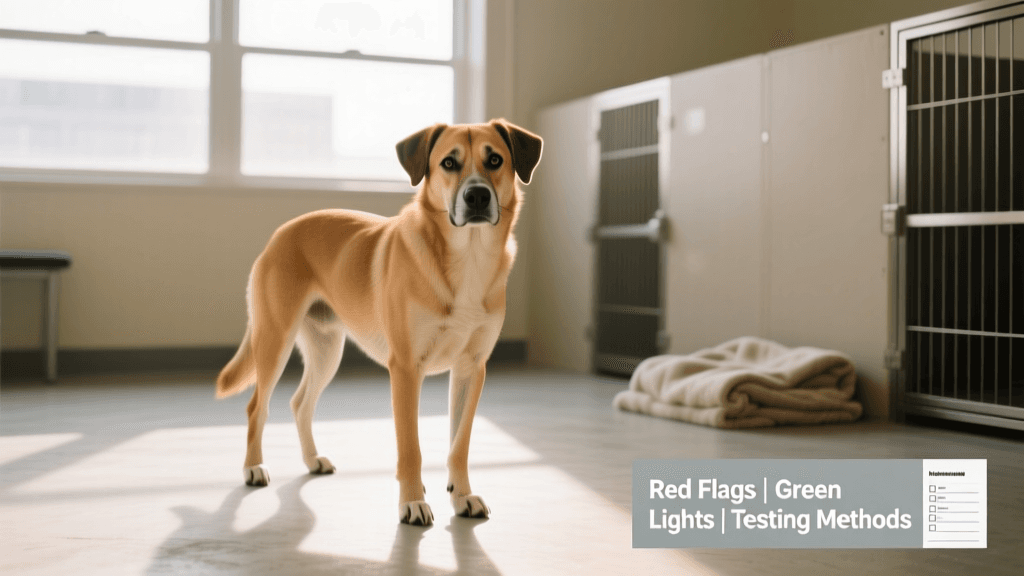
Adopting a rescue dog is one of the most rewarding experiences a person can have, but it also comes with unique behavioral challenges. When you walk through the concrete corridors of an animal shelter, you are not seeing the dog’s true personality. Instead, you are witnessing a complex mix of stress responses, survival instincts, and environmental reactivity. As an expert in canine behavior analysis, I frequently see well-meaning adopters make choices based on a dog’s behavior in a highly artificial, high-stress environment. To ensure a successful, lifelong match, you must look past the kennel front and apply a structured, scientific approach to behavioral assessment.
Understanding Kennel Stress and Barrier Frustration
The shelter environment is a sensory overload for dogs. The echoing barks, unfamiliar scents, lack of sleep, and confinement lead to chronically elevated cortisol levels. According to the Best Friends Animal Society, this chronic stress can manifest in two primary ways: hyper-arousal (pacing, lunging, barking, spinning) or learned helplessness (shutting down, freezing, facing the back of the kennel).
One of the most misunderstood behaviors in a shelter is barrier frustration. A dog that lunges, snarls, and throws its body weight against the kennel door or leash is often labeled as "aggressive." However, from a behaviorist's perspective, this is frequently a displacement behavior driven by over-arousal and a desperate desire to investigate or escape, rather than a genuine intent to cause harm. Conversely, a dog that is completely shut down and limp might be labeled as "chill" or "low energy," when in reality, they are experiencing severe fear and will likely exhibit defensive behaviors once they decompress in a home environment. To uncover the truth, we must remove the dog from the stressor and conduct a systematic evaluation.
The Behaviorist’s Meet-and-Greet Protocol
Do not schedule your meet-and-greet on a busy Saturday afternoon. The optimal time for a behavioral assessment is during off-peak hours, typically Tuesday through Thursday between 10:00 AM and 12:00 PM, when the shelter is quietest. Plan to spend at least 45 to 60 minutes with the dog. Here is the three-phase protocol I use to assess shelter dogs.
Phase 1: The Decompression Walk (15-20 Minutes)
Before attempting any training or handling, the dog must burn off initial adrenaline. Take the dog to a quiet, low-traffic grassy area. Use a long line or a standard 6-foot leash—never a retractable leash, as the constant tension mimics leash reactivity. Allow the dog to engage in "sniffari" behavior. Sniffing naturally lowers a dog's heart rate and engages their parasympathetic nervous system. Observe their gait and posture once the initial excitement fades. Do they check in with you? Do they have a loose, wiggly body, or are they rigid and scanning the horizon for threats?
Phase 2: The Handling and Sensitivity Test
Once the dog is calm, begin the handling assessment. This is crucial for predicting how the dog will react to grooming, veterinary care, and children. Start with low-stakes touch: pet the chest and shoulders. Gradually move to higher-stakes areas: the paws, the ears, the tail base, and the muzzle. Watch for micro-expressions of stress. If you touch a dog's paw and they exhibit "whale eye" (showing the whites of their eyes), lip licking, or a sudden freeze, you have identified a sensitivity trigger. Note whether the dog communicates discomfort through gentle avoidance (green light for an experienced owner willing to do desensitization training) or through hard stares, growling, or snapping (red light for a novice home).
Phase 3: Resource Guarding and Arousal Evaluation
Resource guarding is a natural survival behavior in a shelter where food and toys are scarce. To test this, offer the dog a high-value item, such as a stuffed KONG. Allow them to engage with it for two minutes. Then, approach calmly and offer a trade: an even higher-value treat, like boiled chicken or freeze-dried liver. If the dog willingly drops the item to take the food, their guarding risk is low. If they stiffen, hover over the item, or snap at the air, they possess a high propensity for resource guarding. This does not make the dog "bad," but it requires a highly structured management plan and professional behavior modification post-adoption.
Decoding Canine Body Language: Indicators Table
Understanding the subtle language of dogs is the cornerstone of behavioral analysis. The ASPCA emphasizes that recognizing early stress signals can prevent bites and behavioral deterioration. Use the following chart to decode the dog's emotional state during your assessment:
| Behavioral Cue | Physical Manifestation | Behaviorist Interpretation | Assessment Action |
|---|---|---|---|
| Appeasement Signals | Lip licking, yawning, blinking, lowered ears | Mild stress or an active attempt to diffuse social tension | Stop current handling; give the dog space and time to reset. |
| Displacement Behaviors | Sudden scratching, intense ground sniffing, shaking off | Internal conflict, frustration, or anxiety overload | Change the environment; the current task exceeds the dog's threshold. |
| Barrier Frustration | Lunging, barking, spinning on leash | Over-arousal and lack of impulse control, not necessarily aggression | Use pattern games or scatter feeding to lower arousal and test focus. |
| Learned Helplessness | Shutting down, freezing, avoiding all eye contact, limp body | Severe stress response; the dog has given up trying to cope | End the session immediately; this dog needs a quiet foster environment to decompress. |
Essential Assessment Toolkit
To conduct a professional-grade behavioral assessment, you need the right tools. Relying on the shelter’s frayed slip leads and generic kibble will yield inaccurate results. Invest approximately $30 to $50 in the following toolkit before your adoption appointment:
- Mendota Slip Lead (6-foot, 1/2-inch thickness): Costs around $15. The braided nylon provides excellent tactile feedback without the bulk of a standard clip collar, allowing you to feel subtle shifts in the dog's tension.
- Zuke’s Mini Naturals (Peanut Butter or Salmon): Costs around $6. These are low-calorie (under 3 calories each), high-value treats that allow for rapid reinforcement during the decompression walk without overfeeding.
- KONG Classic (Red, Medium): Costs around $12. Stuff it with wet food or peanut butter prior to your visit. This is your primary tool for testing resource guarding and measuring the dog's food motivation.
- Adaptil Calm On-The-Go Collar or Spray: Costs around $20. Applying a synthetic dog-appeasing pheromone to your clothing or the testing area can help artificially lower the dog's environmental anxiety, giving you a clearer picture of their baseline temperament.
Post-Adoption: The 3-3-3 Rule of Decompression
Even with the most rigorous behavioral assessment, the dog you meet at the shelter is not the dog you will have in three months. The Humane Society of the United States and rescue organizations widely advocate for the 3-3-3 Rule of Decompression to set realistic expectations for new owners.
The First 3 Days: The dog will likely be overwhelmed, scared, and unsure of their surroundings. They may not eat, may hide, or may test boundaries. Keep the environment incredibly quiet, restrict access to the whole house, and focus entirely on building trust.
The First 3 Weeks: The dog begins to settle in, learning your routine and figuring out that they are safe. This is when minor behavioral quirks and mild resource guarding may first appear as their true personality starts to emerge from beneath the shelter stress.
The First 3 Months: The dog finally feels at home. A bond of trust is established, and you are now seeing their true, unmasked temperament. This is the appropriate time to begin formal obedience training and address any lingering behavioral modifications.
By approaching the adoption process through the lens of expert behavior analysis, you move beyond emotional impulse and make an informed, compassionate decision. You are not just adopting a dog; you are adopting a specific set of behavioral needs, and with the right assessment tools, you can ensure your home is the perfect environment for them to thrive.
hannah-wickes
All our authors care for dogs every day — read more of their work on the authors page.