Best Puppy Crates and Playpens: A New Owner Buyer's Guide
Discover the best puppy crates, playpens, and gates for new dog owners. Compare top-rated containment gear, sizing tips, and costs for a safe home.
Why Proper Containment is Crucial for New Puppies
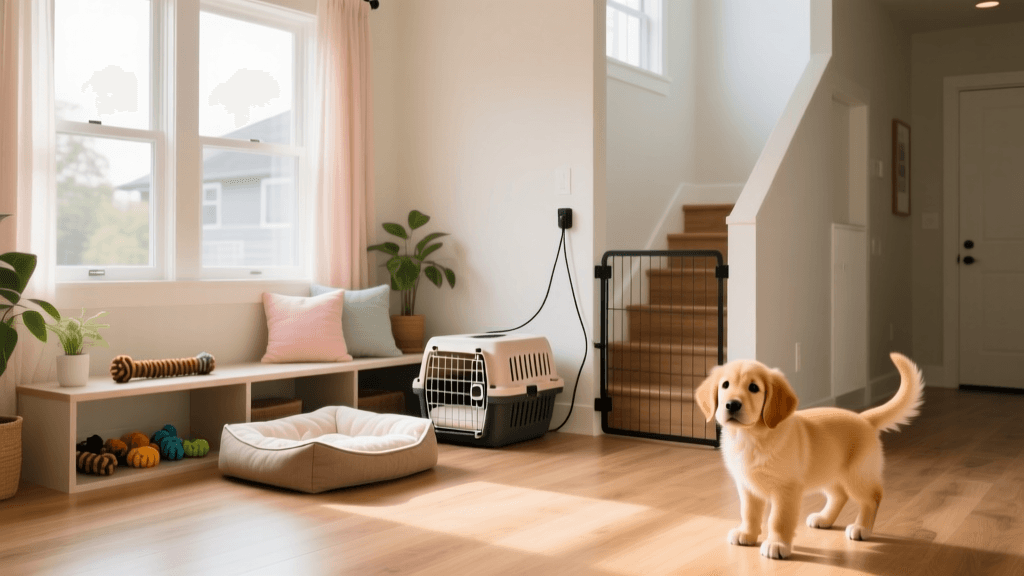
Bringing a new puppy or rescue dog home is one of life's greatest joys, but it also comes with the immediate responsibility of keeping them safe. Puppies explore the world with their mouths, and an unsupervised dog can quickly ingest toxic substances, chew through electrical cords, or destroy cherished furniture. According to the Humane Society of the United States, proper containment through crate training is not about punishment; it is about providing a secure, den-like sanctuary where your dog can relax while preventing household accidents. When you are preparing your home for a new arrival, investing in high-quality containment gear is non-negotiable. This comprehensive buyer's guide will walk you through the best crates, playpens, and gates on the market, helping you make informed decisions based on your puppy's size, breed, and behavioral needs.
How to Choose the Right Crate: Sizing and Materials
Before diving into specific product reviews, it is essential to understand how to measure your dog for a crate. A properly sized crate should allow your dog to stand up without crouching, turn around comfortably, and lie down stretched out. If the crate is too large, puppies may use one corner as a bathroom and the other for sleeping, which undermines house training. To manage this, always purchase a crate that includes an adjustable divider panel, allowing the space to grow with your puppy.
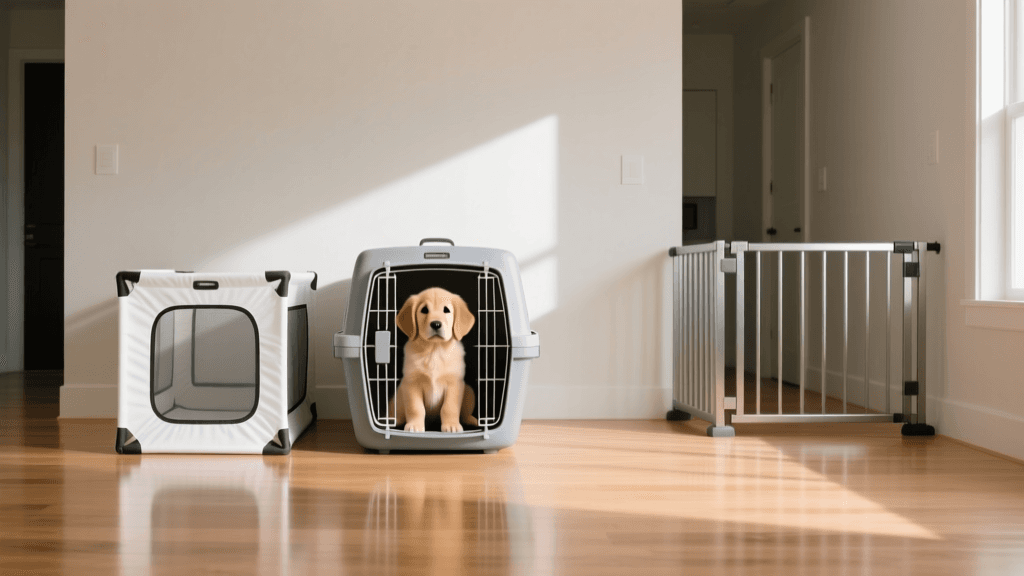
Crates generally fall into three categories: wire, plastic, and soft-sided. Wire crates offer maximum ventilation and visibility, making them ideal for warm climates and dogs that like to observe their surroundings. Plastic crates provide a more enclosed, den-like environment, which is excellent for anxious dogs and mandatory for airline cargo travel. Soft-sided crates are lightweight and portable but should only be used for fully house-trained, non-destructive dogs during supervised travel or lounging.
Puppy Crate Sizing Chart
| Estimated Adult Weight | Recommended Crate Length | Common Breed Examples |
|---|---|---|
| 1 - 10 lbs | 18 - 22 inches | Chihuahua, Pomeranian, Toy Poodle |
| 11 - 25 lbs | 24 inches | Beagle, French Bulldog, Corgi |
| 26 - 40 lbs | 30 inches | Spaniels, Terriers, Miniature Schnauzer |
| 41 - 70 lbs | 36 inches | Border Collie, Bulldog, Standard Poodle |
| 71 - 90 lbs | 42 inches | Labrador Retriever, Golden Retriever, Boxer |
| 90+ lbs | 48 inches | Great Dane, Mastiff, Saint Bernard |
Top Rated Puppy Crates Reviewed
1. Best Overall Wire Crate: MidWest Homes for Pets iCrate
The MidWest iCrate is widely considered the gold standard for wire crates, offering an unbeatable combination of durability, safety features, and affordability. Constructed from heavy-duty steel wire with a sleek, electro-coated black finish, this crate is designed to withstand the teething phase of a rambunctious puppy. It features rounded corners to protect your floors and your pet's paws, alongside dual slide-bolt latches on each door to prevent clever escape artists from pushing their way out.
Key Features:
- Includes a free adjustable divider panel for growing puppies.
- Features a leak-proof, easy-to-clean plastic pan.
- Folds flat for easy transport and storage without requiring tools.
- Available in single and double-door configurations.
Cost: Typically ranges from $45 to $90 depending on the size. The 36-inch double-door model, ideal for medium breeds, usually retails around $65.
2. Best Plastic Crate for Travel and Den-Lovers: Petmate Sky Kennel
If you plan to fly with your puppy in cargo, or if your dog simply prefers a darker, more enclosed sleeping space, the Petmate Sky Kennel is an exceptional choice. Made from heavy-duty, eco-friendly plastic, this crate provides a secure vault-like environment. It features a wire mesh ventilation system on the sides and back, ensuring adequate airflow while maintaining a cozy interior. The vault door with dual extruded metal locking pins is incredibly secure, giving you peace of mind when your dog is in transit.
Key Features:
- Meets most airline cargo travel specifications (always verify with your specific airline).
- Includes 'Live Animal' stickers, ID stickers, and clip-on food and water bowls.
- Heavy-duty plastic shell is easy to wipe down and sanitize.
Cost: Ranges from $50 for smaller sizes up to $130 for the extra-large 48-inch model.
3. Best Soft Crate for Supervised Lounging: EliteField 3-Door Folding Soft Crate
For older puppies who have outgrown their destructive chewing phase, or for owners who need a lightweight containment option for hotel stays and outdoor events, the EliteField Soft Crate is a top contender. The frame is made of strong steel tubing, while the body consists of breathable mesh and durable nylon fabric. It features three mesh doors (top, front, and side) for versatile access and excellent ventilation.
Important Caveat: Soft crates should never be used for unsupervised crate training or for puppies prone to chewing, as they can easily unzip or scratch their way out. According to veterinary behaviorists at VCA Hospitals, the crate must be a safe, indestructible space during the initial training phases to prevent injury and escape.
Cost: Approximately $40 to $70, making it a highly affordable secondary crate for travel.
Playpens and Exercise Pens: Giving Them Room to Roam
While crates are essential for sleeping and short-term confinement, puppies also need a larger, safe area to play, eat, and use puppy pads when you are busy but still need them contained. This is where exercise playpens come into play. Setting up a 'puppy zone' in your living room or kitchen allows your dog to be part of the family action without having full run of the house.
Best Modular Playpen: IRIS USA Exercise Playpen
The IRIS USA Playpen is a favorite among new dog owners due to its modular, snap-together design. Unlike traditional metal wire pens that can scratch hardwood floors and are difficult to reconfigure, the IRIS pen is made of durable, lightweight plastic panels. You can easily add or remove panels to create a custom shape that fits your room's layout. The panels feature interlocking mechanisms that are secure enough to keep small to medium puppies contained, and the base can be paired with IRIS training pads for easy cleanup.
Pros: Floor-friendly, highly customizable, easy to assemble, and visually appealing in modern homes.
Cons: Not suitable for large, aggressive chewers or powerful breeds who might knock over the lightweight panels.
Cost: A standard 4-panel, 24-inch tall pen costs around $45, while larger 8-panel configurations or taller 34-inch versions range from $70 to $110.
Baby Gates and Freestanding Barriers
To protect specific rooms, block off staircases, or create doorless barriers, a high-quality pet gate is a mandatory addition to your puppy starter kit. Gates allow you to practice the 'open door policy' of house training, letting your puppy roam a designated safe zone while keeping them out of carpeted bedrooms or dangerous areas like the kitchen.
Best Pressure-Mounted Gate: Carlson Pet Products Design Studio Walk-Thru Gate
The Carlson Walk-Thru Gate is a staple in the pet care industry. It utilizes a pressure-mount system, meaning no drilling or hardware is required, making it perfect for renters. The gate expands to fit doorways and hallways between 29 and 39 inches wide. A standout feature for dog owners is the built-in small pet door, which allows cats or tiny puppies to pass through while keeping medium and large dogs restricted.
Pros: Tool-free installation, includes a walk-through door for humans, features a secondary pet door, and is made of chew-proof steel.
Cons: The pressure mount may leave marks on delicate baseboards, and the step-over bar at the bottom can be a tripping hazard for humans.
Cost: Very budget-friendly, typically retailing between $35 and $45.
Puppy Containment Comparison Chart
| Product Type | Top Pick | Best For | Estimated Cost |
|---|---|---|---|
| Wire Crate | MidWest iCrate | Everyday training, visibility, growing puppies | $45 - $90 |
| Plastic Crate | Petmate Sky Kennel | Airline travel, anxious dogs, den lovers | $50 - $130 |
| Soft Crate | EliteField 3-Door | Supervised travel, hotel stays, fully trained dogs | $40 - $70 |
| Playpen | IRIS USA Playpen | Puppy zones, pad training, safe play areas | $45 - $110 |
| Pet Gate | Carlson Walk-Thru | Blocking stairs, restricting room access, renters | $35 - $45 |
Expert Tips for Crate Training Your New Dog
Buying the right equipment is only half the battle; teaching your puppy to love their crate is the other. The Humane Society of the United States emphasizes that a crate should never be used as a time-out or punishment zone. Instead, it should be associated with positive experiences, meals, and high-value treats.
'When introduced properly, a crate becomes a dog's personal sanctuary. Start by leaving the door open and tossing treats inside. Feed your puppy their meals in the crate with the door open, gradually closing it for short periods while you remain in the room.' - Canine Behavioral Experts
Furthermore, veterinary professionals at VCA Hospitals recommend adhering to strict time limits. A general rule of thumb for bladder control is that a puppy can hold it for one hour per month of age, up to a maximum. Therefore, a three-month-old puppy should not be crated for more than three to four hours at a time during the day. Over-crating can lead to severe anxiety, muscle atrophy, and a breakdown of the house-training process. Always ensure your puppy receives adequate physical exercise and mental enrichment before being placed in their crate for a nap.
Final Thoughts on Preparing Your Home
Preparing your home for a new dog requires foresight, patience, and the right tools. By investing in a high-quality wire crate like the MidWest iCrate for foundational training, a versatile IRIS playpen for supervised play, and a reliable Carlson gate to manage your home's layout, you are setting both yourself and your new furry friend up for success. Remember that containment gear is an investment in your dog's safety and your peace of mind. Take the time to measure your space, consider your dog's adult size, and introduce all new equipment with patience and positive reinforcement. Welcome to the incredible journey of dog ownership!
priya-sutaria
All our authors care for dogs every day — read more of their work on the authors page.