Senior Dog Trick Training: Top Joint Supplements 2026
Discover how to teach low-impact tricks to senior dogs in 2026. We review the best joint supplements to support mobility, focus, and pain-free training.
The Intersection of Cognitive Training and Joint Health in Senior Dogs
As we navigate 2026, veterinary advancements and improved nutrition mean our canine companions are living longer, more vibrant lives than ever before. However, this extended longevity brings an increased prevalence of age-related conditions, most notably canine osteoarthritis and degenerative joint disease. For dog owners and professional trainers, this presents a unique challenge: how do you continue to provide essential mental stimulation and behavioral conditioning for a dog whose physical mobility is declining?
Mental stimulation through trick training is not just a fun party trick; it is a critical component of preventing Canine Cognitive Dysfunction Syndrome (CCDS). Engaging an aging dog’s brain helps maintain neural pathways, reduces anxiety, and strengthens the human-animal bond. Yet, traditional training methods that involve repetitive sitting, lying down, or jumping can exacerbate joint pain and lead to training aversion. According to the American Kennel Club, osteoarthritis affects a significant percentage of senior dogs, often manifesting as a reluctance to perform previously learned commands. To bridge the gap between cognitive enrichment and physical comfort, integrating premium joint supplements into your dog’s daily routine is essential. By managing inflammation and supporting cartilage health, you can unlock your senior dog’s ability to learn new, low-impact tricks pain-free.
Evaluating the Best Joint Supplements for Training Readiness in 2026
The canine supplement market has evolved significantly by 2026. We have moved beyond basic glucosamine and chondroitin formulations to include advanced bioactive compounds like Undenatured Type II Collagen (UC-II), Green Lipped Mussel extract, and specialized Omega-3 fatty acids (EPA/DHA). When selecting a joint supplement to support a training regimen, the goal is to reduce systemic inflammation so the dog remains comfortable during 5-to-10-minute learning sessions.
Below is a comparison of the top three joint supplements recommended by veterinary orthopedic specialists for active and aging learners this year.
| Brand (2026 Formulation) | Key Active Ingredients | Best Training Scenario | Est. Monthly Cost |
|---|---|---|---|
| Nutramax Dasuquin Advanced | UC-II Collagen, Boswellia Serrata, Glucosamine HCl | High-drive seniors needing rapid inflammation reduction for focus | $65 - $80 |
| Cosequin DS Plus MSM | Glucosamine, Chondroitin Sulfate, MSM | Mild stiffness during basic obedience refreshers and targeting | $40 - $55 |
| Zesty Paws Mobility Bites | New Zealand Green Lipped Mussel, OptiMSM, Turmeric | Dogs requiring high-value, palatable treat-based motivation | $30 - $45 |
Pro-Tip for Trainers: If your dog is highly food-motivated, the Zesty Paws Mobility Bites serve a dual purpose. They act as both a daily joint health supplement and a high-value training reward, streamlining your session prep while ensuring your dog receives their required dosage of Green Lipped Mussel, which is rich in natural glycosaminoglycans.
Recognizing Micro-Expressions of Pain During Training
Before introducing new tricks, it is vital to understand how joint pain manifests behaviorally. The American College of Veterinary Surgeons notes that dogs are stoic animals and will often hide chronic pain until it becomes severe. During a training session, a dog experiencing joint discomfort may not whine or limp. Instead, look for micro-expressions and behavioral shifts:
- Breaks in Eye Contact: A dog in pain will frequently look away or lick their lips when asked to hold a position.
- Slower Latency: Taking longer than usual to process and execute a known command, such as a “sit” or “down.”
- Shifting Weight: Subtly moving weight from one front paw to another while in a stationary stance.
- Anticipatory Anxiety: Pacing or refusing to engage with the treat pouch before the session even begins.
If you observe these signs, cease the physical demands immediately, administer a prescribed or approved joint supplement protocol, and pivot to strictly zero-movement cognitive games.
Step-by-Step Low-Impact Tricks for Arthritic Dogs
To keep your senior dog mentally sharp without stressing their hips, shoulders, or spine, focus on tricks that can be performed from a comfortable, supported position (such as lying on an orthopedic mat or sitting on a raised cot). Here are three highly effective, low-impact tricks to teach in 2026.
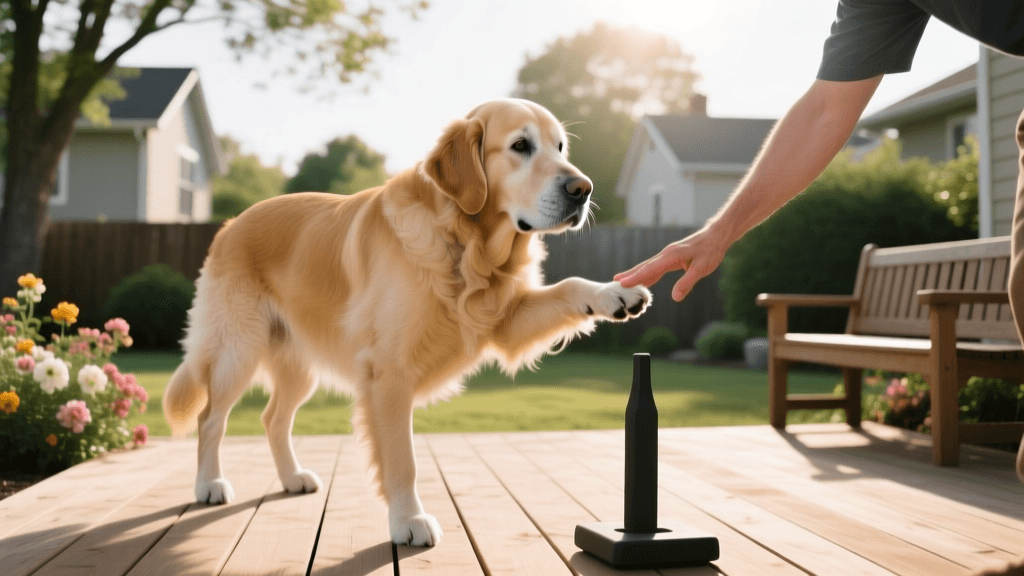
1. The “Target” Command (Nose-to-Hand Touch)
Targeting is a foundational behavioral conditioning tool that builds confidence and focus without requiring the dog to move their hindquarters.
- Step 1: Sit comfortably on the floor or a low chair near your dog’s orthopedic bed. Hold out your flat palm about two inches from their nose.
- Step 2: The moment your dog sniffs or touches your palm with their nose, use a clicker or a verbal marker (“Yes!”) and reward with a soft, easily chewable treat.
- Step 3: Gradually move your hand slightly to the left, right, up, and down, forcing the dog to stretch their neck and engage their core without standing up.
- Step 4: Add the verbal cue “Touch” right before presenting your hand.
2. “Speak” and “Quiet” (Vocalization Control)
Vocalization tricks are entirely stationary and provide excellent mental fatigue, which is ideal for senior dogs with limited mobility.
- Step 1: Identify a trigger that naturally causes your dog to bark or “boof” (e.g., knocking on the wall, holding a favorite toy just out of reach).
- Step 2: Trigger the vocalization, mark it with a “Yes!”, and reward. Repeat until the dog offers the bark readily.
- Step 3: Introduce the “Speak” hand signal (opening and closing your fingers like a duck’s beak).
- Step 4: To teach “Quiet,” ask for a “Speak,” then immediately hold a high-value treat (like a dab of dog-safe peanut butter) to their nose. The dog will stop barking to sniff. Mark the silence with “Quiet” and reward.
3. “Chin Rest” (Stationary Focus and Impulse Control)
The chin rest is a beautiful trick that promotes calmness and is highly therapeutic for dogs with anxiety or chronic pain.
- Step 1: While your dog is lying comfortably on their bed, hold your hand or a small towel flat on the ground just below their snout.
- Step 2: Lure their head downward with a treat until their chin rests on your hand/towel. Mark and reward.
- Step 3: Fade the lure, waiting for the dog to offer the chin drop voluntarily to earn the reward.
- Step 4: Gradually increase the duration of the rest, building up to 30 seconds of sustained, relaxed eye contact. This trick is excellent for veterinary prep and grooming desensitization.
Timing Supplements with Training Sessions
The efficacy of joint supplements is heavily dependent on consistent daily administration and proper timing. In 2026, veterinary nutritionists emphasize that fat-soluble ingredients (like Omega-3s and certain vitamin complexes found in advanced joint chews) must be administered with a meal containing healthy fats for optimal absorption.
For training purposes, avoid scheduling intense learning sessions immediately after a large meal or supplement dose, as digestion requires energy and can make a senior dog lethargic. Instead, administer the joint supplement with breakfast, and schedule your 5-minute trick training sessions for mid-morning or late afternoon when the dog’s joints have had time to “warm up” through normal household movement and the anti-inflammatory compounds are actively circulating in their system.
Safety, Regulation, and Veterinary Guidelines
While joint supplements are widely available over the counter, they are not a replacement for veterinary diagnosis and prescription pain management. The U.S. Food and Drug Administration (FDA) reminds pet owners that animal supplements are regulated differently than pharmaceutical drugs, meaning quality control can vary between brands. Always look for products that carry the National Animal Supplement Council (NASC) Quality Seal, which ensures the manufacturer adheres to strict labeling and safety standards.
Before beginning any new behavioral conditioning program or introducing a joint supplement, consult your primary care veterinarian. They can perform baseline orthopedic exams and blood panels to ensure your dog’s liver and kidneys are healthy enough to process daily supplements. By combining cutting-edge 2026 joint health nutrition with compassionate, low-impact trick training, you can ensure your senior dog’s golden years are filled with joy, mental sharpness, and a deep, rewarding connection with you.
anouk-beaumont
All our authors care for dogs every day — read more of their work on the authors page.