Expert Behavior Analysis: Curing Canine Resource Guarding
Discover expert behavior analysis techniques to cure canine resource guarding. Learn actionable desensitization protocols, timing, and management.
Understanding Resource Guarding Through Applied Behavior Analysis
Resource guarding is one of the most misunderstood behaviors in canine ownership. Often mislabeled as 'dominance' or 'stubbornness,' resource guarding is, from the perspective of Applied Behavior Analysis (ABA), a highly functional and naturally reinforcing behavior. When a dog guards a high-value item—such as a Kong Classic stuffed with peanut butter, a raw bone, or even a stolen sock—they are attempting to maintain control over a valued resource. According to VCA Animal Hospitals, this behavior is rooted in survival instincts and is maintained through negative reinforcement: the dog growls, the human backs away, and the dog learns that aggression successfully protects their prize.
To effectively modify this behavior, we must abandon outdated 'alpha' theories and instead utilize evidence-based behavioral conditioning. This involves altering the dog's emotional response to the presence of humans near their resources (Counter-Conditioning) while systematically reducing their fear response (Desensitization). As noted by the American Kennel Club, early intervention using positive reinforcement is the gold standard for long-term behavioral modification.
The Functional Behavior Assessment (FBA)
Before implementing a modification protocol, a certified behaviorist will conduct a Functional Behavior Assessment. This requires tracking the ABCs of the behavior: Antecedent (what happens immediately before), Behavior (the dog's specific actions), and Consequence (what happens immediately after). Tracking this data removes human emotion from the equation and reveals the exact environmental triggers.
| Antecedent (Trigger) | Behavior (Canine Response) | Consequence (Result) | Function / Reinforcement |
|---|---|---|---|
| Owner walks within 4 feet of dog's food bowl. | Dog stiffens, freezes, and emits a low-frequency growl. | Owner stops approaching and retreats to the kitchen. | Negative Reinforcement (Removal of the perceived threat). |
| Child reaches toward dog's chew toy. | Dog snaps at the air (warning bite) and pulls item away. | Child cries and runs away; toy remains with dog. | Negative Reinforcement and Positive Reinforcement (Keeping the toy). |
| Owner attempts to pry item from dog's mouth. | Dog bites owner's hand. | Owner drops the item and seeks medical attention. | Negative Reinforcement (Escalated threat is neutralized). |
By analyzing this chart, we can see that punishing the growl (the antecedent communication) does not cure the guarding; it merely suppresses the warning system, leading to a dog that bites without signaling. Our goal is to change the Antecedent so that a human approaching predicts a highly valuable outcome, rather than a threat of loss.
Antecedent Arrangements and Environmental Management
Behavior modification cannot occur if the dog is continually practicing the unwanted behavior. Management is the critical first step. According to Fear Free Happy Homes, preventing rehearsal of the guarding behavior is essential for neurological rewiring.
- Zero-Access Protocol: For the first 30 days, the dog should only receive high-value chews (e.g., bully sticks, Yak cheese) inside a locked crate or a separate room. Do not attempt to take the item away.
- Muzzle Conditioning: If the dog guards items in open spaces, condition a basket muzzle (such as the Baskerville Ultra Muzzle, costing $15-$25). This allows the dog to pant and drink while ensuring human safety during training. Pair the muzzle with high-value treats like Real Meat Company Beef Bites to create a positive conditioned emotional response (+CER).
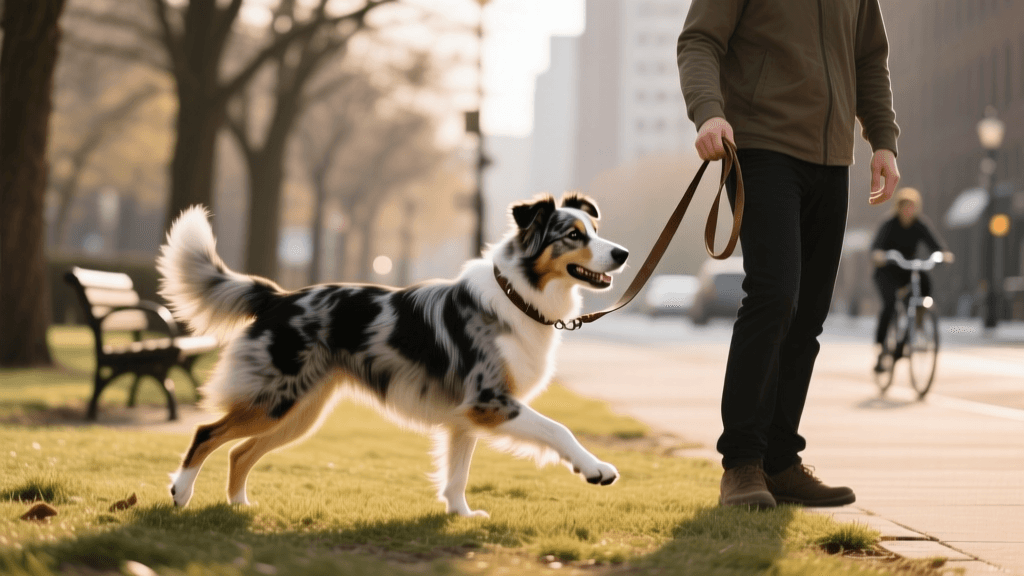
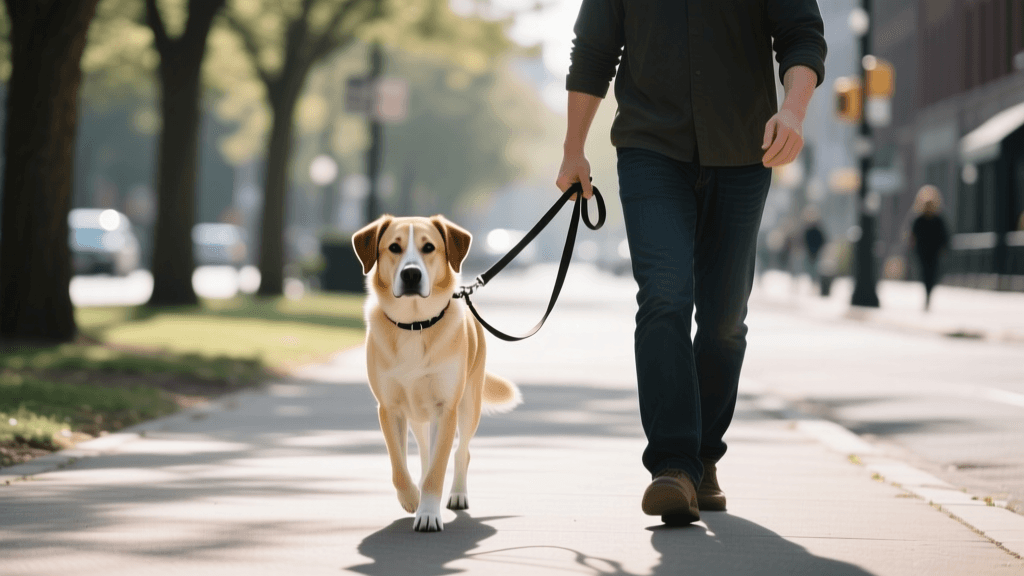
- Tethering: Use a 6-foot leather leash attached to a secure harness to manage the dog's distance from dropped food or forbidden items, preventing the rehearsal of the 'snatch-and-guard' sequence.
The Desensitization and Counter-Conditioning (DS/CC) Protocol
The core of our behavioral intervention relies on classical conditioning. We want to change the dog's underlying emotional state from 'I must defend this' to 'A human approaching means I get something even better.' This requires strict adherence to timing and threshold distances.
Step 1: Identify the Sub-Threshold Distance
The 'threshold' is the exact distance at which the dog notices the trigger (a human approaching) but does not exhibit guarding behaviors (no stiffening, whale eye, or growling). For many dogs, this distance is 8 to 10 feet. If your dog reacts at 6 feet, your working distance must be 10 feet.
Step 2: The Pavlovian Delivery Sequence
- The Setup: Give the dog a medium-value item (e.g., a standard kibble-filled toy or a low-value biscuit).
- The Approach: The handler stands at the sub-threshold distance (e.g., 10 feet).
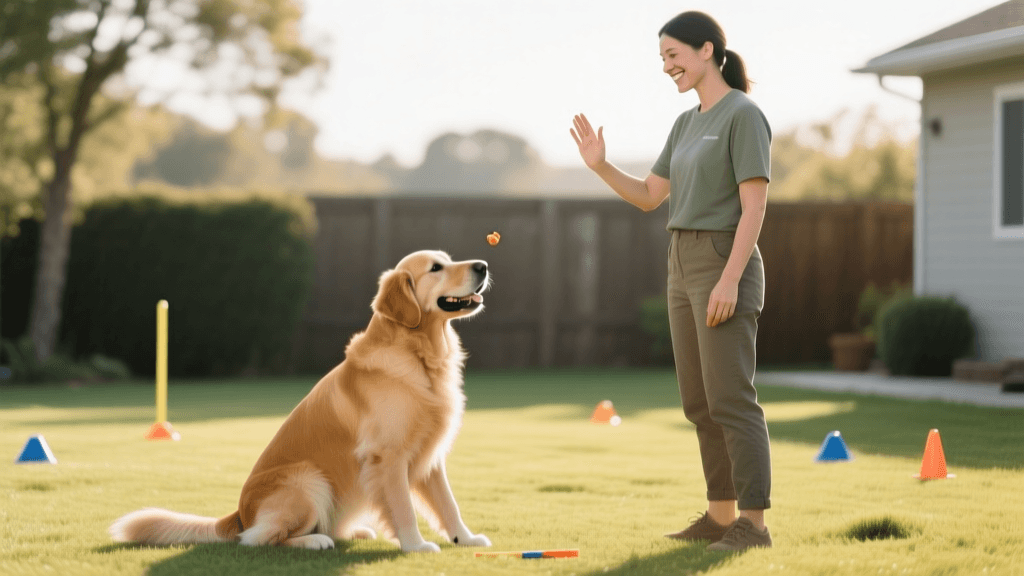
- The Toss: Toss a high-value treat (e.g., Zuke's Mini Naturals or boiled chicken, cut into 1/4-inch pea-sized pieces) directly to the dog.
- The Timing: The high-value treat must land within 0.5 to 1 second of the human taking a step. The sequence in the dog's brain must be: Human steps forward = Chicken arrives.
- The Retreat: After tossing 3-5 treats, the human turns and walks away. This teaches the dog that the human's approach is temporary, safe, and highly profitable.
Cost & Time Investment: Conduct these sessions for 3 to 5 minutes, twice daily. If you are struggling to identify thresholds, hiring an IAABC-certified behaviorist typically costs between $150 and $250 per hour, an investment that can prevent severe bite incidents and save the dog's life.
Teaching an Incompatible Behavior: The 'Trade-Up' Game
Once the dog's emotional response has shifted via DS/CC, we introduce an operant conditioning protocol: teaching the dog to voluntarily relinquish items. We never forcefully pry items from a dog's mouth, as this triggers an opposition reflex and reinforces the need to guard.
The Golden Rule of Trading: The item you offer in exchange must always be of equal or greater value than the item the dog currently holds. You cannot trade a dry biscuit for a fresh marrow bone and expect compliance.
The Step-by-Step Trade Protocol
- Initiate the Trade: When the dog has a toy, approach calmly with a handful of high-value treats (e.g., freeze-dried liver) hidden in your hand.
- Present the Alternative: Open your hand and present the treats near the dog's nose, about 2 inches away. Say your cue word, such as 'Drop' or 'Trade.'
- The Release: The dog will naturally drop the toy to eat the treats. The moment the toy hits the floor, mark the behavior with a verbal 'Yes!' or a clicker.
- The Jackpot: Feed the treats continuously (1-2 seconds per treat) for 5 to 10 seconds. This duration prevents the dog from immediately diving back for the dropped toy.
- The Return (Optional): In the early stages, pick up the toy, then give it back to the dog after the treats are finished. This builds massive trust. The dog learns that giving up an item doesn't mean losing it forever; it means a temporary pause filled with premium snacks.
Why Punishment and 'Alpha Rolls' Fail
Historically, trainers recommended pinning a dog to the ground (alpha rolls) or scolding them to 'show them who is boss.' Modern veterinary behaviorists strongly advise against this. Punishing a growl does not remove the dog's anxiety about losing their resource; it only teaches the dog that growling results in physical conflict. Consequently, the dog skips the growl and goes straight to a bite. This phenomenon is known in behavior analysis as the suppression of warning signals, creating a highly dangerous 'silent biter.'
Furthermore, physical confrontation triggers an adrenaline dump, increasing the dog's arousal state and making future guarding incidents more intense and unpredictable. By utilizing the antecedent arrangements and DS/CC protocols outlined above, we address the root cause—the dog's emotional insecurity—rather than merely suppressing the symptoms.
Conclusion: Patience and Consistency
Curing resource guarding is not an overnight process. It requires meticulous data tracking, strict adherence to sub-threshold distances, and a commitment to never putting the dog in a position where they feel forced to bite to protect themselves. By viewing resource guarding through the objective lens of Applied Behavior Analysis, we replace frustration with a clear, actionable roadmap. With consistent management, high-value reinforcement, and expert timing, even severe resource guarders can learn that human hands are the source of wonderful things, not a threat to their prized possessions.
marcus-aldridge
All our authors care for dogs every day — read more of their work on the authors page.