Low-Impact Scent Training For Dogs With OA In 2026
Discover low-impact scent work and mat training techniques for dogs with osteoarthritis in 2026. Keep your senior dog mentally sharp without joint strain.
Understanding Canine OA and Training in 2026
Canine osteoarthritis (OA) is a degenerative joint disease that affects a significant portion of the aging dog population. As we navigate veterinary care in 2026, multimodal treatments like monthly monoclonal antibody injections and advanced joint-support diets have revolutionized pain management. However, while medical treatments address the physical inflammation, they do not fulfill a dog's inherent need for mental stimulation and structured learning. According to the American Kennel Club, managing OA requires a holistic approach that includes weight management, controlled exercise, and environmental modifications. For dog owners and trainers, this means completely rethinking our approach to obedience and trick training.
When a dog is diagnosed with OA, traditional training routines can inadvertently accelerate joint degradation. Repetitive movements, high-impact recalls, and even the simple act of repeatedly sitting and standing can cause micro-trauma to compromised hips, knees, and shoulders. In 2026, the gold standard for training dogs with mobility issues revolves around low-impact cognitive exercises, cooperative care conditioning, and scent work. These methods keep your dog's brain engaged, burn excess energy, and strengthen the human-animal bond without putting unnecessary mechanical stress on their cartilage.
The Hidden Dangers of Traditional Obedience for OA Dogs
Many foundational obedience commands are inherently physical. The 'sit' command requires deep flexion of the stifle (knee) and coxofemoral (hip) joints. For a dog with moderate to severe OA, holding a sit or repeatedly transitioning from a stand to a sit can be agonizing. Similarly, the 'down' command requires the dog to lower their entire body weight, which can be difficult for dogs with elbow dysplasia or shoulder osteoarthritis.
In 2026, progressive trainers advocate for stationary standing or mat settling as alternatives to the traditional sit-down-sit obedience cycle. By replacing high-flexion commands with low-impact alternatives, you preserve your dog's joint health while maintaining their responsiveness and discipline.
Scent Work: The Ultimate Low-Impact Brain Game
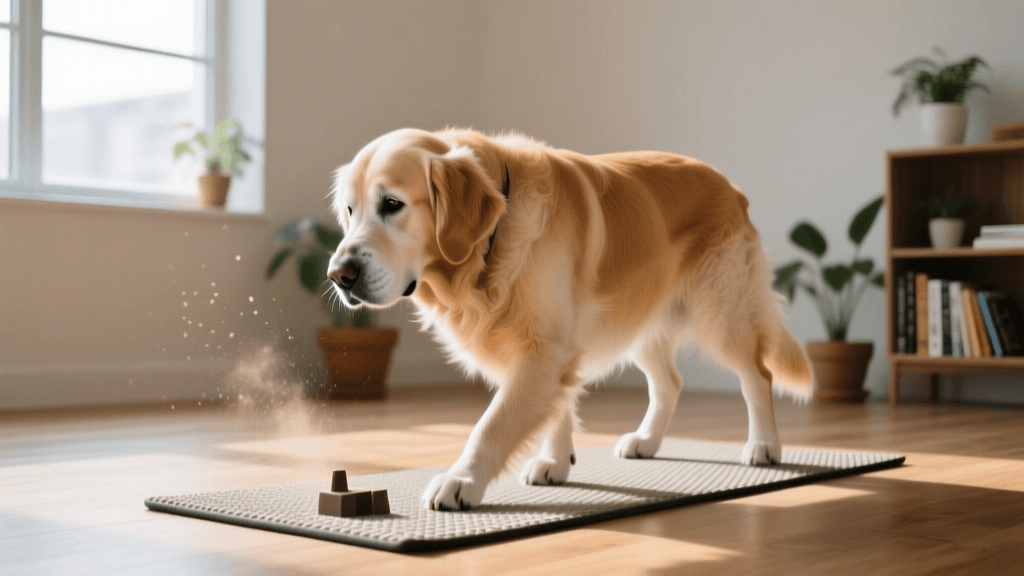
If physical exercise is restricted, mental exercise must take its place. Scent work, often referred to as nosework, is widely considered the most effective low-impact activity for senior and mobility-impaired dogs. Veterinary behaviorists note that fifteen to twenty minutes of active, focused sniffing can expend as much mental and physical energy as an hour of brisk walking. The AKC Scent Work program highlights how this sport taps into a dog's natural hunting instincts, providing immense psychological satisfaction without requiring them to jump, run, or navigate difficult terrain.
How to Start Scent Work at Home
- Step 1: The Box Search. Gather five to six identical cardboard boxes. Place a high-value treat or a specific 2026-approved scent hide (such as birch or anise oil on a cotton swab) inside one box. Allow your dog to investigate at their own pace. When they indicate the correct box by sniffing intensely or pawing gently, reward them immediately.
- Step 2: Elevated Hides. Dogs with severe spinal or neck OA may struggle to sniff along the baseboards. Elevate your scent hides to table height or shelf level so your dog can search with a neutral, comfortable spine alignment.
- Step 3: The Room Search. Expand the search area to a single room. Hide the target scent in accessible, low-impact locations. Avoid placing hides under furniture that requires the dog to crouch or crawl.
Mat Training: Teaching the Settle Command
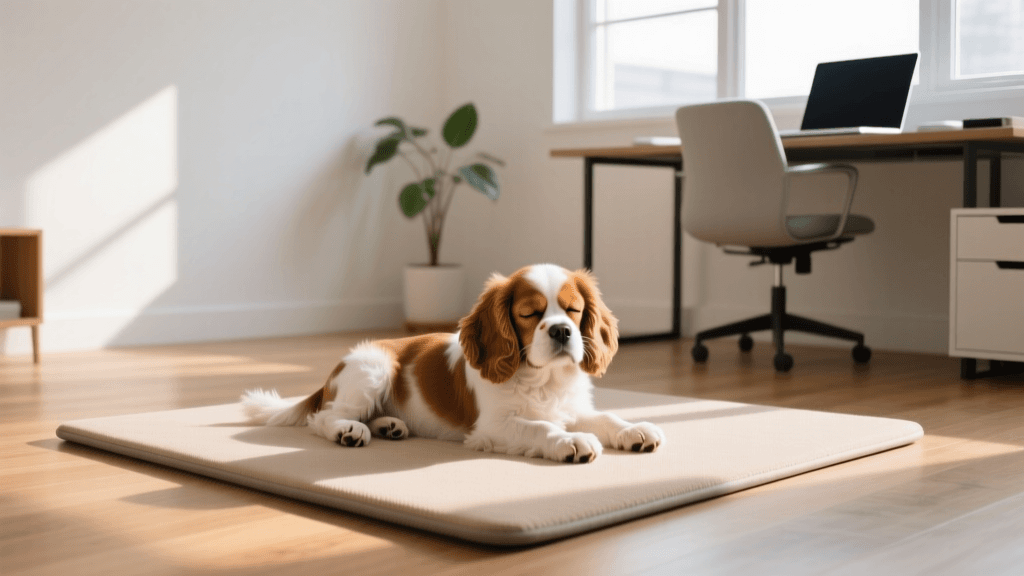
Mat training is a crucial behavioral conditioning tool for dogs with chronic pain. A designated orthopedic mat provides a predictable, comfortable surface that signals to the dog that it is time to rest. More importantly, teaching a reliable 'go to place' command allows you to direct your dog away from chaotic household environments or slippery floors that could lead to a fall and subsequent joint injury.
To teach mat training without causing joint strain, start with the mat placed directly in front of your dog. Do not ask them to sit or lie down initially. Simply reward them for placing all four paws on the mat while standing. Over several weeks, use a capture-and-reward method to encourage a natural, relaxed down position. If your dog prefers to rest in a sphinx pose or on their side with extended legs (which is often more comfortable for arthritic hips), accept and reward that posture. The goal is relaxation, not a rigid, traditional obedience down.
Cooperative Care: Training for Home Physical Therapy
Dogs undergoing treatment for OA often require daily home physical therapy, including passive range of motion (PROM) exercises, massage, and the application of topical therapies. Cooperative care training teaches the dog to voluntarily participate in their own medical care, reducing stress and the need for physical restraint. According to principles championed by Fear Free Pets, giving the animal a sense of control over their handling significantly reduces anxiety and pain perception.
The Chin Rest and Target Training
Teach your dog to rest their chin on a designated target, such as a padded stool or your open palm. This chin rest behavior acts as a consent signal. While the dog holds the chin rest, you can gently perform massage or PROM exercises on their hindquarters. If the dog lifts their head, it signals that they are experiencing discomfort or fatigue, and the therapy session immediately pauses. This level of communication is vital for maintaining trust with a dog suffering from chronic pain.
High-Impact vs. Low-Impact Training Comparison
| Training Activity | Impact on OA Joints | 2026 Recommended Alternative |
|---|---|---|
| Repetitive Sit/Stands | High (Hip/Knee Flexion) | Stationary Stand or Mat Settle |
| Agility Weave Poles | Extreme (Spinal Flexion) | Scent Work Box Searches |
| Fetch / Sprinting | High (Joint Concussion) | Target Training / Nosework |
| Jumping into Vehicles | High (Shoulder/Hip Strain) | Ramp Conditioning and Targeting |
Structuring Your Training Schedule for the Arthritic Dog
When designing a training regimen for a dog with OA, frequency and duration must be carefully managed. In 2026, veterinary rehabilitation specialists recommend micro-training sessions. Instead of one thirty-minute session, aim for three to five-minute sessions spread throughout the day. This prevents joint fatigue and keeps the dog's pain levels from escalating during the learning process.
Always observe your dog for subtle signs of pain, such as lip licking, yawning, shifting weight, or a reluctance to take treats gently. If these calming signals appear, end the session on a positive note with a simple, low-impact behavior they have already mastered. By embracing scent work, cooperative care, and modified mat training, you can ensure your dog remains mentally vibrant, behaviorally sound, and deeply connected to you, regardless of their physical limitations.
Ultimately, treating canine OA is not just about managing physical symptoms; it is about adapting their entire lifestyle to ensure a high quality of life. Training should never be a source of pain. By shifting our focus from physical compliance to cognitive engagement, we honor our senior dogs and provide them with the enriching, pain-free life they deserve in their golden years.
beth-carrasco
All our authors care for dogs every day — read more of their work on the authors page.