Low-Impact Training For Dogs With Osteoarthritis 2026
Discover how to adapt obedience and trick training for dogs with osteoarthritis in 2026. Learn low-impact methods to keep your senior dog mentally sharp.
The Intersection of Canine OA Treatment and Training in 2026
Osteoarthritis (OA) is one of the most common chronic conditions affecting dogs, particularly as they age. Historically, training a dog with OA was often sidelined in favor of strict rest and pharmaceutical management. However, the veterinary and canine behavioral consensus in 2026 has shifted dramatically. Today, treatment for canine OA is recognized as a multimodal approach that heavily incorporates physical rehabilitation, cognitive enrichment, and adapted behavioral conditioning. Training is no longer just about obedience; it is a vital component of your dog's pain management and overall quality of life.
According to the American Veterinary Medical Association (AVMA), osteoarthritis is a degenerative joint disease that causes inflammation, pain, and reduced mobility. While medical interventions are crucial, keeping a dog mentally stimulated through low-impact training prevents the anxiety, depression, and cognitive decline that often accompany chronic pain and reduced physical activity.
As a senior dog owner or handler, adapting your training methods ensures that your dog remains engaged, happy, and mentally sharp without exacerbating joint deterioration. This guide will walk you through the 2026 best practices for modifying obedience cues, teaching low-impact tricks, and utilizing cognitive enrichment as a core pillar of canine OA treatment.
The 2026 Medical Context: Why Impulse Control Training is Critical
To understand how to train a dog with OA in 2026, we must first look at the current standard of care. The widespread use of anti-nerve growth factor (anti-NGF) monoclonal antibody therapies, such as bedinvetmab (Librela) and frunevetmab (Solensia), has revolutionized OA treatment. These monthly injections significantly reduce pain signals, allowing many senior dogs to move comfortably for the first time in years.
While this is a medical miracle, it introduces a unique behavioral challenge: masked pain. Because the dog feels less pain, they may attempt to jump onto high beds, sprint after squirrels, or engage in high-impact play that their structurally compromised joints cannot handle. Therefore, the most critical training objective for an OA dog in 2026 is not learning new tricks, but mastering impulse control and settle behaviors.
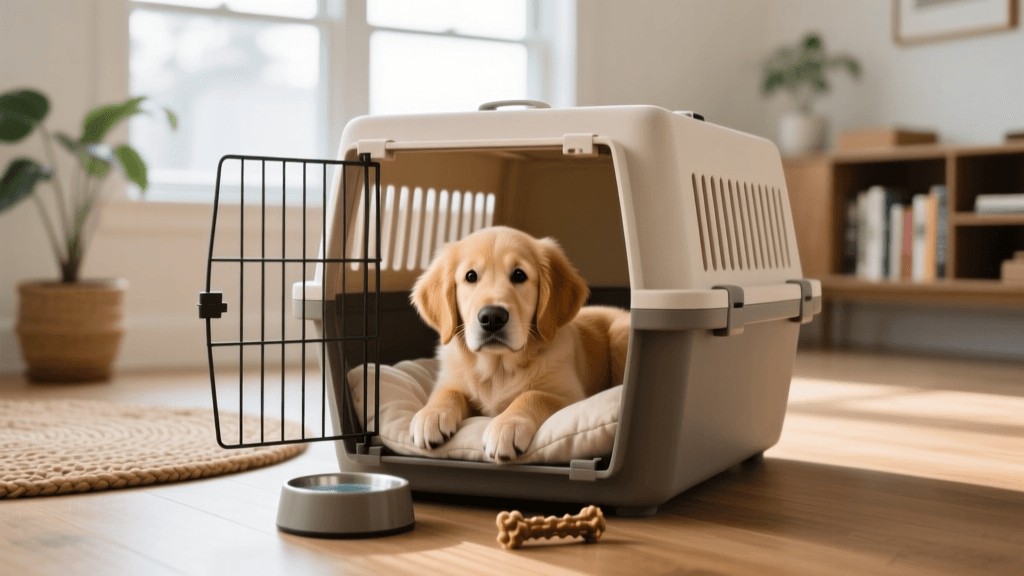
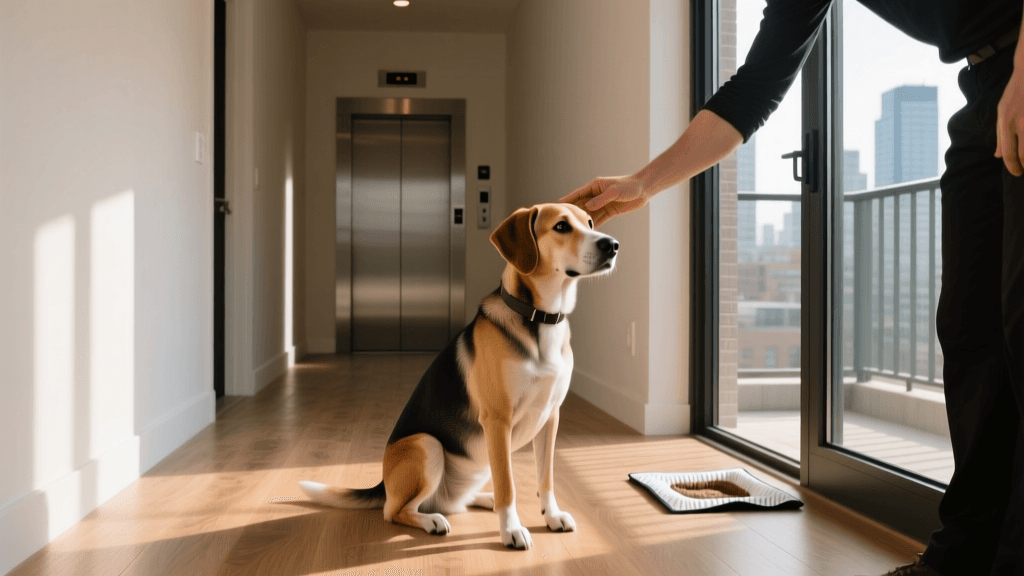
Teaching a rock-solid 'Place' or 'Mat' command is a medical necessity. By training your dog to go to a supportive orthopedic mat and remain there calmly, you are actively preventing them from overexerting themselves when their medication makes them feel overly enthusiastic. Reward-based training for stationary behaviors burns mental energy, which is just as tiring for a dog as a long physical walk, without putting any load on their hips, stifles, or spine.
Modifying Core Obedience Cues for Joint Health
Traditional obedience training relies heavily on repetitive movements that can be agonizing for a dog with OA. The 'Sit' and 'Down' commands, for example, require deep flexion of the hips, knees, and hocks. If your dog is hesitating to perform these cues, they are not being stubborn; they are experiencing pain.
The American Kennel Club (AKC) emphasizes that owners must observe their dogs for subtle signs of joint discomfort and adapt their expectations accordingly. Here is how you can modify traditional cues to accommodate canine OA:
- Replace 'Sit' with 'Stand' or 'Wait': Teaching a dog to stand still and wait is highly functional for leashing up, waiting at doors, and veterinary exams. It requires zero joint flexion and strengthens the stabilizing muscles in the legs.
- Replace 'Down' with 'Chin Rest': Getting into a sphinx or side-lying down position can be difficult for dogs with severe hip dysplasia or spinal OA. A 'Chin Rest' (where the dog rests their chin on your hand or a low stool) provides the same calming effect and focus as a down stay, but can be performed while the dog is comfortably standing or lying in a natural position.
- Modify the 'Recall': Instead of calling your dog across a slippery floor or rough terrain, practice 'Name Recognition' and 'Look at Me' exercises at close range. If you must practice recall, do it on a non-slip surface over very short distances, rewarding heavily for calm walking rather than sprinting.
Top 3 Low-Impact Tricks for Cognitive Enrichment
Cognitive enrichment is a cornerstone of modern OA therapy. Mental fatigue reduces a dog's overall stress levels, which in turn lowers systemic inflammation and pain perception. Here are three highly effective, low-impact tricks to teach your OA dog:
1. Scent Work (Nosework)
Scent work is arguably the best activity for a dog with limited mobility. It taps into their natural foraging instincts and requires almost no physical exertion. Start by hiding strong-smelling treats or a specific essential oil (like birch or anise, used in competitive nosework) in low, easily accessible boxes or on the floor. As your dog gains confidence, you can hide scents around the room at varying heights, allowing them to stretch gently without jumping. A 15-minute scent work session can tire a dog out as much as a two-mile hike.
2. Hand and Wand Targeting
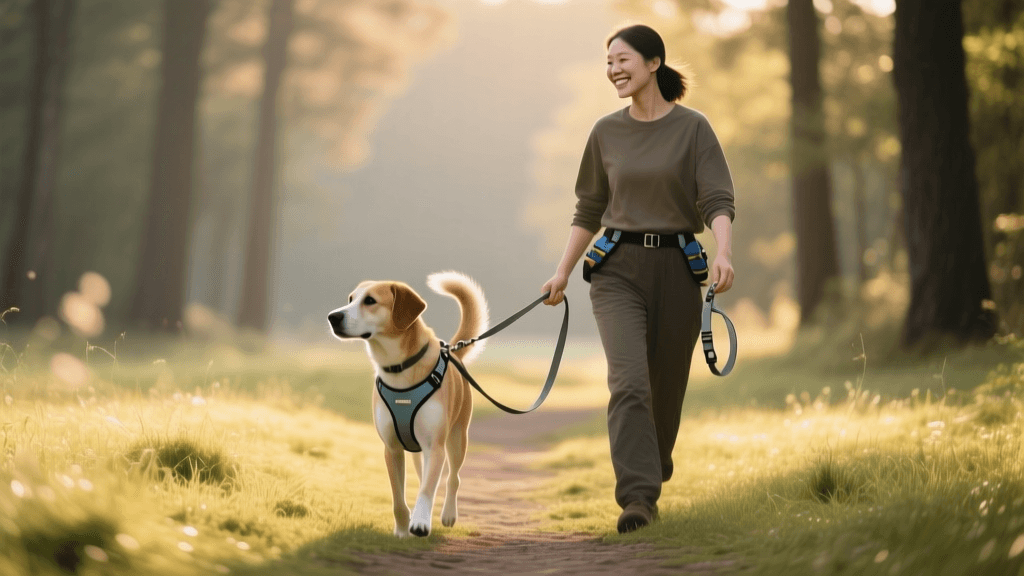
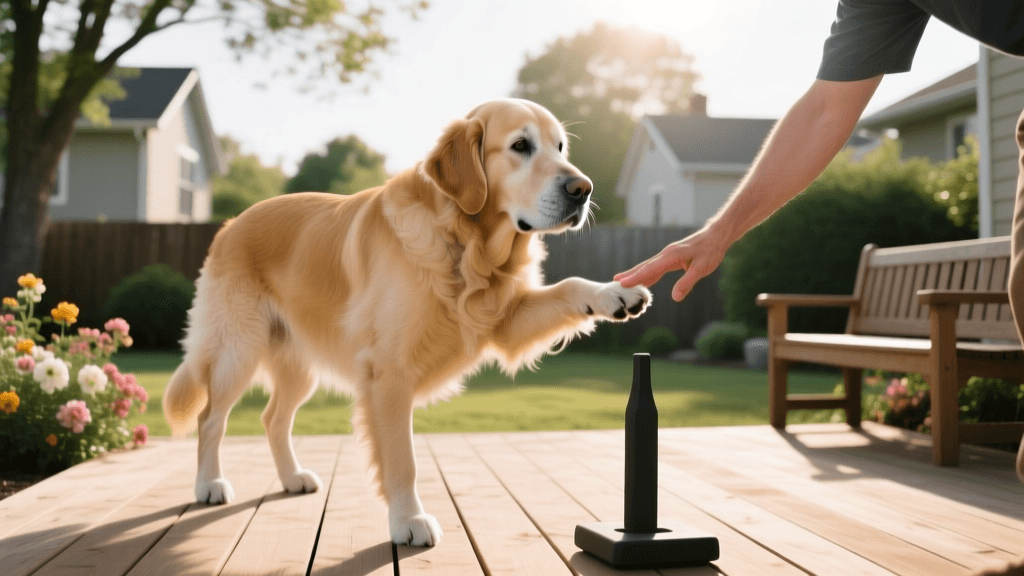
Targeting teaches the dog to touch a specific object with their nose or paw. Using a target wand (a stick with a ball on the end) allows you to guide your dog's movements without using a leash, which can put pressure on the cervical spine. You can use targeting to guide your dog onto a scale at the vet, into a car via a ramp, or simply to encourage gentle, controlled neck stretching and weight-shifting, which acts as a mild form of physical therapy.
3. Paw Targeting on a Low Mat
Teaching your dog to place their front paws on a low, non-slip mat or a specialized balance disc encourages weight-bearing on the forelimbs and engages the core muscles. This is a common exercise recommended by canine rehabilitation specialists. According to the Colorado State University Veterinary Teaching Hospital, targeted physical rehabilitation exercises help maintain muscle mass, which is vital for supporting arthritic joints. Always perform these exercises on a non-slip surface to prevent splaying and injury.
Comparison: Traditional vs. OA-Adapted Training
To help you visualize how to adjust your training sessions, refer to the table below. This chart outlines standard training methods and their OA-friendly alternatives.
| Traditional Training Element | OA-Adapted Alternative | Why It Benefits the OA Dog |
|---|---|---|
| Repetitive Sit/Down Drills | Stand/Wait and Chin Rests | Eliminates painful hip and stifle flexion |
| High-Impact Fetch/Frisbee | Scent Work and Puzzle Toys | Provides mental fatigue without joint impact |
| Heeling on Hard Pavement | Target Wand Guiding on Grass/Mats | Reduces concussive forces on cartilage |
| Jumping into the Car | Ramp Training and 'Place' Commands | Prevents acute spinal and shoulder strain |
Recognizing Pain Behaviors During Training Sessions
One of the most important skills a handler can develop is the ability to differentiate between a dog who is 'stubborn' or 'distracted' and a dog who is in pain. Dogs are stoic animals and will often hide their discomfort until it becomes severe. If your dog is failing to perform a previously known cue, never resort to punitive corrections. Instead, assess the environment and the physical demand of the cue.
Watch for these subtle signs of OA pain during training:
- Lip licking and yawning: Often misinterpreted as tiredness, these are primary canine calming signals that indicate stress or physical discomfort.
- Shifting weight: If your dog cannot hold a stand-stay and constantly shifts from one hind leg to the other, they are experiencing joint fatigue.
- Avoidance behaviors: Turning the head away, sniffing the ground intensely, or scratching unexpectedly when asked to perform a movement.
- Delayed response times: A dog who previously sat instantly but now takes several seconds to lower their hindquarters is likely calculating how to do so with minimal pain.
Setting Up a Training Environment for Success
The physical space where you train your OA dog is just as important as the techniques you use. Slippery floors like hardwood, tile, or laminate are the enemy of the arthritic dog. When a dog slips, their adductor and abductor muscles spasm to catch their weight, leading to severe soreness that can set back their mobility for days.
Before beginning any training session in 2026, ensure your training area is covered in interlocking foam mats, yoga mats, or low-pile non-slip rugs. Keep training sessions incredibly short—no more than 3 to 5 minutes at a time. OA dogs fatigue quickly, both physically and mentally. Multiple short, positive sessions throughout the day are vastly superior to one long, exhausting session.
Conclusion
Treatment for canine osteoarthritis in 2026 is a holistic endeavor that bridges veterinary medicine, physical rehabilitation, and behavioral science. By adapting your training methods to prioritize low-impact cognitive enrichment, impulse control, and joint-friendly obedience, you are providing your dog with an invaluable form of therapy. Training keeps their brain active, preserves their bond with you, and ensures that their golden years are lived with dignity, comfort, and joy. Always consult with your veterinarian or a certified canine rehabilitation therapist before starting a new physical conditioning routine to ensure it aligns with your dog's specific medical needs.
marcus-aldridge
All our authors care for dogs every day — read more of their work on the authors page.