Best Apartment Dogs: Cavalier vs Greyhound vs Basset
Discover which apartment dog suits your lifestyle. We compare the Cavalier King Charles Spaniel, Greyhound, and Basset Hound for city living.
Introduction to Apartment Dog Selection
Moving into an apartment or condo should never mean giving up on your dream of dog ownership. However, shared walls, limited square footage, and elevator logistics require careful breed selection. Many prospective owners mistakenly believe that only tiny toy breeds are suitable for apartments. In reality, a dog's indoor energy level, vocalization tendencies, and adaptability to routine are far more critical than their physical footprint.
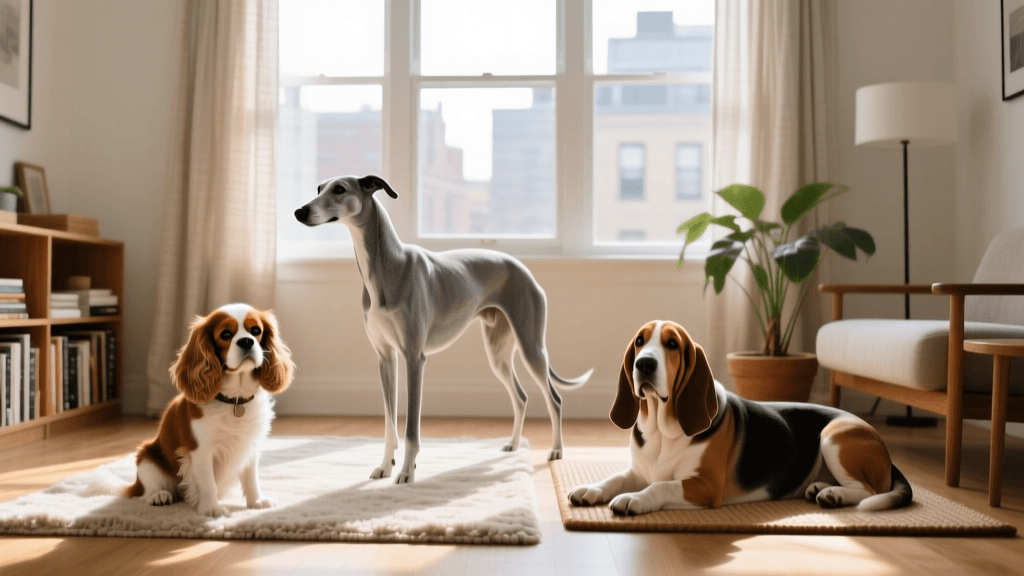
When evaluating breeds for multi-family housing, you must consider potty break logistics, noise complaints, and separation anxiety. A high-energy herding dog in a 600-square-foot studio is a recipe for destructive behavior and stressed neighbors, regardless of how many walks you take. Today, we are comparing three vastly different but surprisingly excellent apartment companions: the Cavalier King Charles Spaniel, the Greyhound, and the Basset Hound. By examining their daily routines, space requirements, and financial upkeep, you can make an informed decision that ensures harmony for you, your dog, and your neighbors.
Breed Profiles: The Contenders
1. Cavalier King Charles Spaniel: The Velcro Companion
Weighing in at just 13 to 18 pounds and standing 12 to 13 inches tall, the Cavalier King Charles Spaniel is a quintessential lap dog. According to the American Kennel Club, Cavaliers are highly adaptable, affectionate, and eager to please. Their moderate energy levels mean they are perfectly content lounging on the sofa while you work from home.
Apartment Pros: They are exceptionally quiet, rarely barking without cause, which makes them ideal for buildings with thin walls. Their small size means they fit comfortably in a standard 24-inch wire crate, leaving plenty of room in your living area.
Apartment Cons: Cavaliers are notorious for separation anxiety. If you work long hours outside the home, a Cavalier may develop stress-induced vocalization or destructive chewing. They require a mid-day dog walker or doggy daycare to thrive in an apartment setting where owners are away for 8+ hours.
2. The Greyhound: The 45-MPH Couch Potato
It is a common misconception that Greyhounds need vast open spaces to live happily. While they are indeed capable of reaching speeds up to 45 miles per hour, they are sprinters, not marathoners. The AKC breed standard notes that Greyhounds are gentle, independent, and surprisingly sedentary indoors. A retired racing Greyhound or a rescued Greyhound will happily sleep for 18 hours a day on your rug.
Apartment Pros: They are incredibly quiet and rarely bark. Despite their large size (60-70 pounds), they tuck themselves into corners and take up less visual space than a bouncy Labrador.
Apartment Cons: Their size requires a large 48-inch crate, which can dominate a small studio. Furthermore, Greyhounds have very low body fat and thin coats, meaning they feel the cold acutely. An apartment with drafty windows requires you to invest in fleece dog sweaters and thick orthopedic bedding to prevent joint soreness from hard apartment floors.
3. Basset Hound: The Low-Rider Scent Hound
Standing no taller than 15 inches but weighing up to 65 pounds, the Basset Hound is a heavy-boned, low-energy scent hound. The AKC describes them as patient, charming, and somewhat stubborn. Indoors, they are remarkably placid and prefer to trail their owners from room to room at a leisurely pace.
Apartment Pros: They are not prone to the zoomies and will not knock over your apartment decor with a wagging tail. Their exercise needs are easily met with two 20-minute neighborhood sniffs.
Apartment Cons: Vocalization is the Basset Hound's biggest hurdle for apartment living. They bay and howl, a deep, resonant sound that easily penetrates drywall and floors. They are not recommended for buildings with strict noise ordinances. Additionally, their long, droopy ears require meticulous weekly cleaning to prevent chronic infections.
Head-to-Head Comparison Chart
| Feature | Cavalier King Charles Spaniel | Greyhound | Basset Hound |
|---|---|---|---|
| Average Weight | 13 - 18 lbs | 60 - 70 lbs | 40 - 65 lbs |
| Indoor Energy Level | Moderate / Cuddly | Very Low / Sedentary | Low / Placid |
| Bark / Noise Level | Low (Occasional yips) | Very Low (Rarely barks) | High (Deep baying) |
| Required Crate Size | 24-inch | 48-inch | 36-inch |
| Separation Tolerance | Low (Prone to anxiety) | Moderate to High | Moderate |
| Monthly Food Cost | $30 - $45 | $70 - $90 | $50 - $70 |
Daily Routine and Apartment Logistics
Exercise and Potty Logistics
In a high-rise apartment, a 2 AM potty break means leashing up, waiting for the elevator, and walking to the designated concrete relief area. This logistical hurdle impacts breeds differently.
- Cavaliers have smaller bladders and may struggle to hold it through the night. Many apartment-dwelling Cavalier owners utilize indoor potty solutions like the Fresh Patch (a subscription service delivering real grass in a cardboard box) placed on a balcony or in a tiled bathroom.
- Greyhounds have excellent bladder control and can easily hold it for 8-10 hours overnight. However, because they are sight hounds with a high prey drive, apartment walks require a sturdy 6-foot leather leash and a martingale collar. Their narrow heads can easily slip out of standard buckle collars if they spot a squirrel in the courtyard.
- Basset Hounds are notoriously stubborn on walks. If a Basset catches an interesting scent near the apartment dumpster, they will simply plant their heavy bodies on the pavement and refuse to move. You must be prepared to use high-value treats like Zuke's Mini Naturals to coax them back to the elevator.
Noise Levels and Neighbor Relations
Shared walls mean your dog's noise becomes your neighbor's problem. Greyhounds are practically mute indoors, making them the undisputed champions of neighborly relations. Cavaliers may whine or bark briefly when someone walks past your door, but they are easily redirected with a stuffed Kong Classic. Basset Hounds, however, will bay loudly if they hear a delivery driver in the hallway or spot a stray cat from the balcony. If you choose a Basset, investing in a white noise machine for your entryway and using heavy blackout curtains can help muffle exterior triggers.
Financial Upkeep and Space Requirements
Apartment living often comes with hidden pet costs, including monthly pet rent (averaging $35-$50/month) and non-refundable pet deposits. Beyond building fees, the breed you choose dictates your monthly upkeep.
- Grooming Costs: Cavaliers require professional grooming every 6 to 8 weeks to prevent severe matting behind their ears and feathering on their legs. Expect to pay $60 to $90 per session. Greyhounds have a single, short coat that requires zero professional grooming; a $10 Kong ZoomGroom brush used once a week is all they need. Bassets shed heavily and require weekly ear flushing with a veterinary-approved solution like Zymox Otic ($25/bottle) to prevent yeast infections.
- Space and Furniture: Greyhounds need orthopedic bedding because they lack natural fat padding. A large Big Barker Orthopedic Dog Bed costs upwards of $250 but is essential for preventing pressure sores on hard apartment floors. Cavaliers and Bassets do well with standard plush beds.
- Dietary Needs: Basset Hounds are highly prone to obesity, which exacerbates joint and spinal issues. You must strictly measure their food (usually 2 to 2.5 cups of a weight-management formula like Purina Pro Plan Weight Management) and avoid free-feeding.
Final Verdict: Which Breed is Right for You?
Selecting the right apartment dog requires an honest assessment of your daily schedule, your building's noise tolerance, and your budget.
Choose the Cavalier King Charles Spaniel if: You work from home or have a flexible schedule that allows you to be with your dog most of the day. You want a quiet, small companion who will happily curl up on your lap while you watch TV.
Choose the Greyhound if: You live in a quiet building, work standard hours, and have the floor space for a large crate and orthopedic bed. You want a deeply affectionate, quiet, and low-maintenance dog who treats your apartment like a luxury hotel room.
Choose the Basset Hound if: You live in a ground-floor unit or a building with thick concrete walls, and you appreciate a slow-paced, humorous companion. You are committed to strict portion control and weekly ear-cleaning routines.
Ultimately, successful apartment living with a dog is less about the square footage of your unit and more about the predictability of your routine. By matching your lifestyle to the innate traits of these unique breeds, you can cultivate a peaceful, joyful environment for both you and your four-legged roommate.
beth-carrasco
All our authors care for dogs every day — read more of their work on the authors page.