Apartment Dog Bark Control: Train Your Pup for City Noise
Learn effective apartment dog bark control techniques. Train your urban pup to handle city noises, sirens, and hallway footsteps without barking.

The Challenge of Urban Dog Ownership
Living in an apartment with a dog is a wonderful experience, but it comes with a unique set of challenges that suburban and rural dog owners rarely face. The most pressing of these challenges is noise control. In a multi-family dwelling with shared walls, floors, and ceilings, a dog's natural instinct to vocalize can quickly escalate from a minor annoyance to a serious lease violation. Urban environments are inherently loud, filled with sirens, garbage trucks, elevator dings, and the constant hum of hallway foot traffic. For a dog, this sensory overload can trigger territorial, fearful, or alert barking.
If you are an urban dweller, proactive apartment dog bark control is not just about keeping the peace; it is about protecting your housing situation and ensuring your dog's mental well-being. According to the ASPCA, excessive barking is one of the most common behavioral issues reported by dog owners, and it is the leading cause of neighbor disputes in apartment complexes. Fortunately, with targeted behavioral conditioning, environmental management, and consistent training, you can teach your dog to navigate the city soundscape calmly.
Understanding Urban Noise Triggers
Before you can train your dog to stop barking, you must understand why they are barking in the first place. Dogs in apartments typically bark for three main reasons:
- Territorial/Alert Barking: Triggered by footsteps in the hallway, the sound of the elevator, or people talking outside the front door. The dog believes they are protecting their den.
- Fear/Anxiety Barking: Triggered by sudden, loud noises like sirens, thunder, or construction work. This is a stress response.
- Boredom/Frustration Barking: Triggered by being left alone in a confined space without adequate mental stimulation, often directed out the window at passing pedestrians or other dogs.
Identifying your dog's specific triggers is the first step in creating a customized training plan. Keep a 'bark log' for three days, noting the time, the suspected trigger, and the duration of the barking episode.
Mastering the 'Quiet' Command
The 'Quiet' command is an essential tool for any apartment dog owner. Unlike punishment-based methods, this command teaches your dog an alternative, incompatible behavior (being silent and focusing on you) in exchange for a high-value reward.
Step-by-Step Training Protocol
Step 1: Gather High-Value Rewards
In a high-distraction urban environment, standard kibble will not suffice. Use soft, pungent treats that your dog loves, such as Zuke's Mini Naturals (which are under 3 calories each, allowing for frequent repetition) or small pieces of boiled chicken breast.
Step 2: Capture the Bark
Wait for a trigger to occur (e.g., a neighbor walking by). When your dog barks, allow them to bark two or three times to acknowledge the trigger.
Step 3: Interrupt and Redirect
Say your interrupter word, such as 'Quiet' or 'Enough,' in a calm, firm, and cheerful tone. Do not yell; yelling sounds like you are barking along with them. Immediately hold a treat directly in front of their nose. The act of sniffing the treat will naturally cause the dog to stop barking.
Step 4: Mark and Reward
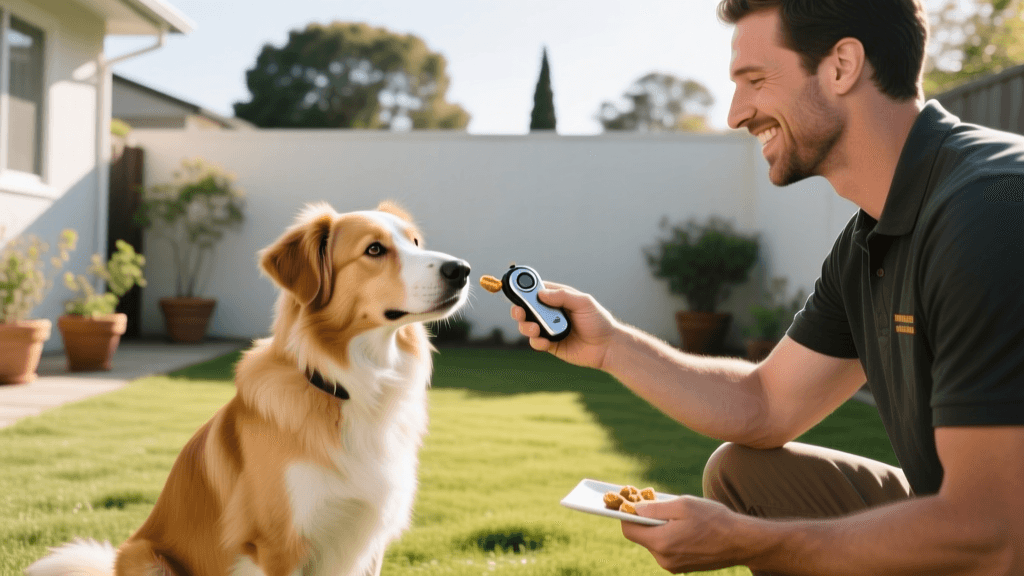
The second your dog stops barking to sniff the treat, use a marker word like 'Yes!' or a clicker, and give them the treat. Repeat this process 5 to 10 times per session, keeping sessions short (under 5 minutes) to prevent frustration.
Step 5: Increase the Duration
Once your dog reliably stops barking upon hearing the cue and seeing the treat, begin to delay the reward. Ask for 'Quiet,' wait two seconds of silence before marking and rewarding. Gradually increase this to 5 seconds, then 10 seconds, building their impulse control.
Desensitization and Counter-Conditioning (DSCC)
For dogs that react to unavoidable city noises like sirens or garbage trucks, the 'Quiet' command might not be enough if the dog is over their fear threshold. In these cases, Desensitization and Counter-Conditioning (DSCC) is the gold standard. The Humane Society of the United States highly recommends DSCC for noise-related anxiety and reactivity, as it changes the dog's underlying emotional response to the trigger.
The Urban DSCC Protocol
- Source the Audio: Find high-quality YouTube videos or apps featuring city sounds (sirens, subway trains, doorbells, hallway chatter).
- Set the Baseline: Play the audio at a volume so low (e.g., 10% volume) that your dog notices it but does not bark, pant, or pace. This is called being 'under threshold.'
- Pair with Positive Reinforcement: While the audio is playing at this low volume, feed your dog high-value treats continuously, or engage them in a fun game of tug. The goal is to create a positive association: Sirens = Chicken.
- Gradual Progression: Over the course of several weeks, increase the volume by 5% increments every three days, provided the dog remains relaxed and under threshold. If the dog barks or shows stress, you have increased the volume too quickly. Drop the volume back down to the last successful level.
This process requires patience. You are essentially rewiring your dog's brain to view terrifying urban noises as predictors of wonderful things.
Environmental Management for Apartment Dwellers
Training takes time, and in the meantime, you must manage your dog's environment to prevent them from rehearsing the barking behavior. Every time your dog barks at a hallway noise and the person eventually walks away, the dog's brain registers a 'win,' reinforcing the territorial barking.
Acoustic Masking
Invest in a high-quality white noise machine. The LectroFan High Fidelity White Noise Machine (typically around $45) is excellent for drowning out the specific frequencies of human speech and footsteps in the hallway. Place the machine near your front door or the shared wall to create an acoustic buffer. Alternatively, leaving a television or radio on a talk station at a moderate volume can provide consistent, comforting background noise.
Visual Barriers
If your dog barks at pedestrians, cyclists, or other dogs from your ground-floor or low-rise apartment window, you need to block the visual trigger. Apply a frosted window film (such as Frost King or Rabbitgoo privacy film, costing about $15 to $20) to the bottom half of your windows. This allows natural sunlight to enter while completely blocking your dog's line of sight to the street. For balcony doors, use opaque tension rod curtains that you can easily pull shut when you are not actively supervising your dog.
Mental Enrichment Tools
A tired dog is a quiet dog, but physical exercise alone is rarely enough for high-energy breeds in small apartments. Mental fatigue is crucial. Utilize tools like the LickiMat Soother or snuffle mats when you leave for work or when you know a noisy event (like building maintenance) is scheduled. Spreading wet food, plain pumpkin puree, or Greek yogurt on a LickiMat and freezing it provides 20 to 30 minutes of soothing, licking behavior, which naturally releases endorphins and lowers a dog's heart rate.
Urban Noise Triggers and Training Strategies
Below is a structured breakdown of common apartment triggers and the specific combination of training and management strategies required to address them effectively.
| Urban Trigger | Dog's Reaction | Training Strategy | Management Tool |
|---|---|---|---|
| Hallway Footsteps | Territorial Alert Barking | 'Quiet' Command & 'Place' Mat Training | White Noise Machine near the front door |
| Sirens / Construction | Fear / Howling / Pacing | Desensitization & Counter-Conditioning | Calming pheromone diffusers (e.g., Adaptil) |
| Street Traffic / Dogs | Frustration / Lunging at Window | Recall Training & Window Desensitization | Frosted privacy window film on lower panes |
| Elevator Dings | Alert Barking / Anticipation | Audio DSCC (recorded elevator sounds) | Classical music playlist on smart speaker |
Mistakes to Avoid in Apartment Bark Training
When facing the threat of eviction due to noise complaints, desperate owners often turn to aversive methods that ultimately worsen the problem. Avoid the following pitfalls:
- Yelling at Your Dog: As mentioned, dogs interpret yelling as you joining in on the alert. It increases the overall arousal level of the environment.
- Using Shock or Citronella Bark Collars: Major veterinary and behavioral organizations strongly advise against these devices. Punishing a dog for barking at a scary noise (like a siren) does not remove the fear; it merely suppresses the vocalization while the dog's internal panic escalates. This can lead to redirected aggression or severe anxiety disorders.
- Inconsistency: If you allow your dog to bark at the mail carrier but scold them for barking at the pizza delivery person, they will not understand the rules. You must enforce the 'Quiet' command universally.
Conclusion
Apartment dog bark control is an ongoing process that requires a blend of proactive training, environmental management, and deep empathy for your dog's sensory experience. By utilizing the 'Quiet' command, implementing rigorous desensitization protocols, and optimizing your living space with white noise and visual barriers, you can transform your urban apartment into a peaceful sanctuary. Remember that patience and consistency are your greatest allies. With time and positive reinforcement, your city dog will learn to navigate the urban hustle with confidence and calm.
priya-sutaria
All our authors care for dogs every day — read more of their work on the authors page.