Apartment Dog Bark Control: Train the Quiet Command Fast
Learn how to stop apartment dog barking with the Quiet command. Discover actionable training steps, soundproofing tips, and top tools for shared walls.

The Unique Challenge of Apartment Dog Barking
Living in an apartment or a multi-family urban dwelling with a dog is a rewarding experience, but it comes with a distinct set of challenges that suburban or rural pet owners rarely face. The most pressing of these challenges is noise. In a shared living environment, your dog's natural instinct to alert you to a delivery driver, a neighbor walking down the hall, or the ding of the elevator can quickly escalate from a minor annoyance to a serious lease-violating issue. Noise complaints are consistently ranked among the top reasons for tenant disputes and eviction notices in urban apartment complexes.
Unlike a fenced-in backyard where a dog might bark at a squirrel with minimal consequence, apartment barking reverberates through shared walls, floors, and ceilings. Addressing this requires a two-pronged approach: proactive obedience training to teach a reliable "Quiet" command, and strategic environmental management to reduce the auditory and visual triggers that cause the barking in the first place. By combining positive reinforcement techniques with smart apartment modifications, you can maintain your sanity, keep your neighbors happy, and ensure your dog remains a welcomed member of your building community.
Understanding the Triggers in Shared Spaces
Before you can effectively train your dog to stop barking, you must understand why they are vocalizing. According to the ASPCA, dogs bark for a variety of reasons, including territorial behavior, alarm, attention-seeking, and anxiety. In an apartment setting, the most common culprits are "alarm barking" triggered by unfamiliar hallway noises and "separation anxiety" when left alone in a confined space.
Urban environments are incredibly noisy. Footsteps echoing in a stairwell, the rumble of a garbage truck, or the sound of keys jingling outside your door are all perceived by your dog as potential threats. Because dogs have a much broader hearing range than humans, they process these sounds long before you do, triggering an instinctual alert response. Recognizing that your dog is not being "stubborn" but rather acting on deeply ingrained protective instincts is the first step toward empathetic and effective training.
The "Quiet" Command: A Step-by-Step Training Protocol
Teaching the "Quiet" command is one of the most valuable obedience skills for an apartment dog. This protocol relies on positive reinforcement, rewarding your dog for the absence of noise rather than punishing them for making it. You will need a clicker (such as the Karen Pryor Clicker, approximately $7), high-value treats (like Zuke's Mini Naturals, around $6 for a 6oz bag), and a quiet environment to start.
Step 1: Capture the Bark and Mark the Silence
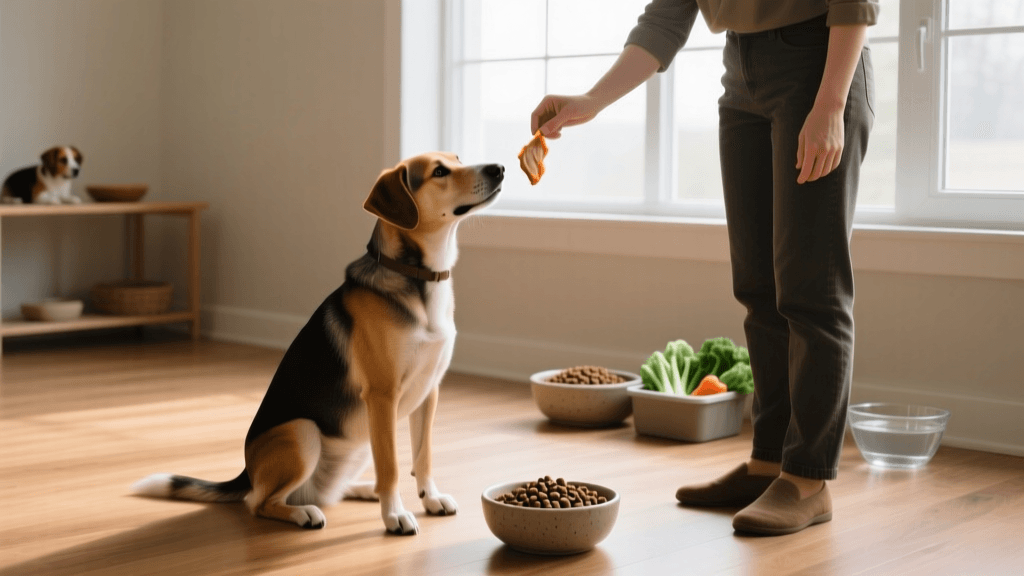
Wait for your dog to bark naturally. If they don't bark on their own, you can gently trigger them by knocking on the door or ringing the doorbell. Once your dog barks two or three times, present a high-value treat directly in front of their nose. The smell of the treat will almost always cause the dog to stop barking to investigate. The exact second your dog stops barking and goes quiet to sniff the treat, click your clicker (or use a verbal marker word like "Yes!") and give them the treat. Repeat this process 10 to 15 times in a single 5-minute session. You are teaching your dog that silence is what earns the reward.
Step 2: Introduce the Verbal Cue
Once your dog reliably stops barking when you present the treat, it is time to add the verbal cue. When your dog begins to bark, calmly say "Quiet" in a firm but gentle tone. Wait for them to stop barking, immediately click, and then reward. It is crucial that you do not yell the word "Quiet." To a dog, yelling sounds like you are barking along with them, which only increases their excitement and validates their alarm. Keep your voice low, calm, and steady.
Step 3: Increase the Duration of Silence
After your dog associates the word "Quiet" with the action of stopping, begin to delay the reward. Say "Quiet," wait for the barking to stop, but instead of clicking and treating immediately, wait for three full seconds of silence. Gradually increase this duration to five seconds, then ten seconds, and eventually up to thirty seconds. If your dog barks again before the time is up, simply reset the clock and wait for the next pause. This builds the "muscle memory" of sustained silence, which is vital when waiting out a noisy neighbor in the hallway.
Desensitizing Your Dog to Hallway and Elevator Noises
While the "Quiet" command manages barking in the moment, desensitization prevents the emotional trigger from occurring at all. Veterinary behaviorists at VCA Animal Hospitals highly recommend systematic desensitization and counter-conditioning for noise-reactive dogs. This involves exposing your dog to their triggers at a volume low enough that they notice the sound but do not react with barking or fear.
Start by recording the sounds of your specific building—elevator dings, heavy footsteps, or doors closing—or find similar sound effects online. Play the recording on your phone at a very low volume while your dog is relaxing. If they remain calm, feed them high-value treats continuously. Slowly increase the volume over several days and weeks. If your dog begins to bark or show signs of stress, you have increased the volume too quickly; lower it and proceed at a slower pace. Over time, your dog's brain will rewire to associate the sound of the elevator or hallway footsteps with the arrival of delicious treats, rather than the need to sound an alarm.
Environmental Management: Tools for Shared Walls
Training takes time, and during the learning process, you must manage your dog's environment to prevent rehearsing the unwanted behavior. Every time your dog practices barking at the window or the front door, the neural pathway associated with that behavior becomes stronger. Investing in a few strategic apartment management tools can drastically reduce your dog's exposure to triggers while you work on your obedience training.
| Tool / Product | Type | Estimated Cost | Best For |
|---|---|---|---|
| LectroFan High Fidelity White Noise Machine | Audio Masking | $45 - $55 | Drowning out hallway footsteps, talking neighbors, and elevator dings. |
| KONG Classic Dog Toy (Red/Black) | Mental Stimulation | $15 - $20 | Keeping dogs occupied and preventing boredom barking during owner absences. |
| Artscape Window Privacy Film | Visual Blocker | $25 - $35 | Preventing visual alert barking at street-level windows or passing pedestrians. |
| Snuggle Puppy Heartbeat Toy | Comfort / Anxiety | $40 - $50 | Soothing separation anxiety, whining, and stress-related vocalizations. |
Placing a white noise machine near your front door or shared bedroom wall can create an acoustic buffer that masks the sharp, sudden sounds of apartment living. Similarly, applying frosted window film to the bottom half of your windows allows natural light to enter while blocking your dog's line of sight to passing cars and pedestrians, instantly eliminating visual triggers.
What to Avoid: The Dangers of Punitive Measures
When facing the threat of an eviction notice, desperate apartment dwellers sometimes turn to punitive anti-bark devices, such as ultrasonic emitters or shock collars. The American Kennel Club (AKC) strongly advises against using punishment-based methods to stop barking. These devices do not teach the dog what you want them to do; they merely suppress the symptom through fear or pain.
In an enclosed apartment space, ultrasonic devices can bounce off hard walls and floors, causing unpredictable distress not only to your dog but potentially to neighboring pets. Furthermore, suppressing a bark without addressing the underlying anxiety often leads to "behavioral fallout," where the dog develops new, equally destructive coping mechanisms such as obsessive licking, pacing, or inappropriate elimination. Positive reinforcement and environmental management are not only more humane, but they yield significantly more reliable long-term results.
Managing Calories for the Urban Dog
One common pitfall in apartment dog training is overfeeding. Because urban dogs often have less access to large, open yards for free-roaming exercise, their daily caloric expenditure is generally lower than their suburban counterparts. When you are conducting multiple 10-minute training sessions a day using treats, those calories add up quickly.
To prevent obesity while maintaining high motivation, use a portion of your dog's daily kibble allotment for training rewards, reserving the high-value treats (like freeze-dried liver or Zuke's Minis) only for the most difficult distractions, such as loud hallway noises. Alternatively, use puzzle feeders like the Outward Hound Nina Ottosson Dog Brick (approx. $30) to make your dog work for their meals, providing essential mental stimulation that tires them out just as effectively as a long walk.
Pro-Tip: A tired dog is a quiet dog. If you live in a high-rise apartment without immediate yard access, invest in a flirt pole (approx. $25) for indoor games of tug-and-chase, or utilize indoor doggy treadmills to ensure your dog's physical energy is depleted before you leave for work.
Final Thoughts
Training an apartment dog to be quiet requires patience, consistency, and a deep understanding of your shared living environment. By mastering the "Quiet" command, systematically desensitizing your dog to the unique sounds of urban life, and utilizing smart environmental tools, you can transform your vocal pup into a polite, relaxed neighbor. Remember that behavior modification is a marathon, not a sprint. Celebrate the small victories, keep your training sessions short and positive, and enjoy the peaceful harmony of a well-adjusted urban dog.
anouk-beaumont
All our authors care for dogs every day — read more of their work on the authors page.