Master AKC Scent Work Novice in 2026: Gear, Odors, and Training
Prepare for your first AKC Scent Work Novice title in 2026. Discover essential birch odor gear, hide techniques, and foundational training steps for success.
The Rise of AKC Scent Work in 2026
The world of competitive dog sports has seen a massive surge in popularity, and as we navigate the 2026 competitive season, AKC Scent Work remains one of the most accessible, inclusive, and rewarding titles a handler can pursue. Unlike agility or obedience, which demand intense physical conditioning and precise spatial awareness, scent work taps into your dog's most powerful natural instinct: their olfactory system. With over 300 million scent receptors in some breeds, dogs experience the world through odor in ways we can barely comprehend.
According to the American Kennel Club's official Scent Work hub, the sport is designed to mimic the work of professional detection dogs. For the Novice (NW) level, the target odor is exclusively Birch. Earning your Novice title requires qualifying scores across four distinct search elements. This comprehensive guide will walk you through the exact gear, imprinting protocols, and handling mechanics required to pass your first AKC Scent Work Novice trial in 2026.
Essential Gear for the Novice Handler
While scent work is relatively low-cost compared to sports like agility, investing in the right equipment is critical for clear communication and safety. Here is the essential gear checklist for the 2026 season:
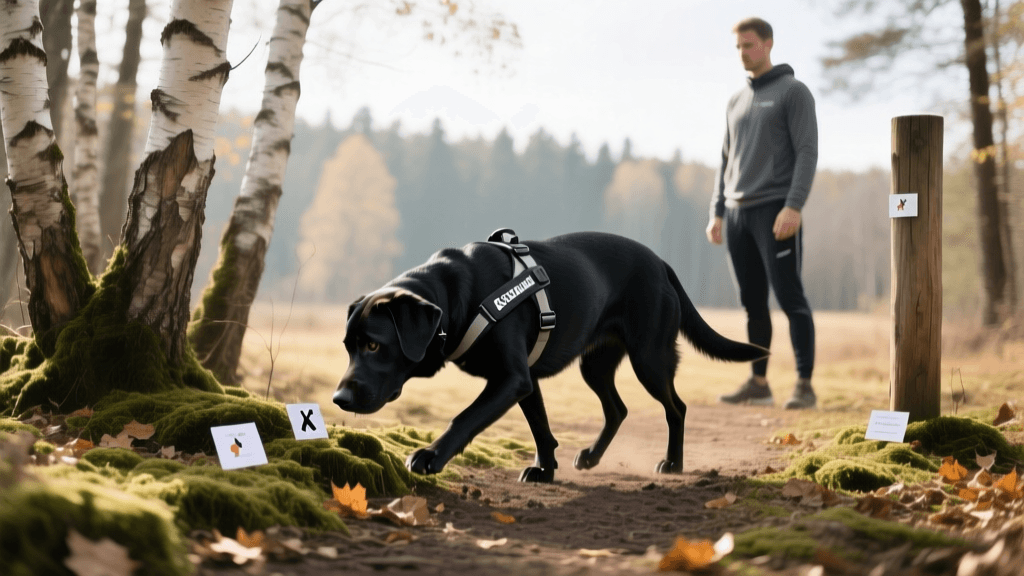
- Scent Work Harness: You need a harness that allows full shoulder extension and features a handle or clear dorsal ring for leash management. The Ray Allen M-9 Scent Work Harness remains the gold standard in 2026, retailing for approximately $95. It provides excellent support and prevents leash tangling during tight interior searches.
- Odor Kit: You must purchase a pre-made, properly diluted Birch odor kit. The K9 Nose Work Official Odor Kit (approx. $50) includes Birch essential oil diluted to competition standards, along with Q-tips and specialized metal scent tubes with magnets.
- Treat Pouch: Speed of reward delivery is vital during imprinting. A flat, open-top pouch like the Dogline Treat Tote ($25) allows for rapid, fumble-free reinforcement when your dog hits the odor cone.
- Long Line: A 10-to-15-foot lightweight biothane leash is ideal for vehicle and exterior searches, giving your dog the freedom to follow odor plumes without heavy leash drag.
Understanding Your Target Odor: Birch
In AKC Novice Scent Work, the only target odor you will encounter is Birch (Betula lenta). It is crucial to understand that competition odor is never pure essential oil. Pure essential oils are highly concentrated and can cause severe respiratory or dermatological issues for both canines and humans. As noted by the Pet Poison Helpline, direct exposure to undiluted essential oils can lead to toxicity, making proper dilution and handling a non-negotiable safety rule.
Competition Birch is diluted in a carrier oil (usually fractionated coconut oil) and applied to cotton swabs. When training, always handle your scent tubes with tweezers or gloves to avoid transferring your own skin oils or food smells onto the outside of the tube. If a judge or certifying official detects food contamination on your hide in 2026, you risk immediate disqualification.
Step-by-Step Birch Odor Imprinting
Imprinting is the process of teaching your dog that the smell of Birch predicts a high-value reward. Do not rush this phase. A solid imprint is the foundation of a reliable competition dog.
Phase 1: The 'Hot Box' Game
Start with a single cardboard box. Place your Birch scent tube inside and seal the box. Place three other empty, clean boxes nearby. When your dog investigates the 'hot' box and their nose lingers on the scent holes, immediately mark the behavior with a 'Yes!' and deliver a high-value reward (like freeze-dried liver or boiled chicken) directly into the scent hole. This teaches the dog that the source of the smell is where the food appears.
Phase 2: Pairing and Fading
Once the dog reliably targets the hot box, begin 'pairing' the odor with food. Place a small, smelly treat directly on top of the scent tube inside the hide. The dog learns that Birch odor equals food. After 10 to 15 successful paired sessions, begin fading the food. Place the food in your pouch, and only produce it after the dog shows a clear change of behavior (COB) at the hide. A COB might be a sudden head snap, a freeze, or an intense sniffing rhythm.
Phase 3: Elevating and Concealing
Dogs naturally search the ground. To prepare for Novice trials, you must teach them to search vertically. Use magnetic scent tubes to stick hides to the sides of chairs, door frames, and low walls. Always reward at the source to prevent the dog from drifting away from the odor cone.
Novice Search Elements Breakdown
To earn the Novice title, you must qualify in four distinct elements. The National Association of Canine Scent Work (NACSW) and AKC share similar foundational parameters for these elements, emphasizing the dog's natural hunting style. Below is the 2026 parameter chart for Novice searches:
| Search Element | Environment Description | Number of Hides | Time Limit (2026) |
|---|---|---|---|
| Container | Uniform boxes or bags arranged in a grid or line. | 1 | 3 Minutes |
| Interior | Indoor rooms with furniture, chairs, and walls. | 1 | 4 Minutes |
| Exterior | Outdoor areas with natural terrain, landscaping, and structures. | 1 | 4 Minutes |
| Vehicle | One or more parked vehicles (searching specific sides). | 1 | 4 Minutes |
Pro Tip for 2026 Trials: In the Container element, do not let your dog paw at the boxes. While a brief paw might be tolerated, repeated scratching can result in a 'fault' or dismissal for disturbing the search area. Train a solid 'sit' or 'freeze' at the source during your imprinting phase to ensure clean, unambiguous alerts.
Advanced Handling and Leash Mechanics
The most common reason handlers fail Novice trials is not because the dog cannot find the odor, but because the handler inadvertently restricts the dog's movement. Odor does not travel in a straight line; it moves in plumes, eddies, and cones based on air currents and temperature.
When your dog catches the edge of an odor plume, they will often 'bracket'—moving back and forth to find the edges of the cone before driving to the source. If you maintain a tight leash, you will pull the dog out of the odor cone before they can process the information. Practice 'slack leash' handling in your training yard. Keep your leash gathered in loops in your non-dominant hand, feeding it out smoothly as the dog moves forward. Your job is to be a passive observer and a mobile treat dispenser, not a navigator.
Reading the Threshold
Before crossing the start line, pause. In many 2026 trial setups, odor may be pooling right at the threshold (the doorway or start line). Watch your dog's initial reaction. A deep, sustained inhale, a lip lick, or a sudden change in tail carriage at the start line often indicates the dog has already sourced the hide from the threshold. Acknowledge this behavior and let the dog work the problem without rushing them into the room.
Competition Day Strategy
Arrive at the trial venue early to allow your dog to acclimate and empty their bladder. Scent work requires immense mental focus, and a distracted dog will miss subtle odor cues. Keep your dog crated and calm between runs. Avoid letting them play with other dogs, as this shifts their brain from 'hunting mode' to 'social mode'.
When the judge calls 'Are you ready?', take a deep breath, look at your dog, and give your specific search cue, such as 'Find it!' or 'Search!'. Step back, give them the full length of the leash, and trust the nose. By following this structured imprinting and handling protocol, you and your canine partner will be fully prepared to conquer the AKC Scent Work Novice title in 2026 and beyond.
priya-sutaria
All our authors care for dogs every day — read more of their work on the authors page.