Expert Behavior Analysis: Fixing Dog Resource Guarding
Learn expert behavior analysis techniques to fix dog resource guarding. Discover ABA protocols, trade-up games, and desensitization strategies.
Understanding Resource Guarding Through Applied Behavior Analysis
Resource guarding is one of the most misunderstood behaviors in canine psychology. Often mislabeled by outdated training paradigms as 'dominance' or 'stubbornness,' resource guarding is, in reality, a highly functional, operant behavior driven by anxiety and a history of reinforcement. From the perspective of Applied Behavior Analysis (ABA), a dog that growls over a bone or snaps when approached while eating is not attempting to conquer the household hierarchy. Instead, the dog is utilizing a learned behavioral response to maintain control over a valuable resource and increase the distance between themselves and a perceived threat.
To effectively modify this behavior, we must strip away anthropomorphic interpretations and analyze the environmental contingencies that maintain the behavior. By utilizing operant conditioning, classical counterconditioning, and precise environmental management, we can systematically change the dog's emotional response and behavioral output when high-value items are present.
The Role of Motivating Operations
In behavior analysis, we must consider Motivating Operations (MOs), which alter the value of a specific reinforcer. An Establishing Operation (EO) increases the value of a resource. For example, a dog that has been food-deprived for 24 hours experiences an EO that makes kibble highly valuable, thereby increasing the likelihood of guarding behavior. Conversely, an Abolishing Operation (AO) decreases the value of a resource. Feeding a dog multiple small, satiating meals throughout the day acts as an AO, temporarily reducing the biological drive to guard food. Understanding these physiological states is critical before initiating any behavioral modification protocol.
The ABCs of Canine Resource Guarding
Every behavior occurs within a specific context. To analyze resource guarding, behaviorists use the Antecedent-Behavior-Consequence (ABC) model. The antecedent is the environmental trigger, the behavior is the dog's observable action, and the consequence is what immediately follows, which dictates whether the behavior will occur again in the future.
| Antecedent (Trigger) | Behavior (Response) | Consequence (Outcome) | Behavioral Function |
|---|---|---|---|
| Owner walks within 3 feet of the dog while it is chewing a bully stick. | Dog freezes, hard stares, lip curls, and emits a low-frequency growl. | Owner stops approaching, feels intimidated, and retreats to another room. | Negative Reinforcement: The aversive stimulus (the approaching human) is removed, reinforcing the growl. |
| Child drops a piece of cheese on the floor and reaches down to grab it. | Dog lunges forward, snatches the cheese, and snaps at the child's hand. | Dog successfully consumes the cheese and the child pulls away crying. | Positive Reinforcement (acquiring the food) combined with Negative Reinforcement (removing the child's reach). |
As the data table illustrates, the guarding behavior is heavily reinforced. The dog learns a simple, undeniable equation: Aggression creates distance, and distance preserves resources. Therefore, our intervention must break this contingency by changing both the antecedent environment and the consequent outcome.
Why Punishment Fails: The Behavioral Fallout
Historically, trainers have recommended positive punishment (adding an aversive stimulus, such as a leash correction, alpha roll, or shock collar) to suppress guarding behaviors. While punishment may temporarily suppress the growl, it does not change the underlying emotional state of anxiety. Furthermore, it often results in 'learned helplessness' or a dangerous phenomenon known as suppression without extinction.
When a dog is punished for growling, it learns that the warning signal (the growl) results in physical pain or intimidation. Consequently, the dog stops growling but retains the anxiety and the desire to guard. The next time the dog feels threatened, it bypasses the warning phase entirely and proceeds straight to a bite. The American Veterinary Society of Animal Behavior (AVSAB) strongly advises against the use of punishment for behavior modification, noting that it can increase fear, anxiety, and aggression while damaging the human-animal bond. Our goal is to change the dog's emotional response, not merely suppress its warning system.
Step-by-Step Behavior Modification Protocol
Modifying resource guarding requires a systematic, multi-phase approach rooted in Desensitization and Counterconditioning (DS/CC) and Differential Reinforcement of Incompatible Behavior (DRI).
Phase 1: Environmental Management
Before active training begins, you must manage the environment to prevent the dog from rehearsing the guarding behavior. Every time the dog successfully guards an item, the neural pathway associated with that behavior is strengthened. Management protocols include:
- Physical Separation: Feed the dog in a completely separate room or behind a secure baby gate (e.g., Carlson Pet Products Walk-Thru Gate, approx. $40).
- Item Removal: Pick up all high-value chews (bully sticks, rawhide, pig ears) from the environment. Only provide these items when the dog is securely confined in a crate or separate room.
- No Bowl Approaches: Instruct all family members and guests to never approach, touch, or attempt to 'test' the dog while it is eating.
Phase 2: Desensitization and Counterconditioning (DS/CC)
DS/CC aims to change the dog's classical conditioning regarding human proximity. We want to shift the dog's emotional response from 'a human approaching means I will lose my food' to 'a human approaching predicts the arrival of something even better.'
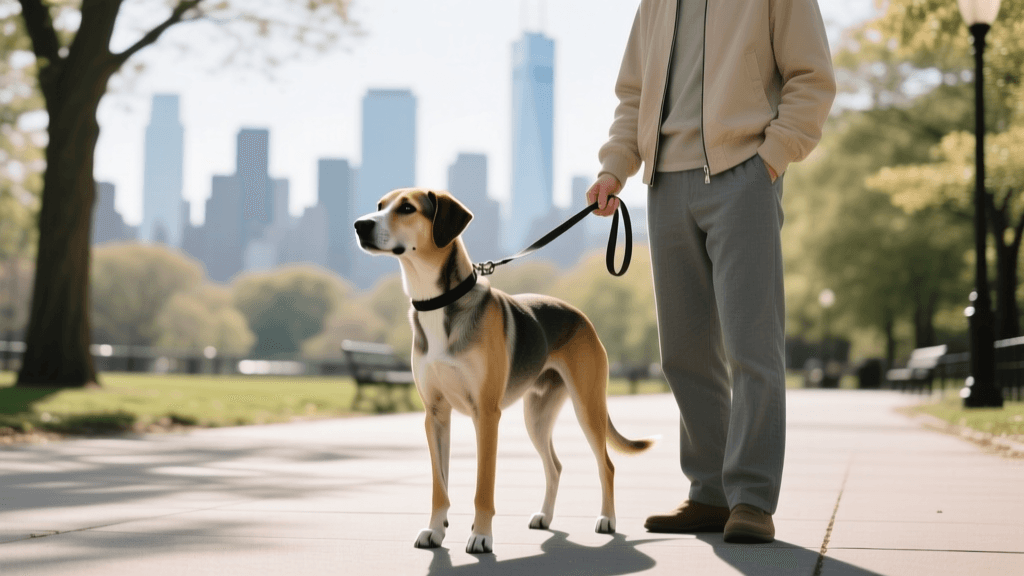
- Identify the Sub-Threshold Distance: Using a tape measure, find the exact distance at which the dog notices you but does not show any signs of tension (freezing, whale eye, eating faster). If the dog tenses at 5 feet, your starting distance is 8 or 10 feet.
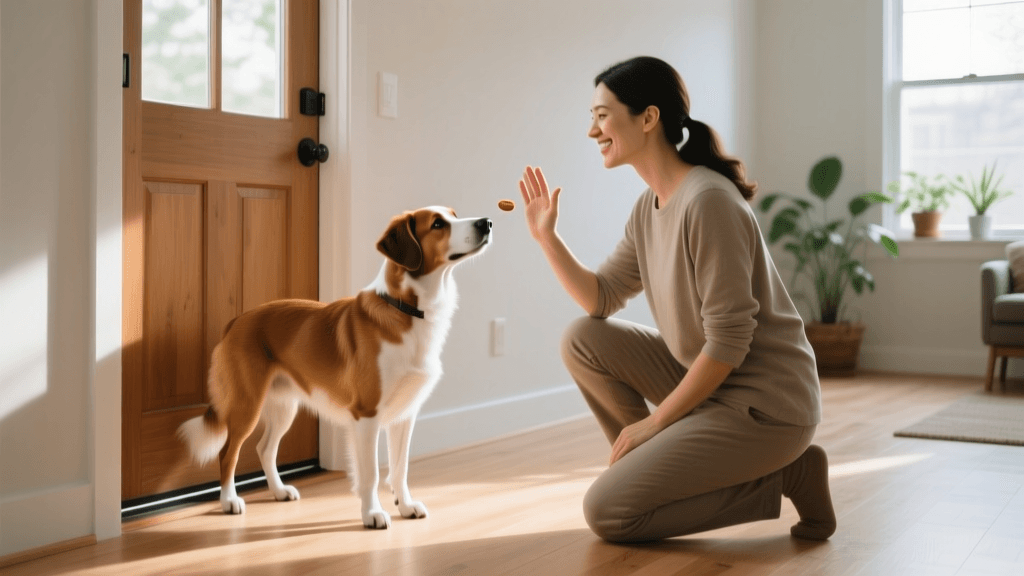
- The Approach and Toss: With the dog eating a low-value meal (kibble), stand at your sub-threshold distance. Take one step toward the dog, immediately mark the behavior with a clicker (e.g., Karen Pryor i-Click, $6) or a verbal 'Yes,' and toss a high-value treat (e.g., Zuke's Mini Naturals, $8 per 16oz bag) directly to the dog.
- Retreat: After tossing the treat, immediately take two steps back. This teaches the dog that your approach is fleeting and highly rewarding.
- Criteria Adjustment: Over multiple sessions spanning weeks, decrease the distance by increments of 6 inches, provided the dog remains relaxed and exhibits a 'happy tail wag' or relaxed body posture upon your approach.
Phase 3: Differential Reinforcement of Incompatible Behavior (DRI)
Once the dog is comfortable with human proximity, we implement DRI by teaching a 'Trade-Up' or 'Drop It' protocol. A dog cannot simultaneously hold an item in its mouth and release it; therefore, releasing is incompatible with guarding.
- The Exchange Rate: Present the dog with a low-value item, such as a Kong Classic ($15) stuffed with plain kibble. Allow the dog to engage with it for 10 seconds.
- The Offer: Approach calmly and present a high-value item right at the dog's nose, such as a piece of boiled chicken breast or freeze-dried liver. The high-value item must be objectively more desirable than the item the dog currently holds.
- The Release: The moment the dog drops the Kong to take the chicken, mark with your clicker and feed the chicken. Do not attempt to snatch the Kong away while the dog is eating the chicken.
- The Return: Once the dog has finished the high-value treat, offer the Kong back to them. This is a crucial step. If the dog learns that dropping an item means it is gone forever, guarding will resurface. If dropping an item results in a high-value snack and the return of the original item, the dog will willingly offer the drop.
Required Tools and Budget
Successful behavior analysis requires precision tools. Below is a recommended kit for implementing this protocol:
- High-Value Treat Pouch: Ruffwear Treat Trader ($30) or similar waist-belt pouch to keep hands free and treat delivery under 0.5 seconds.
- Precision Marker: Karen Pryor Box Clicker or i-Click ($6 to $10) for exact behavioral marking.
- Management Gates: Pressure-mounted baby gates ($40 to $60) for safe spatial separation.
- Long-Line Leash: A 15-foot biothane long line ($25) to safely manage the dog in open spaces if they pick up a contraband item outdoors.
- Caloric Management: Deduct the calories used in training from the dog's daily meals to prevent obesity. Use low-calorie training treats for repetitive DRI drills.
Tracking Progress: Metrics and Timing
According to the American Kennel Club (AKC), resource guarding can escalate rapidly if the underlying anxiety is not addressed through structured, positive training methodologies. Timing is everything in behavior analysis. The reinforcement (the tossed treat or the presentation of the trade-up item) must occur within 0.5 seconds of the dog noticing the antecedent (the human approaching).
Furthermore, the Fear Free Pets initiative emphasizes the importance of monitoring a dog's Fear, Anxiety, and Stress (FAS) scale during training. If your dog displays FAS indicators such as panting, yawning, lip licking, or a tucked tail during a DS/CC session, you have pushed the criteria too far, too fast. Immediately increase the distance, lower the value of the guarded item, and end the session on a successful, low-stress repetition.
Conclusion
Resource guarding is a natural, survival-driven behavior that becomes problematic only when it poses a risk to human safety in a domestic environment. By abandoning punitive, dominance-based myths and embracing the empirical science of Applied Behavior Analysis, owners can systematically dismantle guarding behaviors. Through meticulous environmental management, sub-threshold desensitization, and high-value differential reinforcement, you can transform your dog's anxiety into a predictable, positive response, ensuring a safe and harmonious household for both humans and canines.
robin-maitland
All our authors care for dogs every day — read more of their work on the authors page.