Stop Dog Leash Pulling: Diagnosis and Proven Solutions
Discover why your dog pulls on the leash and learn proven, step-by-step training solutions, gear recommendations, and expert tips for loose-leash walking.
The Frustration of the Tug-of-War Walk
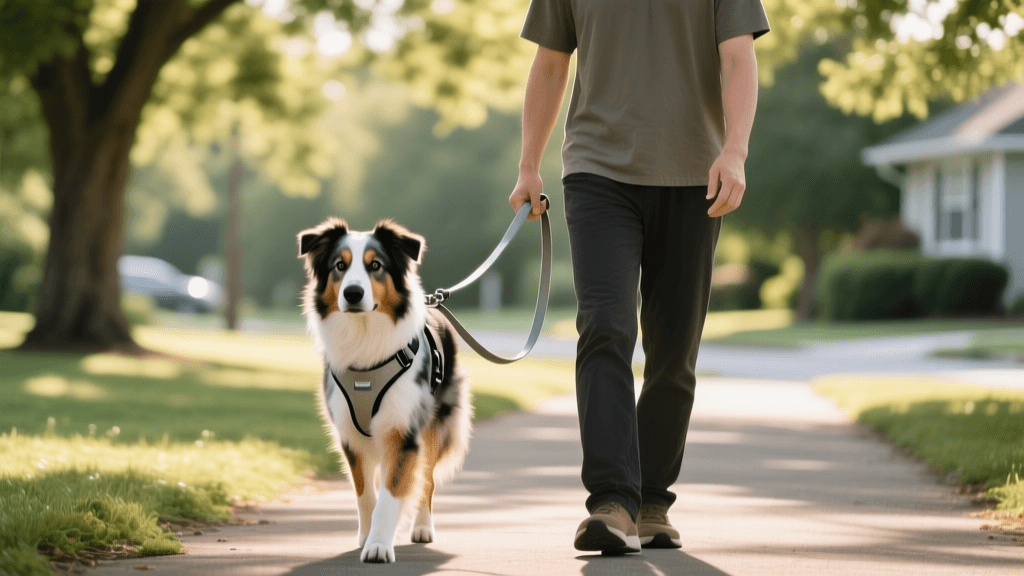
Walking your dog should be a relaxing bonding experience, but for millions of pet owners, it devolves into a frustrating game of tug-of-war. Leash pulling is not just an annoyance; it is a significant behavioral issue that can lead to physical harm. For the dog, constant pressure on the neck can cause tracheal collapse, cervical spine damage, and restricted airflow. For the owner, it results in shoulder strain, back pain, and a reluctance to exercise their pet. To solve this problem permanently, we must move beyond quick fixes and understand the behavioral mechanics driving the pulling. This comprehensive guide diagnoses the root causes of leash pulling and provides actionable, science-backed solutions to achieve a perfect loose-leash walk.
Diagnosing the Root Cause of Leash Pulling
Before implementing a training protocol, it is crucial to diagnose why your dog is pulling. Dogs do not pull out of spite or a desire to dominate their owners. Pulling is typically driven by three primary factors:
1. The Opposition Reflex (Thigmotaxis)
Dogs possess a natural physiological response known as the opposition reflex. When pressure is applied to their chest or neck, their instinct is to push against it. If your dog pulls forward and the leash goes taut, the pressure on their neck triggers this reflex, causing them to pull even harder. Traditional flat collars exacerbate this issue by applying direct pressure to the trachea, triggering the reflex and causing the dog to choke while continuing to surge forward.
2. Accidental Reinforcement and Reward History
From a dog's perspective, pulling works. If your dog pulls toward a fascinating scent tree, another dog, or the park entrance, and you follow them while the leash is taut, you have just reinforced the pulling behavior. The dog learns a simple operant conditioning equation: Tension on the leash = Movement toward the reward. To diagnose your specific issue, observe what your dog is pulling toward. Are they pulling to sniff? To greet people? To chase squirrels? Identifying the environmental reward is the first step in dismantling the behavior.
3. Over-Arousal and Lack of Desensitization
Many dogs pull simply because the outdoor environment is overwhelmingly stimulating. A dog that has spent eight hours alone indoors will experience a massive spike in cortisol and dopamine the moment they step outside. This over-arousal shuts down the logical, learning part of the brain, making them oblivious to treats or commands.
Equipment Diagnosis: Choosing the Right Gear
You cannot train a dog effectively if your equipment is working against you. Retractable leashes are the enemy of loose-leash walking because they teach the dog that tension is required to gain more distance. Prong and choke collars rely on pain compliance, which can increase anxiety and reactivity. Instead, utilize humane, force-free management tools while you train the underlying behavior.
| Equipment Type | Mechanism of Action | Pros | Cons | Estimated Cost |
|---|---|---|---|---|
| Front-Clip Harness (e.g., Ruffwear Front Range, Freedom No-Pull) | Redirects the dog's forward momentum back toward the handler when tension occurs. | Eliminates opposition reflex; highly effective for strong pullers; safe for trachea. | Can cause slight chafing behind armpits if poorly fitted; requires acclimation. | $25 - $45 |
| Head Halter (e.g., Gentle Leader, Halti) | Controls the dog's head, which naturally dictates the direction of the body. | Provides maximum control for giant or extremely powerful breeds; immediate results. | Dogs often hate the feeling on their snout; requires extensive desensitization; risk of neck injury if dog lunges. | $15 - $25 |
| Standard Flat Collar | Attaches leash to the back of the neck. | Simple; good for holding ID tags. | Triggers opposition reflex; high risk of tracheal damage if dog pulls. | $10 - $15 |
| Standard Fixed Leash (4 to 6 feet) | Provides a fixed boundary and consistent communication loop. | Prevents the dog from rehearsing pulling; offers precise control. | Requires the handler to actively manage leash slack. | $15 - $25 |
Step-by-Step Solutions for Loose-Leash Walking
Once you have secured a front-clip harness and a standard 6-foot leather or biothane leash, it is time to implement the training protocol. The goal is to teach the dog that a loose leash is the only way to move forward.
Solution A: The "Be a Tree" Method (Red Light/Green Light)
This method relies on negative punishment (removing something the dog wants—forward movement—to decrease a behavior). 1. Begin walking with your dog on your left side. 2. The absolute millisecond the leash goes taut and you hear a "clink" of the metal clasp, stop dead in your tracks. Become a tree. 3. Do not yank the leash. Do not yell. Simply stand still. 4. Wait for your dog to disengage from the distraction and look back at you, or take a step back toward you to create slack. 5. The moment the leash forms a "J" shape (slack), mark the behavior with a cheerful "Yes!" and resume walking. Timing is critical: You must stop within 0.5 seconds of the tension occurring. If you let the dog drag you for three steps before stopping, you have allowed them to rehearse the pulling behavior.
Solution B: The 180-Degree Penalty Turn
If the "Be a Tree" method results in your dog simply standing at the end of the leash staring at a squirrel, use the penalty turn. 1. When the leash goes tight, say a cue word like "Oops!" or "Let's go!" 2. Immediately turn 180 degrees and walk briskly in the opposite direction. 3. Do not pull the dog; let the pressure of the front-clip harness gently turn their body. 4. When the dog catches up to your side and the leash is slack, mark with "Yes!" and deliver a high-value treat right at the seam of your pants. 5. Turn back toward the original destination and try again. This teaches the dog that pulling away from you results in moving further away from the goal.
Solution C: Reward Zone Conditioning
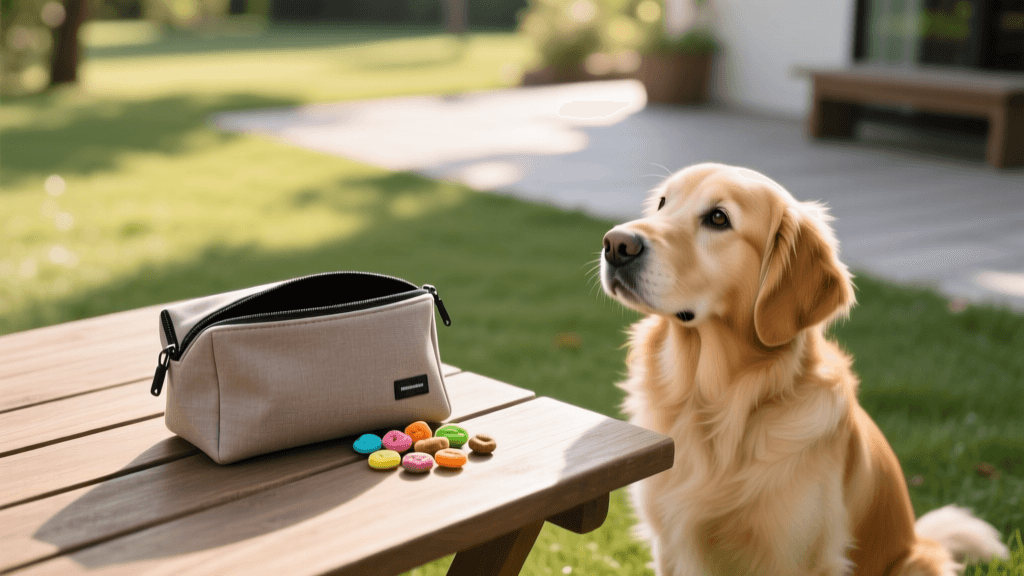
Where you deliver the treat dictates where the dog will position themselves. If you hold the treat up high or toss it forward, the dog will jump or surge ahead. You must establish a "Reward Zone" at your hip. Use a dedicated treat pouch (like the Ruffwear Treat Trader) worn on your left hip. Deliver treats directly downward to the dog's mouth, right at the seam of your pants. This conditions the dog to magnetize to your leg, creating a default heel position.
Structured Training Plan: Timing, Treats, and Milestones
Consistency and high-value reinforcement are the pillars of behavioral modification. Follow this structured plan for the next 30 days:
- Session Length: Keep training walks to 10-15 minutes. Mental fatigue from impulse control training is exhausting for dogs. If you need to exercise them longer, use a long-line (15-30 feet) in an open field for sniffing, where pulling is irrelevant.
- Treat Specifications: Use high-value, pea-sized treats. Zuke's Mini Naturals (approx. 3 calories each) or boiled chicken breast cut into 1/4-inch cubes are ideal. You must be able to deliver 20-30 treats per session without overfeeding or requiring the dog to chew extensively.
- Marker Word: Choose a distinct marker word like "Yes!" or use a mechanical clicker. The marker must occur exactly when the leash is slack, bridging the gap between the behavior and the food reward.
- Week 1-2 (Indoor/Low Distraction): Practice walking in your living room, hallway, and backyard. Reward every 3 to 5 steps of slack leash.
- Week 3-4 (Outdoor/High Distraction): Move to the sidewalk. Increase the criteria, rewarding every 10 to 15 steps, but be prepared to use the "Be a Tree" method frequently.
"Patience is your most valuable training tool. Every time your dog pulls and you follow, you are funding the very behavior you wish to eliminate. Consistency in your boundaries will eventually rewire your dog's walking habits."
Expert Consensus and Authoritative Guidelines
Modern, force-free behavioral science overwhelmingly supports the methods outlined above. According to the Humane Society of the United States, rewarding loose-leash walking and stopping forward movement when tension occurs are the most humane and effective ways to teach a dog to walk politely. They strongly advise against the use of corrective collars, noting that pain-based suppression often leads to leash reactivity and aggression toward other dogs.
Furthermore, the American Kennel Club (AKC) emphasizes the importance of making yourself more interesting than the environment. By utilizing high-value rewards and changing direction unpredictably, you engage the dog's brain and shift their focus from the environment back to the handler. The AKC also highlights that a 6-foot standard leash is the gold standard for training, as retractable leashes inherently teach dogs to pull against tension to achieve more freedom.
Finally, veterinary experts at VCA Animal Hospitals note the severe medical risks associated with leash pulling, particularly for brachycephalic breeds (like Pugs and French Bulldogs) and small breeds prone to tracheal collapse. VCA recommends front-clip harnesses as a medical necessity to protect the canine airway while behavioral modification training is underway. By combining the right equipment with positive reinforcement, you ensure your dog's physical safety and mental well-being on every walk.
hannah-wickes
All our authors care for dogs every day — read more of their work on the authors page.