AKC Scent Work Training: Beginner Gear & Tips for 2026
Discover the best AKC Scent Work gear, birch scent kits, and foundational hide training tips to start competitive nosework with your dog in 2026.
Introduction to Canine Scent Work in 2026
Dog sports have evolved tremendously over the last decade, but few have seen the explosive growth of canine scent work. As we navigate the competitive landscape in 2026, scent work—often referred to as nosework—stands out as one of the most accessible, mentally stimulating, and inclusive sports available to dog owners. Whether you have a high-drive working breed, a reactive rescue who struggles in crowded environments, or a senior dog with limited mobility, scent work offers a tailored challenge that taps into your dog's most powerful natural instinct: their nose.
The American Kennel Club's Scent Work page outlines how the sport has expanded to include new elements and advanced handler challenges this year. Meanwhile, the National Association of Canine Scent Work continues to set the gold standard for trial environments that prioritize the dog's emotional well-being and natural hunting style. If you are looking to transition from casual backyard sniffing to structured competition, this guide will walk you through the essential gear, foundational training steps, and 2026 competition pathways.
Why Nosework is the Ultimate Enrichment Sport
Unlike agility or obedience, which rely heavily on physical exertion and handler-directed cues, scent work is entirely dog-driven. The handler's job is simply to observe, support, and read the dog's subtle changes in behavior. This shift in dynamic builds profound confidence in shy dogs and provides an acceptable outlet for independent thinkers. According to the 2026 curriculum updates from the Fenzi Dog Sports Academy, just fifteen minutes of intense scent searching can be as mentally exhausting for a dog as a two-mile run. This makes nosework an invaluable tool for managing high-energy households and multi-dog environments where physical exercise space might be limited.
Essential Gear for AKC and NACSW Trials
You do not need an massive budget to start scent work, but investing in the correct foundational gear will prevent bad habits and ensure your dog's comfort during long trial days.
Scent Kits and Odor Oils
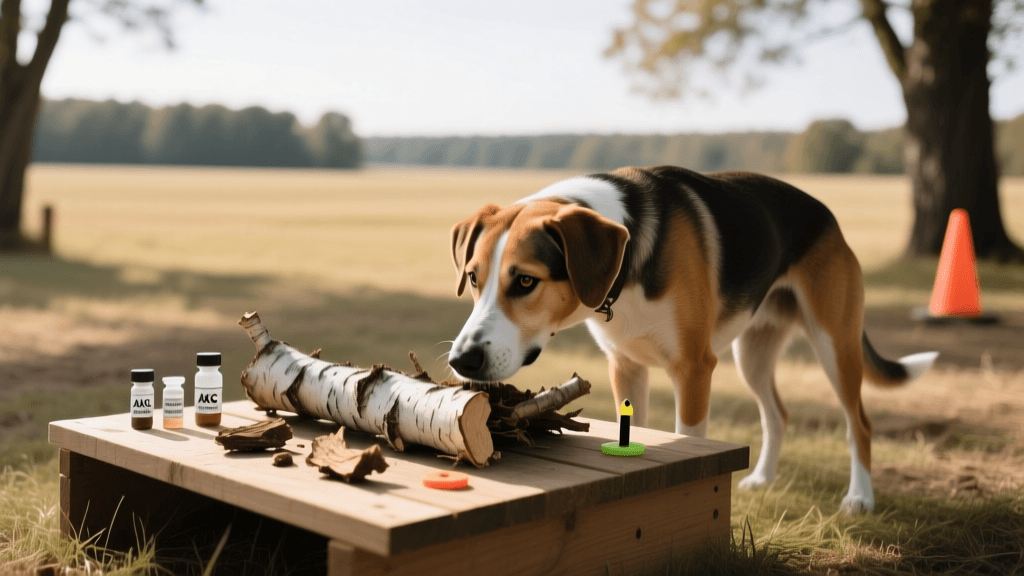
In AKC Scent Work, the first odor your dog will learn is Birch. NACSW also utilizes Birch as the foundational Level 1 odor. You will need a starter kit that includes pure birch essential oil, glass storage jars with screw-top lids, Q-tips (cut in half), and tweezers. In 2026, the 'Clean Run Birch Starter Kit' remains a top seller, priced around $45. It includes everything needed to properly 'cook' your scent vessels without contaminating your home or training areas with accidental odor transfer.
The Right Harness and Long Line
A proper scent work harness must allow for complete, unrestricted shoulder movement. Dogs drop their heads low and stretch their necks when tracking odor pools, so harnesses with restrictive chest straps can cause chafing and hinder performance. Pair your harness with a 15-foot to 20-foot Biothane long line. Biothane is the industry standard in 2026 because it does not absorb moisture, mud, or odor, and it glides smoothly through your hands without causing rope burn.
High-Value Reward Systems
Scent work requires a distinct reward marker. Many handlers use a dedicated 'scent work pouch' worn on the hip, filled with high-value rewards like freeze-dried beef liver or real cheese. The reward must be delivered directly at the source of the odor to build a strong reinforcement history.
2026 Scent Work Harness Comparison Chart
Choosing the right harness is critical for allowing your dog to navigate tight spaces and low hides. Below is a comparison of the top three harnesses favored by competitive handlers in 2026.
| Harness Model | Weight | Approx. 2026 Price | Best For | Shoulder Freedom |
|---|---|---|---|---|
| Hurtta Trail Explorer | 1.1 lbs | $75.00 | All-weather searching, deep woods | Excellent |
| Perfect Fit Harness | 0.8 lbs | $85.00 | Custom fit for deep-chested breeds | Superior |
| Ruffwear Flagline | 0.9 lbs | $99.95 | Agile dogs needing a handle assist | Very Good |
Step-by-Step Birch Hide Training for Beginners
Training a dog to search for odor is a systematic process. Rushing through the foundational steps is the most common mistake beginners make. Follow this progression to build a solid hunting dog.
Step 1: Scent Imprinting and Pairing
Imprinting is the process of teaching your dog that the smell of Birch equals a reward. Place a 'hot' Q-tip (one that has been stored in a jar with birch oil) inside a metal tin with holes punched in the lid. Place the tin on the ground and immediately place a high-value treat directly on top of the tin. Allow your dog to eat the treat off the tin. Repeat this 10 to 15 times per session. The dog's brain will naturally pair the novel scent of the birch with the anticipation of the food reward. Do not add any verbal cues or commands during this phase; let the dog figure out the puzzle.
Step 2: Box Drills and Search Mechanics
Once your dog understands that the tin holds the reward, it is time to introduce the concept of 'searching.' Set up a grid of 6 to 8 identical cardboard boxes in a quiet room. Place the hot tin inside one box, and leave the others empty. Bring your dog into the room on a loose leash and say your search cue, such as 'Find it.' Allow the dog to investigate the boxes. The moment their nose dips into the box containing the hot tin, mark the behavior with a 'Yes!' and deliver the reward directly into that box. Rotate the placement of the hot box for each repetition to prevent the dog from memorizing a specific location.
Step 3: Adding the Cold and Hot Hides
In competition, odor is hidden in 'cold' tins (tins that do not contain food) and affixed to walls, chairs, or vehicle bumpers using magnetic clips or putty. Transition your dog to cold hides by placing the hot tin in a room, but delivering the reward from your pouch rather than from the tin itself. This teaches the dog that the odor is the predictor of the reward, not the physical presence of food. Practice hiding the tin at varying heights, always ensuring the dog can reach the source without jumping or climbing unsafely.
'The biggest mistake new handlers make in 2026 is pulling the dog away from the source to deliver the reward. If your dog finds the hide, the party must happen exactly where the odor is strongest. This builds a dog who sticks to the source rather than glancing back at the handler.' — Fenzi Dog Sports Academy Scent Work Faculty
Navigating Competition Rules and Titling Paths
When you and your dog are consistently finding hides in novel environments, you are ready to enter a trial. In 2026, the average cost for a sanctioned AKC Novice Scent Work (SWN) entry is between $35 and $45 per element. The Novice level requires searching for Birch only, across four distinct elements: Container, Interior, Exterior, and Buried.
Container searches involve a row of identical boxes. Interior searches take place in a single room with hides placed on furniture or walls. Exterior searches happen outdoors, where wind and environmental distractions play a major role. Buried hides require the dog to locate a tin buried under a few inches of sand or soil in a designated box.
To earn an AKC Scent Work Novice title, you must qualify in all four elements during the same trial. This requires not only a dog with a strong nose but a handler who understands leash management, wind direction, and how to read their dog's specific 'change of behavior' when they catch the scent cone. NACSW trials operate similarly but utilize an ORT (Odor Recognition Test) as a prerequisite before entering Level 1 trials, ensuring the dog confidently recognizes Birch, Anise, and Clove before competing.
Final Thoughts on Your Scent Work Journey
Embarking on a scent work journey in 2026 is one of the most rewarding decisions you can make for your dog's mental health and your mutual bond. By investing in the proper Biothane long lines, unrestricted harnesses, and pure odor kits, you set the stage for success. Remember to keep your training sessions short, positive, and heavily reinforced. Whether your goal is to earn high-level championships or simply to give your dog a fulfilling weekend hobby, the world of competitive nosework welcomes every team, one sniff at a time.
priya-sutaria
All our authors care for dogs every day — read more of their work on the authors page.