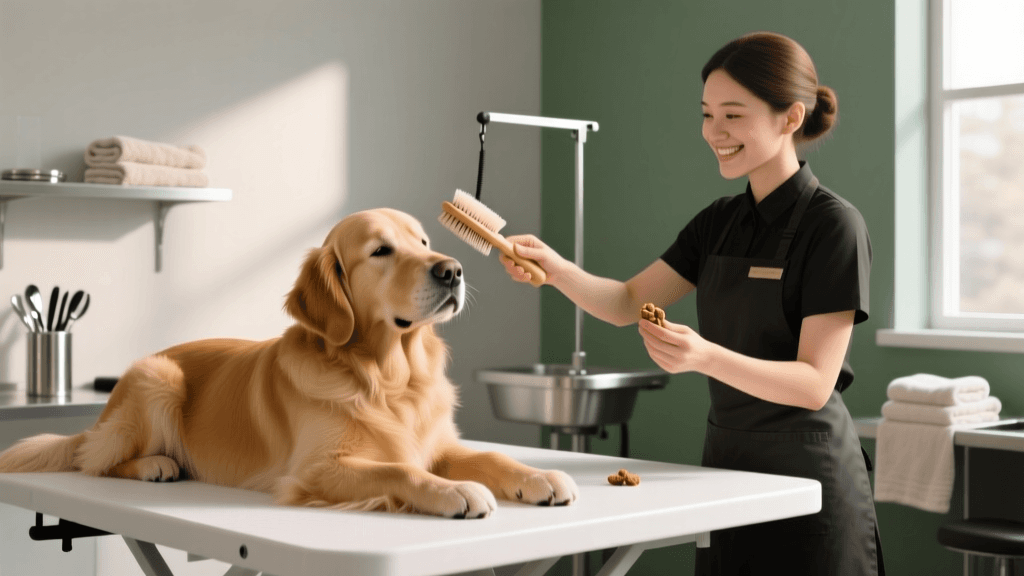
Force-Free Dog Grooming 2026: Cooperative Care Guide
Learn force-free cooperative care dog grooming techniques for 2026. Build trust and reduce stress with positive reinforcement and top tools.
The Shift to Cooperative Care in 2026
Life with a dog in 2026 is more harmonious than ever, thanks to the widespread adoption of force-free methodologies across the global pet care industry. Gone are the days when grooming meant physically restraining a terrified dog on a table. Today, leading behaviorists and veterinary professionals champion 'cooperative care'—a philosophy where the dog is an active, willing participant in their own husbandry routines. As of 2026, major veterinary networks and professional grooming salons increasingly require Fear Free certification, making at-home cooperative care a vital bridge to keep your dog comfortable between professional visits.
According to the American Veterinary Society of Animal Behavior (AVSAB), positive reinforcement is the most effective and humane method for animal training, explicitly advising against the use of aversive tools and physical restraint. By applying these force-free principles to daily grooming routines, you can transform nail trims, brushing, and bathing from stressful battles into bonding exercises built on mutual trust.
What is Force-Free Cooperative Care?
Cooperative care is a force-free training framework that gives dogs a 'say' in their medical and grooming procedures. Instead of using grooming loops, muzzles, or physical pinning to force compliance, cooperative care relies on consent signals and positive reinforcement. The dog learns to offer a specific behavior—such as resting their chin on a mat or targeting a stick—and receives high-value rewards for maintaining that position. Crucially, if the dog breaks the position or moves away, the handler immediately stops the procedure. This 'opt-out' mechanism lowers the dog's anxiety because they know they are never trapped, which paradoxically makes them far more willing to stay and participate.
Essential Force-Free Grooming Tools for 2026
To succeed with cooperative care, you need the right environment and tools. The pet market in 2026 offers incredible innovations designed specifically for low-stress handling:
- Hyper Pet IQ Treat Spread Mats: Licking releases endorphins in dogs, naturally soothing their nervous system. Spreading a high-value treat like plain pumpkin puree or dog-safe peanut butter on a textured silicone mat keeps them engaged and relaxed during brushing.
- Wahl Professional Animal Arco Cordless Clippers: Noise and vibration are major triggers for grooming anxiety. The latest iterations of the Wahl Arco series feature ultra-quiet, low-vibration motors that are ideal for desensitizing noise-sensitive dogs without causing startle responses.
- ScratchPad for Dogs: For dogs who are highly sensitive to having their paws handled, a scratchboard is a revolutionary force-free tool. It allows the dog to file their own front nails by scratching at an abrasive board, completely removing the need for manual restraint and clippers.
- Target Sticks with Spherical Tips: A fundamental tool for teaching consent positions. The brightly colored ball on the end provides a clear visual cue for the dog to touch their nose or chin to, guiding them into the desired grooming posture.
- Non-Slip Grooming Mats: Slipping causes panic. A high-density, non-slip silicone mat placed on the floor or a low table ensures your dog feels physically secure, which is the foundational requirement for any force-free training.
Step-by-Step: Teaching the 'Chin Rest' Consent Signal
The chin rest is the gold standard consent signal for facial grooming, ear cleaning, and eye wiping. Here is how to shape this behavior using purely positive reinforcement:
Phase 1: Capturing and Luring
Place a soft towel or a low stool on the floor. Hold a high-value treat near your dog's nose and slowly lower it toward the surface. The moment your dog's chin makes contact with the surface to follow the treat, mark the behavior with a clicker or a verbal 'Yes!' and reward them. Repeat this 15 to 20 times until the dog is eagerly dropping their chin onto the surface.
Phase 2: Adding Duration
Once the dog understands the target, begin to delay the reward. Ask for the chin rest, wait one second, mark, and reward. Gradually increase the duration to three seconds, five seconds, and eventually ten seconds. If the dog lifts their head before the mark, simply reset and try again with a shorter duration. Never physically push the dog's head down.
Phase 3: Introducing the Grooming Stimulus
With your dog holding a solid five-second chin rest, introduce a grooming tool (like a soft brush) with your free hand. Touch the brush lightly to their shoulder for one second, mark, and reward. Over successive sessions, move the brush closer to the face and increase the intensity of the stroke, always ensuring the dog remains relaxed and willingly holds the chin rest.
Desensitization to Grooming Sounds
Many dogs are terrified of the high-pitched whine of nail grinders or the roar of high-velocity dryers. In 2026, force-free behaviorists emphasize 'systematic desensitization and counter-conditioning' (DS/CC) to change the dog's emotional response to these sounds.
Start with the tool turned off in another room. Place it on the floor, drop a handful of premium treats next to it, and let the dog investigate. Next, turn the tool on at the lowest volume setting while you are across the room. The exact second the tool turns on, begin feeding your dog a continuous stream of treats. When the tool turns off, the treat stream stops. This classical conditioning protocol teaches the dog that the scary noise predicts the arrival of wonderful things. Slowly decrease the distance over days or weeks, always monitoring the dog's body language for signs of stress, such as lip licking, whale eye, or tense muscles.
Force-Free Nail Trimming: Ditching the Restraint
Nail trimming is historically one of the most contentious aspects of living with a dog. As noted in the ASPCA's dog grooming guidelines, regular nail maintenance is vital for a dog's orthopedic health, but it must be done humanely. If your dog panics at the sight of clippers, pivot to a force-free alternative:
- The Scratchboard Method: Teach your dog to target the scratchboard with their front paws. Shape the behavior by rewarding any paw movement toward the board, then reward only when they drag their nails down the abrasive surface. This builds muscle, burns energy, and files nails without you ever having to grab their paw.
- Paw Targeting for Dremel Grinding: Teach your dog to place their paw flat into your open palm on cue ('Paw Target'). Once they can hold their paw in your hand voluntarily for ten seconds, introduce the silent, turned-off grinder. Touch it to a nail, mark, and reward. This voluntary extension of the limb is vastly superior to wrestling a dog's paw out from under their body.
Traditional Restraint vs. Cooperative Care (Comparison Table)
| Aspect | Traditional Restraint Methods | Force-Free Cooperative Care (2026 Standard) |
|---|---|---|
| Control Mechanism | Physical force, grooming loops, muzzling | Consent signals, positive reinforcement, opt-out options |
| Dog's Emotional State | Fear, learned helplessness, high cortisol | Relaxed, engaged, endorphin release via licking/chewing |
| Long-Term Outcome | Increased aggression, grooming aversion | Increased trust, faster and easier future sessions |
| Handler Safety | High risk of fear-biting and injury | Low risk; dog chooses to stay or walk away |
Troubleshooting Common Setbacks
Even with the best force-free intentions, you may encounter setbacks. If your dog suddenly refuses to participate or breaks their consent signal repeatedly, do not force them to continue. This is a vital piece of communication. Assess the environment: Is the room too hot? Is the brush pulling on a hidden mat in their fur? Did you progress to the next step of desensitization too quickly?
The Fear Free Pets initiative emphasizes the importance of reading subtle canine body language. A dog that is panting heavily, yawning repeatedly, or avoiding eye contact is asking for a break. Return to the last successful step in your training plan, lower your criteria, and increase your rate of reinforcement. Remember that cooperative care is a marathon, not a sprint. A single successful, stress-free three-second brushing session is infinitely more valuable than a forced ten-minute struggle.
Final Thoughts on Force-Free Living
Embracing positive reinforcement and cooperative care in 2026 is about more than just getting your dog's coat brushed or their nails trimmed; it is about fundamentally respecting your dog's autonomy and emotional well-being. By investing time in teaching consent signals and utilizing modern, low-stress grooming tools, you are actively strengthening the bond you share. Your dog learns that you are a source of safety and good things, rather than a source of fear and restraint. Ultimately, force-free grooming transforms a dreaded chore into a beautiful demonstration of trust, proving that patience and positivity always yield the best results in life with your dog.
anouk-beaumont
All our authors care for dogs every day — read more of their work on the authors page.