Mastering AKC Rally Novice 360-Pivot Heelwork 2026
Master the AKC Rally Novice 360-degree pivot and heelwork transitions with our 2026 step-by-step training guide, gear recommendations, and scoring tips.
Introduction to AKC Rally Novice in 2026
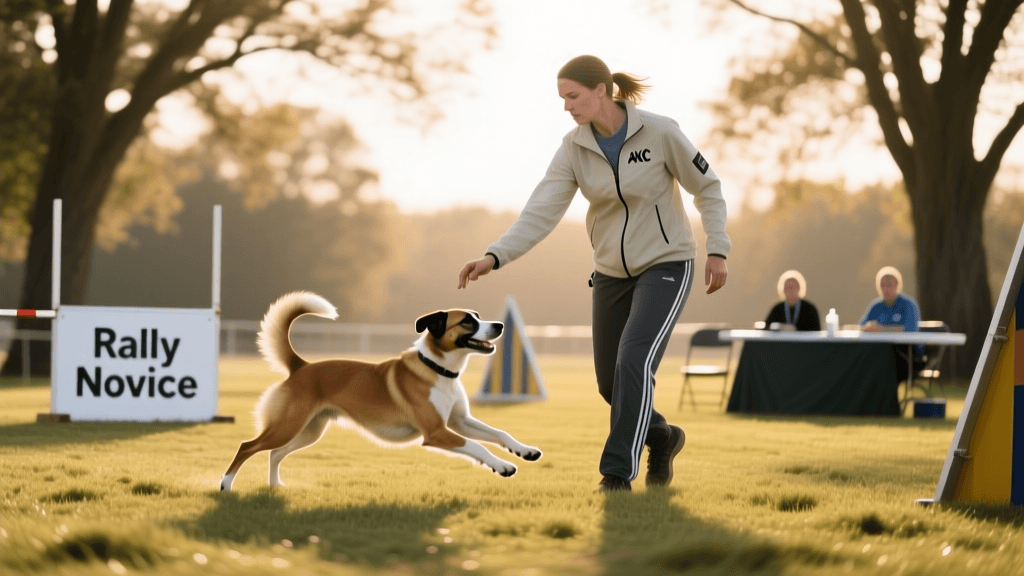
As we navigate the 2026 competitive dog sports season, Rally Obedience continues to be one of the most popular and accessible entry points into the world of canine competition. Unlike traditional obedience, which often demands rigid, robotic precision, Rally emphasizes teamwork, flow, and a joyful connection between handler and dog. For competitors stepping into the Novice level (RN), the exercises are performed entirely on-leash, making it an excellent testing ground for foundational engagement and leash pressure mechanics.
Among the most challenging and frequently misunderstood signs in the Novice repertoire are the 360-degree pivots. The 360 Left and 360 Right signs require the handler and dog to rotate a full circle in place while maintaining the heel position. In 2026, judges are placing an even heavier emphasis on the fluidity of this movement, penalizing handlers who drag their dogs through the turn or take excessive stepping to complete the rotation. According to the latest AKC Rally Regulations, the goal is a seamless, unified turn that demonstrates the dog's active choice to stay in position rather than mere compliance through leash pressure.
Deconstructing the 360-Degree Pivot
To master the pivot, we must first understand the biomechanics involved. A 360-degree pivot is not a wide circle; it is a tight, controlled rotation around a central axis. The handler acts as the inside or outside post, depending on the direction of the turn, while the dog must adjust its hindquarters and front end independently to maintain alignment.
The Geometry of the Turn
When executing a Left Pivot, the dog is on the inside of the turn. This requires the dog to move its hindquarters laterally to the right while keeping its front end relatively stationary or moving in a very tight arc. Conversely, during a Right Pivot, the dog is on the outside. The dog must cross its front paws over one another and swing its hindquarters wide to keep its shoulder aligned with the handler's left leg. Teaching your dog to understand the difference between these two physical demands is the cornerstone of Novice Rally success.
Handler Footwork: The Key to Canine Success
Many handlers blame their dogs for forging or lagging during a pivot, but the root cause is often poor handler footwork. In 2026, top-tier instructors at institutions like the Fenzi Dog Sports Academy heavily advocate for the 'replacement step' or 'heel pivot' technique over the outdated 'step-around' method.
- The Step-Around (Not Recommended): The handler takes a large step forward with the right foot and swings the left foot around. This causes the handler's body to surge forward, pulling the dog out of position and forcing the dog to scramble to catch up.
- The Replacement Step (Recommended): The handler keeps their feet relatively close together, lifting the right foot slightly and placing it down in the same spot while rotating on the ball of the left foot. This keeps the handler's left leg (the dog's guidepost) in a consistent, predictable location, allowing the dog to read the body language and adjust its own footwork accordingly.
Step-by-Step Training Protocol
Building a reliable pivot requires breaking the exercise down into manageable, rewarding steps. Do not rush this process; a solid pivot foundation will serve you well as you advance to the Advanced and Excellent levels, where off-leash heeling and distance work become mandatory.
Phase 1: The Pivot Platform
Start with a visual boundary. A 2x2 foot rubber mat or a specialized pivot disc works best. Place your dog in the heel position next to the mat. Step onto the mat with both feet. The physical boundary helps the handler resist the urge to walk forward, while the tactile change under the dog's paws signals that a specific, stationary behavior is about to be requested.
Phase 2: Luring and Fading the Front End
With a high-value treat in your left hand (for a dog in left heel), position the treat directly in front of the dog's nose. For a Left Pivot, slowly rotate your left wrist and torso counter-clockwise. The dog's nose will follow the treat, causing its hindquarters to swing out to the right. Mark the behavior with a clicker or a verbal 'Yes!' the moment the dog takes a single lateral step with its hind legs. Reward in the heel position. Gradually increase the criteria from a quarter turn, to a half turn, and finally a full 360-degree rotation.
Phase 3: Fading the Lure and Adding the Cue
Once the dog understands the physical mechanics of the turn, you must fade the food lure. Transition the treat to your right hand or a treat pouch, and use an empty left hand to guide the dog's head. Introduce a verbal cue such as 'Pivot' or 'Turn' just as you initiate your body rotation. In the 2026 competitive environment, judges look for dogs that respond to subtle verbal and body cues rather than dogs that are staring fixedly at a handler's baiting hand.
2026 Recommended Gear for Rally Obedience
Having the right equipment can drastically improve your training efficiency and ring performance. Here are the top gear recommendations for the 2026 season:
- Leashes: AKC regulations mandate a standard leash without traffic handles. The Ruffwear Roamer Leash (2026 Edition) offers an excellent balance of lightweight durability and a comfortable handle that won't snag during tight pivots.
- Collars: A simple, flat buckle collar is preferred for Novice. Avoid martingales or slip leads during early training, as they can create inconsistent leash pressure that confuses the dog during lateral movements.
- Treat Delivery: The Dogline Quick Treat Pouch remains a favorite among competitors for its magnetic closure, allowing for rapid, silent treat delivery that keeps the dog's focus upward rather than on the handler's fumbling hands.
- Training Mats: A high-density foam puzzle mat (cut to a 2x2 square) provides excellent grip for both human shoes and canine paws, preventing slips that can cause hesitation or injury during the pivot.
Scoring and Deductions: What Judges Look For
Understanding how you are scored is just as important as the training itself. Below is a breakdown of common errors seen on the 360-degree pivot signs and how they impact your score in the Novice class.
| Common Error | Typical Deduction | How to Fix in Training |
|---|---|---|
| Dog sits or stops moving during the pivot | -10 Points (or NQ if severe) | Reward continuous motion; avoid pausing to deliver treats until the turn is complete. |
| Handler takes extra steps off the pivot point | -3 to -5 Points | Practice on a physical mat; have a video partner record your footwork to identify creeping. |
| Consistent leash tension/pulling | -1 to -3 Points per occurrence | Drop the leash entirely in practice; rely solely on body pressure and verbal engagement. |
| Dog forging ahead of heel position | -3 Points | Reset and reward slightly behind the heel plane to encourage the dog to hold back its momentum. |
Troubleshooting Common Pivot Errors
Even with meticulous training, dogs can develop bad habits. If your dog consistently swings its hindquarters too wide on the Right Pivot, it is likely anticipating forward movement. To fix this, practice 'heeling in place'—shifting your weight from foot to foot without moving forward—and rewarding the dog for maintaining a tight, glued-to-your-leg position. If your dog lags behind on the Left Pivot, ensure you are not inadvertently blocking its path with your left leg. Open your hips slightly to invite the dog into the pocket of the heel position.
Ring nerves can also degrade a perfect pivot. Adrenaline causes handlers to speed up their footwork and dogs to lose focus. Incorporate 'ring simulations' into your weekly routine. Set up a mock course in your living room or backyard, complete with a judge's clipboard and a timer. Practice walking to the sign, reading it aloud, and executing the pivot with the same deliberate breathing and pacing you intend to use in the actual competition ring.
Conclusion
The 360-degree pivot is more than just a required maneuver on an AKC Rally Novice course; it is a profound exercise in communication, balance, and mutual trust. By focusing on precise handler footwork, breaking the behavior down into rewarding phases, and utilizing the best 2026 training gear, you can transform this challenging sign into a showcase of your team's synergy. Remember that Rally is a journey of continuous learning. Celebrate the small victories in your training sessions, keep your leash loose, and most importantly, enjoy the dance with your dog.
robin-maitland
All our authors care for dogs every day — read more of their work on the authors page.