Dog Separation Anxiety Training in 2026: Smart Camera Protocols
Discover how to cure dog separation anxiety in 2026 using smart cameras and graduated departure protocols. Actionable steps and top tech reviewed.
Understanding Separation Anxiety in the 2026 Hybrid Era
As we navigate the hybrid work norms and fluctuating schedules of 2026, dogs are experiencing erratic alone-time routines more than ever before. While some canines adapt seamlessly to their owners coming and going, others develop profound distress. Separation anxiety is not merely a dog being "naughty" or chewing a shoe out of spite; it is a genuine panic disorder. According to the ASPCA, separation anxiety is triggered when dogs become intensely upset that they are separated from their guardians, often resulting in destructive behavior, excessive vocalization, and house soiling.
To effectively treat this condition, modern canine behaviorists rely on a combination of desensitization, counterconditioning, and advanced technology. In 2026, smart treat-dispensing cameras have evolved from simple pet-monitoring gadgets into essential behavioral modification tools. When paired with a structured graduated departure protocol, these devices allow you to reward calm behavior in real-time, even when you are physically outside the home.
The Role of Smart Treat-Dispensing Cameras
Traditional training for separation anxiety required a secondary person to sit in the house and record the dog's behavior, or the owner to stand outside the door with a stopwatch, hoping they could hear if the dog started crying. Today, HD smart cameras with two-way audio and remote treat-tossing capabilities have revolutionized this process.
According to research highlighted by the Cornell University College of Veterinary Medicine, successful treatment of separation anxiety relies heavily on preventing the dog from reaching a state of panic during training exercises. Smart cameras allow owners to monitor stress signals and intervene before the dog crosses the anxiety threshold.
By using the camera's treat-toss feature, you can create a positive association with your absence. The goal is to teach the dog that your departure predicts wonderful things, rather than abandonment.
2026 Smart Camera Comparison for Anxiety Training
Not all pet cameras are created equal when it comes to behavioral modification. For separation anxiety training, you need a device with a reliable, jam-free treat dispenser, high-definition night vision, and low-latency audio. Below is a comparison of the top models utilized by certified trainers in 2026.
| Camera Model | Dispenser Capacity | Key Training Feature | Approx. 2026 Price |
|---|---|---|---|
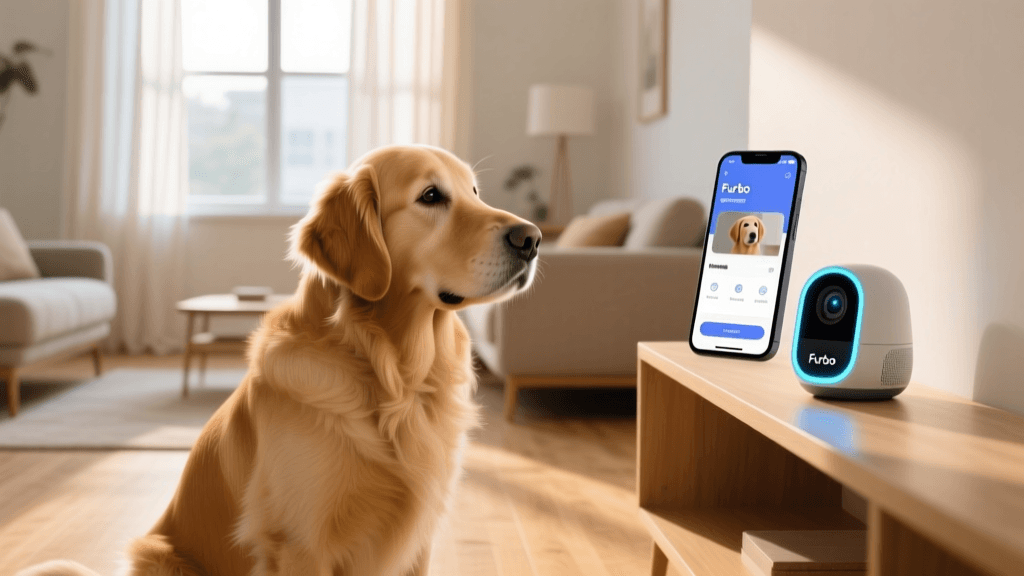
| Furbo 360 Dog Camera | Up to 1.5 cups | 360-degree panning auto-tracking; variable toss distance settings. | $199 |
| Petcube Bites 3 | Up to 2 cups | Scheduled treat routines; laser pointer integration for pre-departure play. | $179 |
| Eufy Indoor Cam Pet | Up to 1 cup | AI pet recognition with "bark alerts" sent directly to your smartwatch. | $129 |
Pro Tip: For training, use high-value, low-calorie treats that fit the dispenser mechanics. Zuke's Mini Naturals or small pieces of freeze-dried beef liver work exceptionally well and prevent the dispenser from jamming.
The 30-Day Graduated Departure Protocol
This protocol utilizes your smart camera to systematically desensitize your dog to your departures. The golden rule of this protocol is never push the dog past their anxiety threshold. If your dog shows signs of stress (panting, pacing, whale eye, whining, or ignoring the tossed treats), you have moved too fast. Return to the previous successful step.
Phase 1: Desensitizing Pre-Departure Cues (Days 1–7)
Dogs with separation anxiety often begin panicking before you even leave the house. They recognize the "cues" of your departure: putting on shoes, jingling keys, or picking up your coat. Phase 1 involves stripping these cues of their predictive power.
- Days 1-3: Put on your coat, then sit on the couch and watch TV. Put your shoes on, then take them off and make dinner. Do this 10-15 times a day.
- Days 4-5: Pick up your keys, walk to the door, then walk back and put them down. Reward your dog with a treat from your pocket for remaining calm.
- Days 6-7: Open the front door, step halfway out, then immediately step back in and close it. Do not make a big fuss when you return; keep greetings incredibly low-key.
Phase 2: Micro-Departures with Camera Feedback (Days 8–14)
Now you will use your smart camera (e.g., the Furbo 360) to monitor your dog and deliver remote rewards. Set up your camera on a stable surface with a clear view of the door and your dog's primary resting spot.
- The Setup: Give your dog a long-lasting enrichment item, like a frozen KONG stuffed with plain pumpkin and Greek yogurt. This keeps them occupied and licking, which naturally releases endorphins.
- The Departure: Walk out the front door and close it quietly.
- The 1-Second Rule: Look at your camera feed. If your dog is calm and engaging with the KONG, wait exactly 1 second, then use the app to toss a treat. Open the door and walk back in before they finish the treat.
- Incremental Increases: Over the week, gradually increase the time outside. Move from 1 second to 3 seconds, then 10 seconds, 30 seconds, and eventually 1 minute. Always toss a treat via the app before the dog shows any sign of distress, and return while they are still happily chewing or eating.
Phase 3: Building Duration and Variable Rewards (Days 15–30)
Once your dog can comfortably handle a 5-minute absence without showing stress signals, you can begin extending the duration more rapidly. However, you must shift from a continuous reinforcement schedule (tossing a treat every single time) to a variable reinforcement schedule.
- Day 15-20: Practice 5-minute, 10-minute, and 15-minute departures. Toss 2-3 treats at random intervals while you are outside. If the dog is sleeping or relaxed, do not wake them with a treat toss; simply let them rest.
- Day 21-25: Introduce "real world" variables. Start your car, drive around the block (5-8 minutes), and return. Use the camera's two-way audio to test if your voice soothes or excites your dog. (Note: For some dogs, hearing the owner's voice without seeing them causes frustration. If your dog whines at the sound of your voice, disable two-way audio during departures).
- Day 26-30: Extend absences to 30–45 minutes. At this stage, you should be leaving the house for actual errands, utilizing the camera to periodically check in and toss a treat if the dog is exhibiting calm, settled behavior.
Troubleshooting Common Roadblocks
Even with the best technology and protocols, training separation anxiety is rarely a perfectly straight line. Here is how to handle common setbacks in 2026.
The Dog Ignores Tossed Treats
If you toss a high-value treat via your camera and your dog ignores it, your dog is over threshold. A dog in a state of panic will not eat, regardless of how delicious the treat is. If this happens, you must immediately return inside, end the training session, and make the next departure significantly shorter (e.g., dropping from 2 minutes back down to 10 seconds).
Camera Obsession and Frustration
Some dogs become hyper-fixated on the camera, staring at it and barking in anticipation of the treat toss. This defeats the purpose of teaching them to relax. If your dog develops "camera frustration," switch to a camera without a dispenser (like a standard Wyze Cam) and rely entirely on long-lasting frozen enrichment toys given before you leave. The goal is for the dog to relax in the environment, not stare at a plastic robot waiting for food.
Regression After Illness or Routine Changes
It is incredibly common for dogs to experience a resurgence of anxiety symptoms if they spend a week recovering from a medical issue (like a GI bug or injury) where you are home with them 24/7. When returning to work, do not jump straight back to 8-hour absences. Use your camera protocol to rebuild their confidence, starting back at Phase 2 micro-departures for a few days.
Supplements and Environmental Support
Training should be supported by a holistic approach to your dog's nervous system. In 2026, veterinary behaviorists frequently recommend pairing graduated departure training with evidence-based calming supplements and pheromones.
- Adaptil Optimum Diffuser: Plug this in the room where your dog spends the most time. It releases synthetic dog-appeasing pheromones that mimic the comforting signals of a nursing mother dog.
- L-Theanine and Colostrum Supplements: Products like Virbac Anxitane or Solliquin can help lower baseline anxiety levels, making your dog more receptive to the counterconditioning protocol. Always consult your veterinarian before starting any new supplement.
- White Noise and Audiobooks: Dogs with isolation distress often react to outdoor triggers (delivery trucks, neighbors) when left alone. Use a smart speaker to play classical music or audiobooks (spoken-word audio has been shown to encourage resting behavior in shelter dogs) to mask outside sounds.
When to Seek Professional Help
If you have diligently followed the 30-Day Graduated Departure Protocol and your dog is still exhibiting severe panic behaviors—such as injuring themselves trying to escape through windows or doors, or experiencing prolonged diarrhea and vomiting when left alone—it is time to escalate your care. Seek out a Certified Applied Animal Behaviorist (CAAB) or a board-certified veterinary behaviorist (DACVB). In severe cases, prescription anti-anxiety medications (such as fluoxetine or clomipramine) are necessary to alter the brain chemistry enough for the dog to be capable of learning the desensitization protocols. Medication is not a failure; it is a vital tool that gives your dog the biological capacity to succeed in their training.
By leveraging the smart home technology of 2026 and committing to a compassionate, science-based graduated departure protocol, you can help your dog overcome their panic and finally enjoy peaceful, relaxing alone time.
anouk-beaumont
All our authors care for dogs every day — read more of their work on the authors page.