Adaptive Obedience Training for Dogs With OA in 2026
Discover how to adapt obedience training and mental enrichment for dogs undergoing osteoarthritis treatment in 2026. Keep your senior dog engaged pain-free.
The Intersection of Canine OA Treatment and Training
Canine osteoarthritis (OA) is a degenerative joint disease that affects a significant portion of the aging dog population. As veterinary medicine has advanced, the approach to managing OA has shifted from simple pain masking to comprehensive, multimodal therapy. However, a critical component that is often overlooked in the rehabilitation process is behavioral conditioning and obedience training. When a dog experiences chronic joint pain, their willingness to perform traditional commands diminishes, and they may develop behavioral aversions to activities they once loved. In 2026, certified canine rehabilitation therapists and veterinary behaviorists emphasize that training must evolve alongside medical treatment. Adaptive obedience training ensures that your dog remains mentally stimulated, maintains a strong bond with you, and navigates their environment safely without exacerbating joint degradation.
The 2026 Landscape of OA Pain Management and Training
Understanding the current standard of care is vital for timing your training sessions effectively. By 2026, the widespread use of anti-NGF monoclonal antibodies, such as bedinvetmab, has revolutionized OA management by neutralizing the nerve growth factor responsible for pain signaling. Additionally, targeted NSAIDs like grapipant offer localized inflammation relief with fewer systemic side effects. While these treatments are miraculous for pain reduction, they can sometimes create a false sense of security. A dog feeling 90% better may attempt to jump onto a high bed or sprint after a squirrel, leading to acute soft-tissue injuries on top of chronic OA. Therefore, modern adaptive training focuses heavily on impulse control, environmental awareness, and low-impact cognitive engagement. The goal is to tire the dog's brain, not their compromised joints.
Modifying Core Obedience Commands for Joint Preservation
Traditional obedience commands were designed for able-bodied dogs and often require deep flexion of the stifle (knee), coxofemoral (hip), and elbow joints. According to the American College of Veterinary Surgeons, repetitive deep flexion and rising from cold, hard surfaces accelerate cartilage wear in dogs with existing OA. As a trainer or dedicated owner, you must audit your dog's basic manners and replace high-stress movements with biomechanically friendly alternatives.
Rethinking the 'Sit' and 'Down'
The 'sit' command requires the dog to fold their hindquarters beneath them, placing immense pressure on dysplastic hips and arthritic stifles. Similarly, the 'down' command forces the dog to lower their entire body weight and later engage their front shoulders and hips to rise. Instead of demanding these positions, 2026 training protocols advocate for the 'Stand-Stay' and the 'Sphinx Rest'. The 'Stand-Stay' keeps the dog's weight evenly distributed across all four limbs without requiring joint flexion. To teach this, capture your dog in a natural standing position, mark the behavior with a clicker or a verbal 'yes,' and reward at chest level to prevent them from dipping their head and shifting their weight forward.
Adaptive Command Comparison Chart
| Traditional Command | Biomechanical Stress | 2026 Adaptive Alternative | Training Method |
|---|---|---|---|
| Sit / Sit-Stay | Deep hip and stifle flexion; difficulty rising | Stand-Stay | Capture natural standing; reward at chest height |
| Down | Shoulder strain; hip splay on hard floors | Place / Mat (Elevated) | Lure onto an orthopedic cot; reward in a resting posture |
| Fetch / Retrieve | High-impact sprinting; sudden deceleration | Scent Work / Find It | Hide treats in snuffle mats or low-lying boxes |
| Jump / Up | Acute spinal and hindlimb impact | Target / Ramp Loading | Shape paw-targeting on a textured ramp surface |
Low-Impact Mental Stimulation and Trick Teaching
The American Kennel Club notes that mental enrichment is just as crucial as physical exercise for senior dogs, particularly those with mobility restrictions. A 15-minute scent work session can burn as much mental energy as a one-mile walk, without the concussive forces on the joints.
Introduction to Canine Scent Work
Scent work leverages a dog's most powerful sense, requiring zero physical exertion beyond slow, deliberate walking. Begin by introducing a specific odor, such as birch or anise essential oil, paired with high-value treats. Once the dog associates the scent with a reward, hide the scent vessel in easily accessible, low-to-the-ground locations. This encourages the dog to move at their own pace, engaging their core muscles gently while providing massive dopamine releases upon finding the target. For dogs with severe spinal OA, scent work can be adapted to a tabletop level, allowing the dog to work while standing comfortably without bending down.
Nose and Paw Targeting
Target training is a foundational skill for adaptive obedience. Teaching a 'nose boop' (touching their nose to your palm) allows you to guide your dog through doorways, into vehicles, or onto grooming tables without ever attaching a leash that could pull on their cervical spine. Similarly, teaching a 'paw target' to a specific mat or sticky note helps you position your dog's hindquarters for veterinary exams or physical therapy exercises without physically manhandling their painful joints.
Behavioral Conditioning for Cooperative Husbandry
Dogs with OA often develop reactivity or fear aggression at the veterinary clinic because traditional restraint methods cause them excruciating pain. Cooperative care training is a vital behavioral conditioning tool that empowers the dog to participate in their own medical care. By 2026, fear-free veterinary practices heavily rely on owners who have pre-trained cooperative care behaviors at home.
The Chin Rest and Bucket Game
The chin rest involves training your dog to voluntarily rest their chin on a soft pillow or your knee. This behavior is shaped using progressive approximation: reward for looking at the pillow, then moving toward it, then touching it, and finally resting their weight on it. Once established, the chin rest serves as a 'consent' behavior. If the dog lifts their chin, the handling stops. This gives the dog a sense of control, drastically reducing anxiety and the need for forceful restraint during joint injections or blood draws.
Desensitization to Mobility Aids
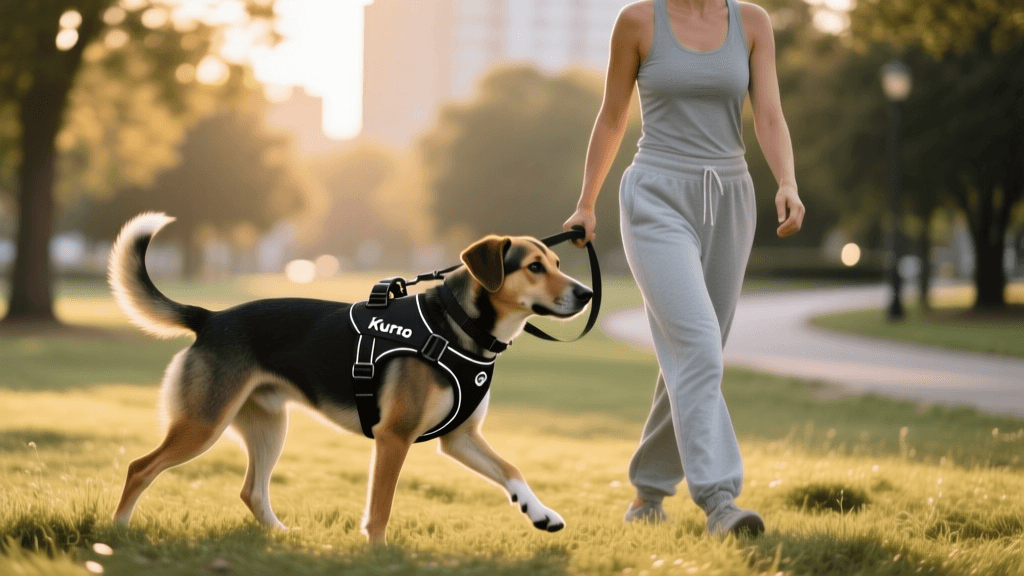
Many dogs undergoing OA treatment eventually require mobility aids, such as hind-limb support harnesses or canine wheelchairs. Introducing these devices without prior behavioral conditioning can result in panic and refusal to move. Use classical counter-conditioning to pair the sight and sound of the harness with high-value food rewards weeks before the dog actually needs to wear it. Practice draping the harness over their back without buckling it, gradually building up to full wear-time while engaging them in their favorite low-impact trick, like a simple hand-target.
Timing Your Training Sessions and Environmental Management
Even with advanced pain management, dogs with OA experience fluctuations in joint stiffness. Morning stiffness is a hallmark of the condition. Avoid scheduling training sessions immediately after your dog wakes up. Instead, allow for 30 to 45 minutes of gentle movement and warmth to let the synovial fluid lubricate the joints. Training sessions should be kept micro-short—no more than 3 to 5 minutes at a time—to prevent fatigue-induced sloppy movements that could cause a strain.
Furthermore, your training environment must be optimized for success. Hardwood and tile floors are the enemies of the OA dog, causing micro-slips that degrade joint stability. Conduct all training sessions on high-density foam mats, carpeted areas, or yoga mats. Ensure the room is well-lit, as aging dogs often suffer from concurrent canine cognitive dysfunction or vision loss, which can cause hesitation and anxiety during training exercises.
Conclusion
Training a dog with osteoarthritis in 2026 is not about abandoning obedience; it is about redefining it. By shifting your focus from physical compliance to cognitive engagement, modifying biomechanically stressful commands, and embracing cooperative care, you can profoundly improve your dog's quality of life. Adaptive training ensures that your senior companion remains a willing, happy, and mentally sharp partner in their golden years, proving that a diagnosis of OA is not the end of your dog's learning journey, but simply a change in the curriculum.
tom-renshaw
All our authors care for dogs every day — read more of their work on the authors page.