AKC Agility Weave Pole Training Guide 2026: 2x2 vs Channel
Master AKC agility weave poles in 2026. Compare the 2x2 and channel methods, explore top equipment, and build competition-ready speed.
Introduction to Competitive Weave Poles in 2026
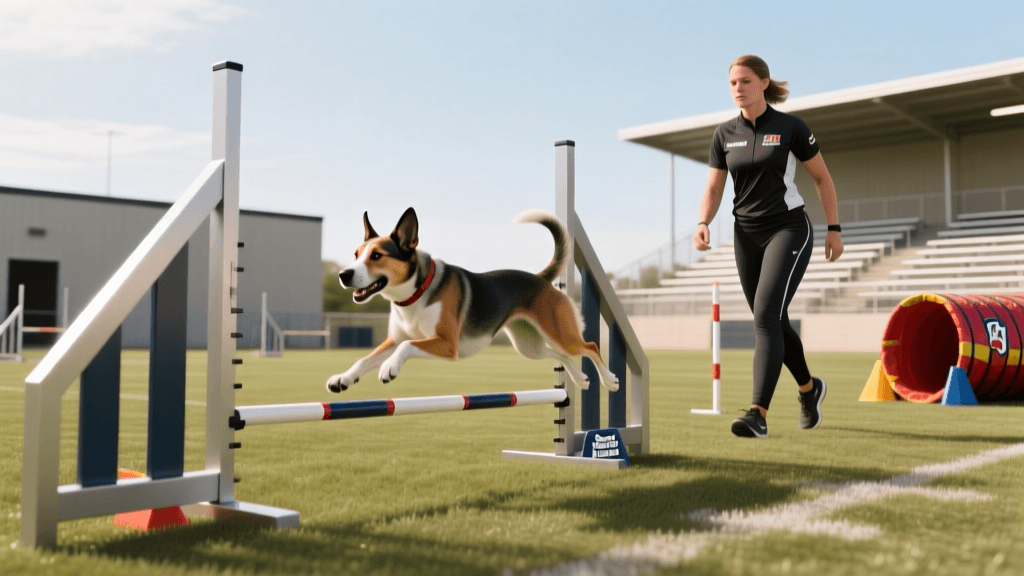
In the fast-paced world of modern dog agility, the weave poles remain the most technical and heavily scrutinized obstacle on the course. As we navigate the 2026 competition season, the meta for elite agility teams has shifted heavily toward independent obstacle performance and raw speed. According to the American Kennel Club's agility guidelines, a dog must enter the weave poles with the first pole on their left shoulder and successfully navigate all twelve poles without skipping or back-weaving. Failing to do so results in a fault, instantly eliminating your chances of a qualifying run.
For handlers and trainers, teaching the weaves is often the most time-consuming aspect of agility foundation work. Unlike a jump or a tunnel, which rely on natural canine instincts to chase and leap, weaving requires a dog to perform an unnatural, biomechanically complex spinal flexion pattern. Choosing the right training methodology from day one is critical. In this comprehensive 2026 guide, we will break down the two dominant weave pole training philosophies—the 2x2 method and the Channel method—helping you decide which approach best suits your dog's learning style and your competition goals.
The Biomechanics of Weaving: Safety and Conditioning
Before introducing any training methodology, it is vital to understand the physical demands of the weave poles. Weaving requires intense lateral spinal flexion, core stabilization, and shoulder flexibility. In 2026, canine sports medicine heavily emphasizes preconditioning before introducing high-repetition weave training.
Puppies and young dogs whose growth plates have not fully closed should never be forced into repetitive weaving. Instead, focus on core strengthening exercises, balance disc work, and proprioception drills. When your dog is physically mature and cleared by a canine sports veterinarian, always incorporate a dynamic warm-up routine. Resources from the AKC expert sports advice portal frequently highlight that cold muscles are highly susceptible to strain during the violent side-to-side motion of high-speed weaving.
Method 1: The 2x2 Weave Pole Training Method
Popularized by renowned agility expert Susan Garrett, the 2x2 weave pole training method has become a staple in the agility community. The core philosophy of the 2x2 method is shaping: breaking the complex behavior of weaving into small, easily achievable steps while building immense drive and value for the poles.
Step-by-Step 2x2 Training
- Phase 1: The Initial Shaping. Set up just two poles. Stand at a 90-degree angle to the poles. The goal is to shape the dog to pass through the poles with the first pole on their left shoulder. Reward heavily with a toy or high-value treat immediately after they pass through the gap.
- Phase 2: Adding the Second Pair. Once the dog is driving through the first two poles with confidence, add a second pair of poles about three feet away. The dog must now perform two independent entries.
- Phase 3: Closing the Gap. Gradually move the pairs of poles closer together, inch by inch, over several training sessions. As the gap closes, the dog naturally begins to adopt the flexing motion required for continuous weaving.
- Phase 4: Full Integration. Once all twelve poles are in a straight line, the dog should be driving through them with speed and independence, having learned the entry and the flexing motion simultaneously.
Pros and Cons of the 2x2 Method
The primary advantage of the 2x2 method is that it builds incredible independence and entry accuracy. Because the dog learns to find the entry from day one without physical guides, they are less likely to pop out of the poles when faced with complex handling moves on course. However, the method requires immense patience from the handler. Shaping can be frustrating for dogs that lack natural shaping experience, and the initial setup requires constantly moving heavy pole bases.
Method 2: The Channel Weave Pole Method
The Channel method takes a completely different approach. Instead of shaping the flexing motion from the start, the channel method prioritizes speed and forward momentum. The poles are set up in a staggered formation, creating a wide 'channel' down the middle. The dog runs straight through the channel without having to flex their spine.
Step-by-Step Channel Training
- Phase 1: The Wide Channel. Offset the poles so there is a clear, straight path down the middle. Send the dog through the channel at a full sprint. Reward heavily at the end to build massive forward drive.
- Phase 2: Narrowing the Gap. Over weeks or months, incrementally push the poles closer to the center line. The dog must begin to slightly adjust their stride to accommodate the narrowing path.
- Phase 3: The Flexing Transition. As the poles reach the halfway point, the dog is forced to begin bending their spine to avoid hitting the poles. The straight run transitions into a weaving motion.
- Phase 4: Closing the Channel. The poles are pushed completely into a straight line. The dog is now weaving at full speed.
Pros and Cons of the Channel Method
The channel method is phenomenal for building raw speed and forward commitment. Dogs trained this way rarely hesitate at the entrance of the weaves. However, the transition phase (when the channel is half-closed) is notorious for causing confusion. Some dogs will attempt to run straight through and crash into the poles, leading to a loss of confidence. Furthermore, dogs trained via the channel method sometimes struggle with difficult, acute-angle entries in competition because they were initially taught to run straight.
Comparison Chart: 2x2 vs. Channel vs. Guide Wires
To help you choose the right methodology for your 2026 training plan, review the comparison table below. Note that Guide Wires (using V-wires to physically guide the dog) are included for historical context, though they have largely fallen out of favor in modern elite training due to the high rate of 'popping' when the wires are removed.
| Training Method | Speed Development | Entry Independence | Setup Complexity | Best Suited For |
|---|---|---|---|---|
| 2x2 Shaping | Moderate to High | Excellent | High (Frequent adjustments) | Precise, thinking dogs; Handlers patient with shaping |
| Channel Method | Very High | Moderate | Moderate (Incremental shifting) | High-drive, fast dogs; Handlers prioritizing raw speed |
| Guide Wires | Moderate | Poor (Reliant on wires) | Low (Set and forget) | Beginner handlers needing quick results (Not recommended for elite 2026 competition) |
2026 Equipment Guide: Top Weave Pole Sets
Executing either the 2x2 or Channel method requires reliable, competition-grade equipment. Wobbly poles or bases that slide on the grass will ruin your dog's confidence and stride. Here are the top recommendations for 2026:
- Clean Run Competition Weave Poles: As highlighted by Clean Run agility experts, their proprietary stick-in-base design offers the perfect balance of rigidity and safety. If a dog hits a pole, it yields slightly without uprooting the entire base. They are the gold standard for AKC and FCI trials.
- Affordable Agility Economy Sets: For beginners on a budget, these PVC-based sets are excellent for backyard 2x2 shaping. While they lack the heavy rubber bases of competition gear, they are lightweight, making the constant moving required in the 2x2 method much easier on the handler's back.
- Max200 Premium Agility Gear: Known for their heavy-duty, weather-resistant bases, Max200 poles are ideal for handlers who leave their equipment set up in the yard year-round. The poles feature a unique flex-hinge that mimics the feel of international competition equipment.
Common Training Mistakes to Avoid
Even with the best methodology, handlers frequently make errors that stall progress. First, avoid the 'luring trap.' In the channel method, running ahead of your dog and luring them through with a toy creates a dog that only weaves when they see the reward at the end. You must fade the lure quickly and use remote reward placement. Second, poor handler positioning is a major culprit for popped poles. If you run past your dog's shoulder line while they are weaving, their natural instinct is to turn toward you and exit the poles early. Practice your rear crosses and blind crosses away from the poles before introducing them into the weave sequence.
Proofing and Competition Readiness
Once your dog can weave twelve poles in your backyard, the real training begins. Competition environments are loud, distracting, and feature complex course designs. You must 'proof' the weave poles against environmental factors. Practice weaving while a friend throws a toy nearby, or while another dog is running a jump sequence. Introduce acute-angle entries by placing a jump directly in front of the weaves, forcing the dog to collect their stride and find the left-shoulder entry from a difficult approach. In 2026, judges are designing courses that test a dog's ability to find the weaves from extreme distances; therefore, sending your dog to the poles from 15 feet away should be a regular part of your training regimen.
Conclusion
Mastering the weave poles is a journey that tests the communication and trust between you and your dog. Whether you choose the meticulous, entry-focused 2x2 method or the speed-driven Channel method, consistency and positive reinforcement are your greatest tools. Invest in quality equipment, prioritize your dog's physical conditioning, and remember that agility is ultimately a game. Keep your training sessions short, joyful, and highly rewarding, and you will be stepping up to the start line with a confident, weave-pole-crushing partner in no time.
hannah-wickes
All our authors care for dogs every day — read more of their work on the authors page.