Agility Dog Joint Recovery: Top 2026 Supplements & Protocols
Discover the best 2026 joint supplements and recovery protocols for canine agility competitors to prevent injury and extend their athletic careers.
The Biomechanical Toll of Modern Canine Agility
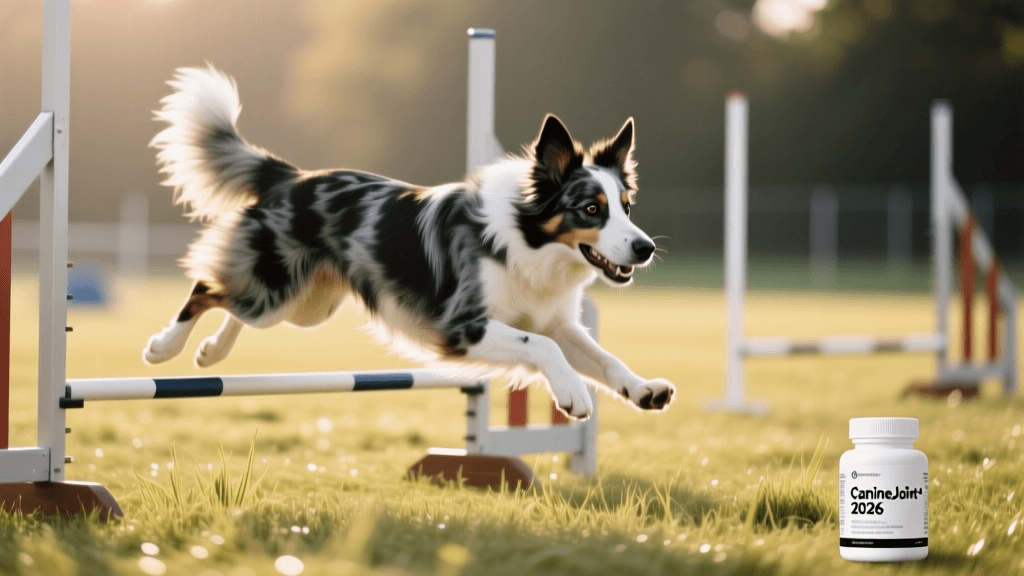
As we navigate the 2026 agility season, course designs are faster, more technical, and more physically demanding than ever before. Modern agility requires dogs to execute tight turning radii, scale towering A-frames, and navigate weave poles at blistering speeds. While the Border Collies, Shelties, and mixed breeds of the agility world are incredible athletes, this high-impact sport places immense biomechanical stress on their joints. When a 50-pound dog lands from a 24-inch jump, the concussive forces traveling through the carpus (wrist), tarsus (ankle), and stifle (knee) can exceed three to four times their body weight.
Over time, this repetitive micro-trauma accelerates the breakdown of articular cartilage and synovial fluid, leading to early-onset osteoarthritis. For handlers and competitors, proactive joint care is no longer optional; it is a fundamental pillar of canine sports medicine. To keep your agility partner sound, happy, and competitive in 2026, you must implement a comprehensive joint recovery protocol that combines cutting-edge nutraceuticals, advanced physical modalities, and strict conditioning routines.
Top Joint Supplements for Agility Dogs in 2026
The veterinary nutraceutical market has evolved significantly. In 2026, the focus has shifted away from basic glucosamine hydrochloride toward multi-modal formulations that target inflammation, cartilage matrix protection, and synovial fluid viscosity. According to the FDA guidelines on canine joint health, it is crucial to select supplements that have undergone rigorous third-party testing for purity and bioavailability.
When evaluating joint support for an active agility dog, veterinarians recommend looking for three primary active ingredients: Undenatured Type-II Collagen (UC-II), Green-Lipped Mussel extract, and high concentrations of EPA/DHA Omega-3 fatty acids. UC-II works via oral tolerance to modulate the immune system's attack on cartilage, while Green-Lipped Mussel provides a natural matrix of glycosaminoglycans (GAGs). The AKC expert advice on joint supplements further emphasizes that consistency in daily dosing is more critical than the sheer volume of the supplement.
2026 Veterinary Supplement Comparison Chart
Below is a comparison of the top-tier veterinary joint formulations favored by sports medicine specialists this year, based on a standard 50-pound agility dog.
| Product Formulation | Key Active Ingredients | Primary Target Benefit | Approx. Monthly Cost (2026) |
|---|---|---|---|
| Dasuquin Advanced | UC-II Collagen, ASU, Boswellia Serrata | Cartilage matrix protection and immune modulation | $85.00 |
| GlycoFlex Max | Perna Canaliculus (Green-Lipped Mussel), MSM, DMG | Soft tissue repair and synovial fluid support | $72.00 |
| Welactin 3X Canine | High-EPA/DHA Marine Omega-3s | Systemic inflammation modulation and joint lubrication | $48.00 |
Note: Always consult your veterinary sports medicine specialist before stacking multiple supplements, as overlapping ingredients like MSM can cause gastrointestinal upset in sensitive dogs.
Advanced Recovery Modalities for 2026 Competitors
Supplements provide the chemical building blocks for joint health, but physical recovery modalities address the acute inflammation and muscle fatigue that occur immediately after a trial. In 2026, two non-invasive therapies have become standard in the toolkit of elite agility handlers: Photobiomodulation (Cold Laser) and Pulsed Electromagnetic Field (PEMF) therapy.
Photobiomodulation (Class IV Laser Therapy)
Class IV therapeutic lasers utilize specific wavelengths of light (typically 810nm and 980nm) to penetrate deep into the joint capsule. This process stimulates cytochrome c oxidase in the mitochondria, accelerating cellular repair and flushing out inflammatory cytokines. Many agility venues in 2026 now feature on-site veterinary rehabilitation tents equipped with Companion Laser Therapy units. A standard post-run protocol involves 6 to 8 minutes of laser application over the bilateral stifles and shoulders, costing roughly $45 per session at private rehab clinics.
PEMF Therapy Blankets
For at-home recovery, PEMF technology has revolutionized canine sports care. Devices like the Assisi Animal Health Canine Circa-EM blanket deliver low-frequency electromagnetic pulses that enhance local circulation and reduce edema. Handlers are increasingly using PEMF blankets in their dogs' crates between runs at national championships to maintain joint mobility and reduce delayed onset muscle soreness (DOMS).
Preventive Conditioning: The FitPAWS Protocol
You cannot supplement your way out of poor biomechanics. A robust core and strong stabilizing muscles act as shock absorbers for the joints. Utilizing inflatable canine fitness equipment, such as the FitPAWS Peanut and Balance Discs, is essential for building the proprioception required to protect joints during unpredictable landings.
"A dog with a weak core will compensate by overloading their distal joints. Ten minutes of targeted balance work daily does more for joint longevity than any pill on the market." — Dr. Sarah Artingstall, DVM, DACVSMR (Canine Sports Medicine)
Daily 10-Minute Joint Protection Routine
- Stand on the Peanut (3 minutes): Ask the dog to stand squarely on the inflatable peanut. Use treats to encourage subtle weight shifts from front to back. This fires the deep stabilizing muscles of the shoulder and hip joints.
- Paw Targets on Discs (4 minutes): Place four balance discs on the floor. Lure the dog to place one paw on each disc and hold for 10 seconds. This builds carpal and tarsal stability.
- Tuck Sits to Kick-Back Stands (3 minutes): This movement isolates the hindquarters, forcing the dog to engage their hamstrings and glutes rather than relying on the patellar ligament to bear weight.
Warm-Up and Cool-Down Metrics
In 2026, the days of taking a dog straight from the crate to the start line are over. A proper warm-up increases synovial fluid viscosity, essentially "oiling" the joints before high-impact work. Your warm-up should last a minimum of 10 minutes and include dynamic movements like figure-eights through your legs, spin twists, and trotting over raised cavaletti poles set at the dog's carpal height.
Equally important is the cool-down. After your final run, engage in 15 minutes of active leash walking to allow the heart rate to return to baseline (typically under 100 BPM for a resting athletic dog). Follow this with gentle, static stretching of the hamstrings and triceps, holding each stretch for 15 to 20 seconds. Never perform static stretching on cold muscles before a run, as this can temporarily decrease joint stability and increase the risk of a soft-tissue tear.
Nutritional Management and Body Condition Scoring
The single most effective way to reduce joint wear and tear is weight management. Every extra pound of body fat places exponential stress on the canine stifle and carpus. In the world of agility, dogs should be maintained at a lean Body Condition Score (BCS) of 4 out of 9. You should be able to easily feel the dog's ribs without pressing hard, and they should have a distinct abdominal tuck when viewed from the side.
During the off-season or periods of reduced trial activity, caloric intake must be adjusted downward by 10% to 15% to prevent creeping weight gain. Many top competitors in 2026 utilize performance diets that are high in bioavailable proteins and fortified with joint-supporting nutrients, feeding slightly less on non-training days to maintain that crucial race-weight leanness.
Final Thoughts for the 2026 Season
Competing in canine agility is a thrilling partnership, but it requires a profound commitment to your dog's long-term physical wellbeing. By integrating premium, multi-modal joint supplements, utilizing advanced recovery technologies like Class IV lasers and PEMF, and adhering to strict conditioning and weight management protocols, you can significantly extend your dog's athletic career. Listen to your dog, watch for subtle changes in their jumping mechanics or weave pole entry, and prioritize their joint health above all else. A sound dog is a fast dog, and a well-cared-for dog will be your partner for years to come.
priya-sutaria
All our authors care for dogs every day — read more of their work on the authors page.