Getting a Dog With Osteoarthritis: 2026 Prep & Care
Learn how to adopt and prepare your home for a dog with osteoarthritis. Discover 2026 multimodal treatments, home essentials, and senior dog care tips.
Why Adopt a Dog with Osteoarthritis?
Adopting a dog is a monumental decision that brings immense joy, but choosing to bring home a dog diagnosed with osteoarthritis (OA) is a uniquely rewarding act of compassion. Many senior dogs or large-breed rescues in shelters are passed over due to an OA diagnosis, leaving them to languish in kennels where hard concrete floors exacerbate their joint pain. When you decide to adopt a dog with OA, you are not just getting a pet; you are providing a sanctuary. Fortunately, the landscape of canine OA treatment in 2026 is more advanced, accessible, and effective than ever before. With proper home preparation and a modern multimodal treatment plan, an OA dog can live a vibrant, comfortable, and deeply fulfilling life in their golden years.
Preparing Your Home: First-Day Essentials for OA Dogs
Before bringing your new companion home, you must modify your living space to accommodate their limited mobility. A dog with OA struggles with impact, slippery surfaces, and repetitive strain. Preparing your environment is the most critical step in the "getting a dog" process for special needs pets.
Flooring and Traction
Hardwood, tile, and laminate floors are the enemies of arthritic joints. When a dog slips, the sudden splay of their legs causes micro-tears in the joint capsule and severe pain spikes. Cover high-traffic areas and your dog's primary living zones with interlocking foam puzzle mats or heavy-duty area rugs featuring non-slip rubber backings. In 2026, many pet owners opt for modular pet-safe traction tiles that can be easily removed and washed, providing a stable, high-grip surface that mimics outdoor turf.
Orthopedic Sleeping Arrangements
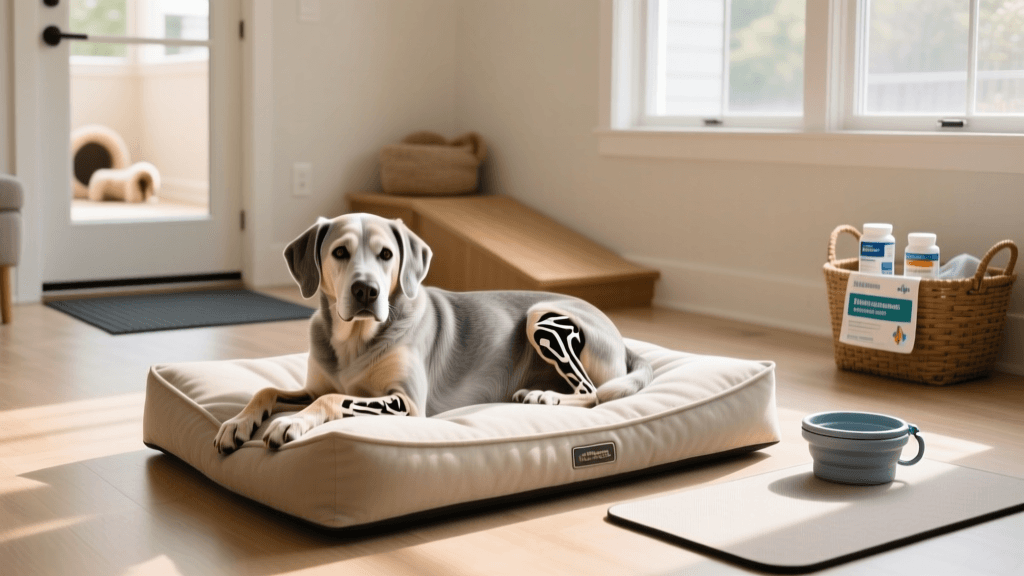
Standard plush dog beds do not offer the structural support an OA dog requires. You need a high-density orthopedic bed that prevents the dog's heavy joints from pressing through the foam to the hard floor. Look for beds featuring a minimum of four inches of therapeutic memory foam, such as the Big Barker Orthopedic Dog Bed or similar premium 2026 models designed specifically for joint support. Place the bed in a draft-free, easily accessible corner where your dog can rest without being stepped over by household foot traffic.
Accessibility Tools and Ramps
Jumping onto couches, beds, or into vehicles puts catastrophic stress on arthritic hips and shoulders. Invest in high-quality, gently sloped ramps. The PetSafe Solvit UltraLite Bi-Fold Ramp is an excellent, lightweight option for vehicle loading, while wider, carpeted indoor ramps should be placed next to your dog's favorite sofa spot. Additionally, elevate their food and water bowls to chest height to prevent them from having to crouch and strain their neck and shoulder joints during meals.
The 2026 Landscape of Canine OA Treatment
According to the American Kennel Club, osteoarthritis is a degenerative joint disease that affects a significant portion of the senior and large-breed dog population. In 2026, veterinary professionals rely on a multimodal approach—combining pharmaceuticals, physical therapies, and environmental modifications—to manage the disease rather than just masking the pain.
Monoclonal Antibodies and NGF Inhibitors
The most revolutionary shift in recent years has been the widespread adoption of Nerve Growth Factor (NGF) inhibitors. Monoclonal antibodies, such as bedinvetmab (marketed as Librela), have become a cornerstone of 2026 OA treatment. Unlike traditional painkillers that are metabolized by the liver or kidneys, these monthly injections specifically target and neutralize the NGF protein responsible for transmitting OA pain signals. This provides profound relief with minimal systemic side effects, making it incredibly safe for senior dogs with concurrent kidney or liver issues.
Advanced NSAIDs and Pain Modulators
Non-Steroidal Anti-Inflammatory Drugs (NSAIDs) remain vital for managing acute flare-ups. Modern veterinary formularies favor targeted NSAIDs like grapiprant (Galliprant), which specifically blocks the EP4 receptor, the primary mediator of inflammation and pain in canine OA. This targeted approach significantly reduces the risk of gastrointestinal and renal side effects associated with older, non-specific NSAIDs.
Regenerative and Physical Therapies
The American College of Veterinary Surgeons emphasizes that maintaining muscle mass is critical for stabilizing arthritic joints. In 2026, canine physical rehabilitation is highly accessible. Underwater treadmills provide low-impact resistance training, allowing dogs to build supporting musculature without bearing their full body weight. Additionally, therapies like Class IV cold laser therapy and veterinary acupuncture are routinely used to stimulate cellular repair and modulate pain pathways naturally.
2026 OA Treatment Comparison Chart
When working with your veterinarian to build a care plan, it helps to understand the different modalities available. Below is a comparison of standard 2026 OA treatments:
| Treatment Modality | Primary Function | Avg. 2026 Monthly Cost | Administration |
|---|---|---|---|
| NGF Inhibitors (e.g., Librela) | Blocks pain signaling at the nerve level | $75 - $150 | Monthly Vet Injection |
| Targeted NSAIDs (e.g., Galliprant) | Reduces joint inflammation and acute pain | $60 - $120 | Daily Oral Tablet |
| Adequan (Polysulfated Glycosaminoglycan) | Inhibits cartilage degradation, improves joint fluid | $50 - $90 | Series of IM Injections |
| Hydrotherapy / Underwater Treadmill | Builds supporting muscle mass without joint impact | $200 - $400 | Weekly Clinic Sessions |
| Prescription Joint Diets | Provides therapeutic levels of EPA/DHA Omega-3s | $80 - $130 | Daily Feeding |
Nutrition and Weight Management
Nutritional management, as outlined by experts at Hill's Pet Nutrition, plays a pivotal role in slowing the progression of OA. Every extra pound of body weight exerts roughly four pounds of additional pressure on a dog's joints. Keeping your newly adopted dog at a lean, optimal body condition score (BCS of 4 or 5 out of 9) is the single most effective, non-pharmaceutical treatment available.
In 2026, veterinary prescription diets formulated for joint health are highly sophisticated. These diets are fortified with specific ratios of Omega-3 fatty acids (EPA and DHA) which actively interrupt the enzymatic degradation of cartilage. They also often include added glucosamine, chondroitin, and specialized antioxidants to reduce systemic inflammation. Consult your veterinarian immediately upon adoption to transition your dog to a therapeutic joint diet, ensuring you measure their food precisely using a gram scale rather than a standard measuring cup to prevent accidental overfeeding.
The First 30 Days: Settling In
The first month with an OA dog requires patience and strict management. Your new dog may not immediately show signs of pain; dogs are stoic, and the adrenaline of a new environment can temporarily mask their discomfort. Limit their physical activity to short, frequent, and slow leash walks on soft surfaces like grass. Avoid throwing balls or encouraging sudden stops and turns, which can cause severe joint torsion.
Schedule a comprehensive veterinary wellness exam within the first week of adoption. Bring all shelter medical records so your vet can establish a baseline and begin a tailored multimodal pain management protocol. Observe your dog's resting habits: if they are pacing at night, panting heavily while resting, or reluctant to climb into their bed, their pain is not adequately controlled, and their medication dosages must be adjusted.
Adopting a dog with osteoarthritis is a commitment to ongoing care, environmental mindfulness, and veterinary partnership. However, the bond forged with a senior dog who finally experiences a pain-free life in a loving home is an unparalleled experience. By leveraging 2026's advanced treatments and thoughtfully preparing your home, you are giving a deserving dog the comfortable, joyful retirement they truly deserve.
marcus-aldridge
All our authors care for dogs every day — read more of their work on the authors page.