First-Day Essentials: Top No-Pull Dog Harnesses 2026
Preparing to bring home a new dog? Discover why a front-clip no-pull harness is a 2026 first-day essential and how to fit it for safe, enjoyable walks.
The First Walk: Setting Up for Success in 2026
Bringing a new dog home is one of the most exciting milestones for any pet owner. As you prepare your home for your new companion, your shopping list likely includes a comfortable bed, durable chew toys, and high-quality kibble. However, one of the most critical first-day essentials is often overlooked until the moment you step outside for that very first walk: the walking gear. In 2026, veterinary behaviorists and professional dog trainers universally agree that standard flat collars and back-clip harnesses are inadequate—and potentially dangerous—for dogs that have not yet mastered loose-leash walking.
Whether you are adopting a high-energy rescue dog, bringing home a strong breed like a Labrador Retriever, or simply starting with a stubborn puppy, a front-clip no-pull dog harness is an absolute necessity. This guide will break down the science behind why dogs pull, the anatomical risks of traditional collars, and the top-rated no-pull harnesses you need to have ready on day one.
Why Standard Collars and Back-Clip Harnesses Fail
When a new dog arrives in an unfamiliar environment, they are often overwhelmed by new scents, sounds, and sights. This sensory overload naturally leads to leash pulling. Relying on a standard flat collar or a back-clip harness during this transitional period can create severe behavioral and medical issues.
The Danger of Tracheal Damage
A dog's neck is a highly sensitive area housing the trachea, thyroid gland, and crucial blood vessels. When a dog pulls against a flat collar, the concentrated pressure can cause severe trauma. According to veterinary experts, repetitive strain from pulling on a neck collar is a leading environmental factor in exacerbating or triggering tracheal collapse, a condition where the cartilage rings of the windpipe weaken and flatten. VCA Animal Hospitals notes that avoiding neck pressure is paramount for dogs prone to respiratory issues or those with a history of pulling. A no-pull harness distributes the force across the dog's robust chest and shoulders, entirely removing the neck from the equation.
The Opposition Reflex and Sled-Dog Mechanics
Dogs possess a natural physiological response known as the opposition reflex. When pressure is applied to their chest or neck, their instinct is to push against it. If you use a back-clip harness, you are essentially putting your dog in a sledding rig. The leash attaches behind the dog's center of gravity, allowing them to drop their weight and use their powerful hindquarters to pull forward. This is fantastic for a Husky pulling a sled, but disastrous for a new pet owner trying to navigate a suburban sidewalk.
How a Front-Clip No-Pull Harness Works
A front-clip no-pull harness features a D-ring located on the dog's sternum (chest). When the dog pulls forward and hits the end of the leash, the front attachment point gently redirects their momentum sideways, turning them back toward the handler. This physical redirection breaks the opposition reflex. Instead of gaining forward traction, the dog learns that pulling results in a loss of forward progress. The American Kennel Club frequently recommends front-clip harnesses as a management tool to keep handlers safe while simultaneously training the dog to walk politely on a loose leash.
Top 3 No-Pull Harnesses for New Dogs in 2026
The pet gear market in 2026 has seen incredible advancements in ergonomic design, breathable materials, and escape-proof stitching. Here are the top three first-day essentials for new dog owners.
1. Rabbitgoo No-Pull Dog Harness (Best Overall for Day One)
The Rabbitgoo harness remains a staple for new dog owners due to its accessible price point, dual-clip design (front and back), and highly reflective strips. The 2026 updated model features upgraded Oxford cloth and softer neoprene padding to prevent armpit chafing, which is common when a new dog pulls erratically. It is highly adjustable at four points, making it forgiving if you are estimating your rescue dog's measurements before adoption day.
2. Kurgo Tru-Fit Smart Harness (Best for Car Safety & Durability)
If your first-day plans include a long car ride home from the shelter or breeder, the Kurgo Tru-Fit is the ultimate choice. Engineered with rock-climbing harness technology, it features a front V-neck design that relieves throat pressure. Its standout feature is the steel nesting buckle system and the included 10-inch seatbelt tether. It is crash-tested and provides exceptional control for strong, erratic pullers during those critical first weeks of decompression.
3. Ruffwear Front Range Harness (Best for Comfort and Long-Term Use)
For owners willing to invest in premium gear, the Ruffwear Front Range is the gold standard. It features four points of adjustment and a foam-padded chest and belly panel that prevents chafing even during long, high-stress decompression walks. The aluminum front leash ring is reinforced with webbing to withstand sudden lunges from reactive or fearful dogs. It slips easily over the head, which is ideal for dogs that are skittish about having gear buckled around their legs.
Comparison Chart: 2026 No-Pull Harnesses
| Brand & Model | Approx. Price (2026) | Clip Locations | Best Feature | Ideal For |
|---|---|---|---|---|
| Rabbitgoo No-Pull | $28.00 | Front & Back | Budget-friendly, reflective | First-time owners, medium breeds |
| Kurgo Tru-Fit Smart | $45.00 | Front & Back | Crash-tested car tether | Car travel, strong pullers |
| Ruffwear Front Range | $49.95 | Front & Back | Premium foam padding | Sensitive skin, long hikes |
Step-by-Step Fitting Guide for Day One
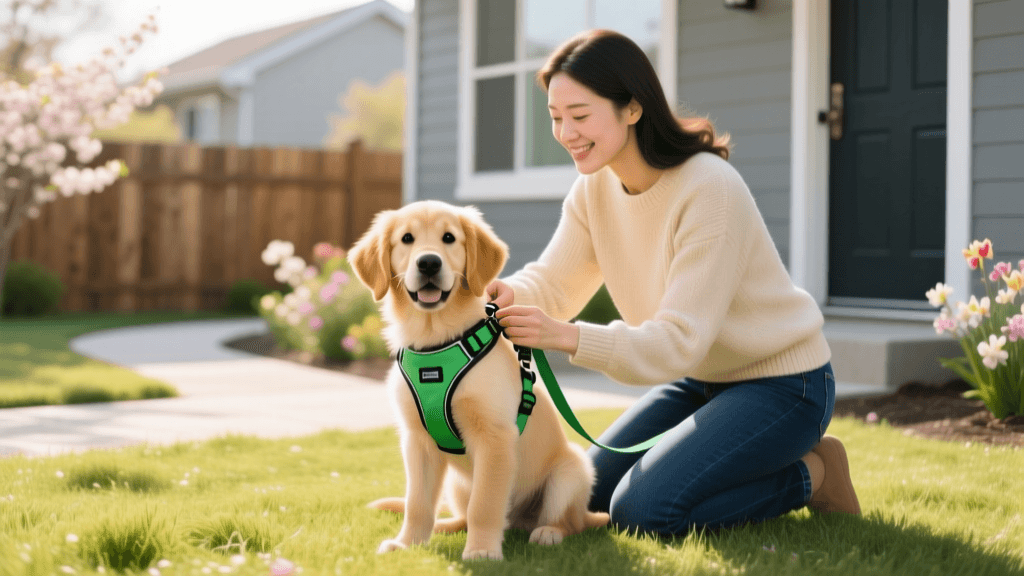
Buying the right harness is only half the battle; improper fit can lead to chafing, restricted shoulder movement, or an escaped dog. Follow these steps to ensure a safe fit on your dog's first day home:
- Measure the Girth: Use a soft tailor's tape measure to wrap around the widest part of your dog's ribcage, just behind the front legs. This is the most critical measurement.
- Measure the Lower Neck: Measure the base of the neck where it meets the chest, not the upper neck where a collar sits.
- The Two-Finger Rule: Once the harness is on, you should be able to slide exactly two fingers flat under any strap. If you can fit three, it is too loose and your dog may back out of it. If you can only fit one, it will restrict breathing and cause friction burns.
- Check Shoulder Mobility: Ensure the chest plate does not rub against the dog's armpits or restrict the full extension of their front legs while trotting.
Day One Desensitization: Introducing the Harness to a Rescue Dog
If you are adopting a shelter dog, they may have a history of negative associations with gear, or they may simply be terrified of objects moving over their head. Never force a harness onto a panicked dog on day one. Instead, use a desensitization protocol.
Pro-Tip: Before attempting to put the harness on, let it sit on the floor next to your dog's food bowl during mealtime. This builds a positive classical conditioning association between the harness and high-value resources.
Start by holding the harness open and luring your dog's nose through the head hole with a high-value treat, such as boiled chicken or freeze-dried liver. Do not buckle it yet. Feed the treat, remove the harness, and repeat five times. Next, slip it over the head, immediately feed a handful of treats, and take it off. Gradually work your way to fastening the belly buckles. Keep the initial sessions under three minutes to prevent the dog from becoming overwhelmed in their new environment.
First-Week Leash Training Tips
Once the harness is securely fitted, your first walks should be focused on decompression rather than strict obedience. Allow your dog to sniff; sniffing lowers a dog's heart rate and helps them process their new surroundings. However, if the dog pulls to the point of choking or dragging you, utilize the front-clip ring. When tension hits the leash, simply stop walking and become a tree. Do not yank the leash back. Wait for your dog to turn their head back toward you to check in, mark that behavior with a 'yes,' and reward them by allowing them to move forward to sniff a tree. Forward movement becomes the reward for a loose leash.
Conclusion
Preparing for a new dog requires foresight, and investing in a high-quality front-clip no-pull harness is one of the best decisions you can make for your dog's physical health and your mutual bond. By prioritizing tracheal safety, leveraging biomechanics to manage pulling, and using positive reinforcement from day one, you set the foundation for a lifetime of enjoyable, stress-free walks together. Ensure your gear is measured, fitted, and ready before your new best friend crosses the threshold of your home in 2026.
marcus-aldridge
All our authors care for dogs every day — read more of their work on the authors page.