Adopting a Dog for Hybrid Work: 2026 Transition Guide
Learn how to adopt and train a dog for a 2026 hybrid work schedule. Includes breed picks, Furbo 360 setup tips, and separation anxiety prevention.
The 2026 Hybrid Work Reality and Dog Ownership
As we navigate the professional landscape of 2026, the hybrid work model has firmly cemented itself as the corporate standard. With most companies mandating a three-day in-office and two-day remote split, many professionals are seizing the opportunity to finally bring a dog into their lives. However, transitioning a new puppy or rescue dog into a household where the owner regularly leaves for eight to ten hours requires meticulous planning. Getting a dog is a profound life transition, and doing so while balancing a hybrid career demands a strategic approach to breed selection, home preparation, and behavioral conditioning.
Unlike the fully remote era of the early 2020s, today's dog owners must prepare their pets for inevitable absences from day one. Failing to account for the jarring contrast between your cozy home-office days and your bustling in-office days can lead to severe canine behavioral issues. This comprehensive guide will walk you through selecting the right companion, leveraging 2026's smart home technology, and executing a flawless separation desensitization protocol.
Evaluating Your 2026 Hybrid Schedule
Before visiting a shelter or contacting a breeder, you must ruthlessly audit your weekly rhythm. In 2026, the average hybrid worker spends roughly 12 hours away from home on office days (including commute, work, and post-work errands). A dog cannot hold its bladder for 12 hours, nor can it remain unstimulated for that duration without developing destructive habits.
You must establish a reliable mid-day intervention strategy. Will you hire a professional dog walker? Are you utilizing a localized doggy daycare for your office days? Or do you have a neighbor or partner who can provide a mid-day potty and play break? Mapping out this logistical safety net is the very first step of responsible dog acquisition.
Selecting the Right Canine Companion
Not all dogs are created equal when it comes to tolerating alone time. While it is tempting to adopt the most affectionate, velcro-type rescue you find, high-attachment breeds often struggle immensely with hybrid schedules. When getting a dog for a hybrid lifestyle, prioritize independence, moderate energy levels, and a calm indoor demeanor.
| Breed / Type | Independence Level | Exercise Need | Hybrid Suitability |
|---|---|---|---|
| Greyhound (Retired Racer) | High | Low/Moderate | Excellent (Couch potatoes that sleep through absences) |
| Basset Hound | Moderate | Low | Very Good (Prone to napping, low destruction risk) |
| Shiba Inu | Very High | Moderate | Good (Cat-like independence, but requires secure fencing) |
| Adult Mixed Breed (Senior) | Varies | Low | Excellent (Fosters can verify alone-time behavior) |
| Border Collie / Vizsla | Very Low | Extremely High | Poor (High risk of separation anxiety and destruction) |
If you are adopting from a rescue, specifically ask the foster coordinator about the dog's behavior when left alone. Foster homes provide invaluable data that shelter environments simply cannot offer. According to the Humane Society, asking detailed questions about a dog's history and foster behavior is critical for ensuring a successful long-term placement.
The 2026 Smart Home Tech Stack
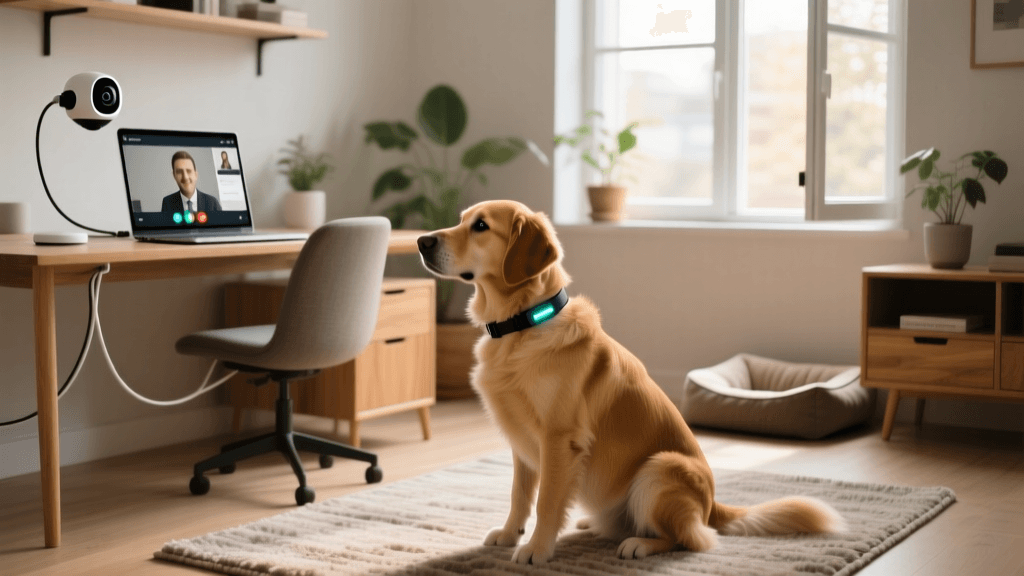
To bridge the gap between your home office and your corporate desk, leveraging 2026's advanced pet technology is non-negotiable. Monitoring and interacting with your dog while you are at the office provides peace of mind and allows you to interrupt unwanted behaviors in real-time.
Furbo 360 Dog Camera
The Furbo 360 remains a top-tier choice in 2026 for hybrid workers. Its rotating lens ensures that no matter where your dog wanders in the living room, you can track them via the app. The built-in treat tosser allows you to reward calm behavior remotely, and the AI-driven 'Dog Nerd' alerts notify you if your dog is barking, crying, or vomiting while you are in a board meeting. Expect to invest around $199 for the hardware, plus a modest monthly subscription for cloud recording.
Fi Series 3 GPS Smart Collar
If your dog will be going to a doggy daycare or walking with a sitter on your office days, the Fi Series 3 GPS collar is essential. It offers precise location tracking and an 'escape alert' that notifies you instantly if your dog leaves a designated safe zone. Furthermore, its activity tracking helps you verify that your dog walker is actually providing the promised 45 minutes of exercise.
The 30-Day Separation Desensitization Protocol
According to the ASPCA, separation anxiety is one of the most prevalent behavioral issues in dogs, characterized by pacing, destructive chewing, and inappropriate elimination. To prevent this, you must begin desensitization the very first week you bring your dog home—even if it is one of your remote days.
Week 1: Trigger Desensitization
Dogs are highly observant of pre-departure cues. Picking up your keys, putting on your work shoes, or grabbing your laptop bag can trigger anxiety before you even leave. Spend the first week performing these actions without leaving. Put your shoes on, then sit on the couch. Pick up your keys, then make a cup of coffee. Strip these items of their emotional weight.
Week 2: Micro-Absences
Begin leaving the house for incredibly short durations. Step out the front door, close it, wait 30 seconds, and return. Do not make a fuss when you leave or when you return. Gradually increase this to 2 minutes, then 5 minutes, then 15 minutes. If your dog vocalizes or panics, you have moved too fast; return to a shorter duration.
Week 3: The Commute Simulation
On your remote days, simulate your actual office departure. Wake up at your normal time, get dressed, give your dog their morning enrichment puzzle (like a frozen Kong), and leave for 1 to 2 hours. Go to a local coffee shop or run errands. This teaches the dog that your departures are predictable and that you always return.
Week 4: Full Day Integration
By week four, your dog should be comfortable with 3 to 4-hour absences. When your actual in-office days begin, ensure your mid-day dog walker arrives at the 4-hour mark to break up the day, provide a potty break, and reset the dog's mental state. Proper crate training or setting up a secure, dog-proofed pen area is highly recommended during these early solo hours to prevent destructive habits from forming.
Financial Planning: 2026 Dog Ownership Costs
Life transitions require financial preparedness. The cost of maintaining a dog on a hybrid schedule is higher than a fully remote setup due to the necessity of mid-day care. Based on 2026 market rates, here is a realistic monthly budget breakdown for a hybrid worker:
- Mid-Day Dog Walker (3 days/week): $360 - $450 per month (assuming $30-$35 per walk).
- Premium Pet Insurance: $65 - $95 per month (comprehensive accident and illness coverage).
- Smart Tech Subscriptions: $10 - $15 per month (Furbo cloud storage, Fi GPS cellular data).
- High-Quality Nutrition & Treats: $80 - $150 per month.
- Enrichment & Daycare (Occasional): $100 - $200 per month.
The AVMA consistently emphasizes that prospective owners must evaluate the long-term financial commitment of pet ownership, which routinely exceeds $1,500 to $2,500 annually, not including emergency veterinary care. Building a dedicated 'pet emergency fund' of at least $1,000 before bringing your dog home is a critical step in your transition.
Conclusion: Embracing the Transition
Getting a dog while navigating a hybrid work schedule in 2026 is entirely feasible, provided you approach the transition with empathy, structure, and the right tools. By selecting an independent breed or rescue, investing in smart monitoring technology like the Furbo 360, and rigorously applying a 30-day desensitization protocol, you set the stage for a harmonious life together. Your dog will learn that your departures are temporary, and your office days will be filled with the comforting knowledge that your best friend is safe, monitored, and eagerly awaiting your return home.
robin-maitland
All our authors care for dogs every day — read more of their work on the authors page.