Adapting Obedience Training For Dysplasia Prone Breeds
Learn how to safely train breeds genetically prone to hip and elbow dysplasia with low-impact obedience routines and joint-friendly agility modifications.

The Genetic Reality of Canine Joint Dysplasia
When developing a comprehensive training plan for your dog, it is crucial to look beyond basic behavioral psychology and consider your dog's unique breed health profile and genetic predispositions. Canine Hip Dysplasia (CHD) and Elbow Dysplasia are among the most common hereditary orthopedic conditions in the canine world. According to the Orthopedic Foundation for Animals (OFA), hip dysplasia is a polygenic trait, meaning it is controlled by multiple genes and heavily influenced by environmental factors, including diet, weight, and the mechanical stress placed on developing joints during early training.
As a senior dog trainer, I frequently see well-meaning owners inadvertently accelerate joint degradation in genetically susceptible breeds by utilizing high-impact training methods. Repetitive jumping, sharp turns during recall, and repetitive 'puppy push-ups' (sit-down-stand cycles) can place immense shearing force on the lax joints of a dysplasia-prone dog. By understanding your dog's genetic blueprint, you can adapt your obedience, agility, and trick training routines to build a brilliant, well-behaved canine citizen without sacrificing their long-term orthopedic health.
Identifying High-Risk Breeds and Genetic Screening
While any dog can develop joint issues, certain breeds carry a significantly higher genetic load for dysplasia. The American Kennel Club (AKC) notes that large and giant breeds are disproportionately affected. If you are training a German Shepherd, Golden Retriever, Labrador Retriever, Rottweiler, or Saint Bernard, you must assume a baseline risk for joint laxity and train accordingly.
Before embarking on any rigorous obedience or agility training program, it is highly recommended to consult your breed's specific health profile. Responsible breeders will provide OFA or PennHIP screening results for the puppy's parents. However, even dogs with 'good' preliminary x-rays can develop osteoarthritis later in life if subjected to repetitive high-impact training stressors. Therefore, a conservative, joint-friendly training philosophy should be the default for all at-risk breeds.
Puppy Growth Plates: A Critical Training Window
The most critical period for joint preservation occurs during puppyhood and adolescence. In large and giant breeds, the epiphyseal plates (growth plates) at the ends of long bones do not fully close and calcify until the dog is between 14 and 18 months of age. During this window, the growth plates are made of soft cartilage and are highly susceptible to injury.
Traditional obedience training often encourages repetitive actions that can damage these developing structures. For example, asking a puppy to repeatedly jump into the back of an SUV, catch frisbees in the air, or perform rapid directional changes on slippery surfaces can cause microfractures in the growth plates. These micro-injuries can trigger abnormal bone remodeling, directly exacerbating genetic dysplasia. Training during this window must focus heavily on mental enrichment, impulse control, and low-impact foundation behaviors rather than physical endurance or high-impact tricks.
Modifying Core Obedience Commands
Rethinking the 'Sit' and 'Down'
The 'puppy push-up'—a common obedience drill where a dog rapidly cycles through sitting, standing, and lying down—is a staple in many training classes. For a dysplasia-prone breed, this repetitive folding and unfolding of the hindquarters places unnecessary wear on the hip joint capsule. Instead of demanding rapid positional changes, focus on duration and stillness. Teach your dog to hold a solid 'down-stay' or 'sit-stay' for extended periods, rewarding them for calmness and impulse control rather than the speed of their physical transitions.
Furthermore, avoid teaching the 'sit pretty' or 'beg' trick. Balancing on the hind legs forces the femoral head deep into the acetabulum (hip socket) under an unnatural angle of weight-bearing, which can aggravate underlying joint laxity and lead to premature cartilage wear.
Recall Training Without High-Impact Stops
A reliable recall is non-negotiable for safety, but the traditional method of calling a dog who sprints at full speed and performs a 'sliding stop' at your feet is disastrous for the hips and elbows. The sudden deceleration forces the dog's hindquarters to swing out or absorb massive shock loads.
To modify this, train an 'emergency down' or a 'go to mat' command. By teaching the dog to drop into a lying position at a distance, or to redirect their momentum toward a designated training mat, you eliminate the abrupt, high-impact braking that damages the joints. Use high-value treats, such as freeze-dried liver or soft training chews infused with omega-3 fatty acids, to reward these low-impact stops.
Low-Impact Agility and Trick Training
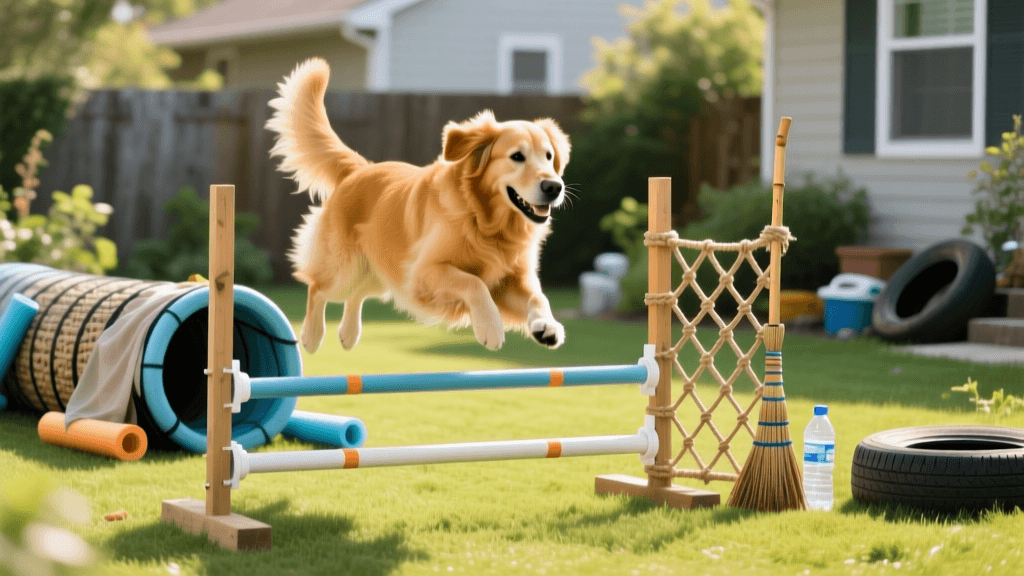
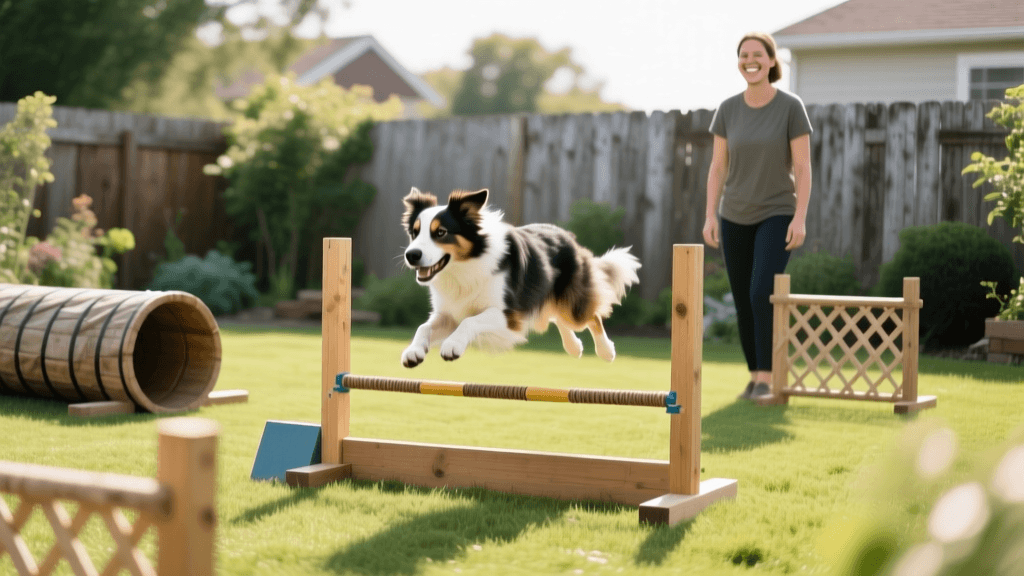
Just because a dog is prone to dysplasia does not mean they cannot participate in dog sports; the modality simply needs to change. Scent work and nosework are phenomenal alternatives to traditional agility. These sports engage the dog's powerful olfactory system and prey drive without requiring them to navigate jumps, weave poles, or A-frames. Tracking and barn hunt provide intense mental and physical exhaustion while keeping the dog's body close to the ground and moving at a natural, joint-friendly pace.
For trick training, focus on stationary behaviors that utilize the front end or core without stressing the hindquarters. Teaching a 'chin rest' (where the dog rests its chin on a target or your knee), a 'paw target', or 'shaping a box' (where the dog places its front paws on an elevated platform while keeping its hind feet stationary) builds confidence and handler focus while preserving orthopedic health.
Environmental and Equipment Considerations
The surface on which you train is just as important as the commands you teach. Hardwood floors, tile, and polished concrete offer zero traction, forcing a dog's stabilizing muscles to work overtime and placing lateral stress on the hip joints. Always conduct your training sessions on high-traction surfaces.
Invest in interlocking foam puzzle mats or a dedicated 3x4 foot orthopedic training mat (at least 3/4 of an inch thick) for indoor sessions. When training outdoors, seek out flat, even grass or dirt, and avoid uneven, rutted terrain that could cause a sudden misstep.
Additionally, evaluate your walking and training equipment. Traditional back-clip harnesses can encourage a dog to lean into the harness and pull, which shifts their center of gravity forward and places compensatory strain on the hindquarters. A well-fitted Y-front harness with a front-clip attachment encourages proper biomechanical alignment and discourages pulling, protecting the dog's overall musculoskeletal structure during leash training.
Training Modifications Comparison Table
Use the following chart to audit your current training routine and swap out high-risk behaviors for joint-safe alternatives.
| Training Behavior | Traditional Method (High Impact) | Joint-Safe Modification (Low Impact) |
|---|---|---|
| Recall | Running full speed and sliding to a stop at handler's feet | Teaching an 'emergency down' at a distance or 'go to mat' |
| Trick Training | 'Sit pretty' or begging on hind legs | 'Chin rest', 'bow', or hand-targeting ('touch') |
| Fetch/Drive | Repetitive hard stops, jumping, and sharp turns for a ball | Scent work, rolling toys along the ground, or swimming |
| Agility | Standard jump heights, weave poles, and A-frames | Hoop jumps, low cavalettis, tunnel work, and nosework |
| Obedience Drills | Rapid 'puppy push-ups' (sit-down-stand cycles) | Long duration 'down-stays' and impulse control games |
Nutrition and Recovery for Training Sessions
Training a dysplasia-prone breed requires a holistic approach that pairs modified physical exertion with targeted nutritional support. According to veterinary nutritionists featured in Purina Pro Plan's health resources, maintaining a lean body condition score (BCS of 4 or 5 out of 9) is the single most effective environmental modification you can make to delay the onset of osteoarthritis in genetically susceptible dogs. Every extra pound of body weight exerts up to four pounds of pressure on the joints during movement.
Factor your training treats into your dog's daily caloric intake to prevent obesity. Utilize low-calorie options like boiled chicken breast, green beans, or commercially available joint-support treats that contain glucosamine, chondroitin, and green-lipped mussel extract. After a rigorous mental training session or a low-impact scent work outing, incorporate gentle canine massage and passive range of motion (PROM) exercises to maintain joint flexibility and promote blood flow to the surrounding musculature.
Conclusion
Training a dog with a genetic predisposition to joint dysplasia does not mean compromising on obedience or behavioral conditioning. By respecting your dog's genetic blueprint, avoiding high-impact stressors during critical growth phases, and utilizing low-impact modifications, you can cultivate a deeply bonded, highly trained companion. Prioritize mental enrichment, environmental traction, and joint-friendly mechanics, and your dog will reward you with a lifetime of willing cooperation and improved mobility.
anouk-beaumont
All our authors care for dogs every day — read more of their work on the authors page.