Calming Leash Reactive Dogs: 2026 Adaptil vs Zesty Paws Review
Discover how to manage leash reactivity in 2026. We compare Adaptil Express spray and Zesty Paws Calming Bites, plus a step-by-step LAT training protocol.
Understanding the Neurology of Leash Reactivity in 2026
Leash reactivity remains one of the most frustrating and emotionally taxing challenges for dog owners in 2026. Whether your dog lunges, barks, growls, or freezes at the sight of other dogs, people, or fast-moving objects, the underlying cause is rarely true aggression; it is almost always rooted in fear, frustration, or severe over-arousal. When a reactive dog spots a trigger, their amygdala hijacks their nervous system, flooding their body with cortisol and adrenaline. In this heightened state of fight-or-flight, cognitive processing shuts down, and learning is biologically impossible.
According to the ASPCA's comprehensive guide to common dog behavior issues, managing this physiological response is the critical first step before any behavioral modification can occur. To effectively manage a reactive dog, modern handlers and veterinary behaviorists are moving away from outdated, punishment-based methods (like prong collars or shock collars) and embracing a dual-action approach: combining fast-acting calming aids with positive reinforcement training protocols. Two of the most popular, non-prescription products in the 2026 canine anxiety market are Adaptil Express Spray and Zesty Paws Advanced Calming Bites. But which one is right for your dog's specific triggers, and how can they be integrated into a modern training plan?
Adaptil Express Spray: Pheromone-Based Interruption
Adaptil Express is a fast-acting situational spray that utilizes a synthetic copy of the Dog Appeasing Pheromone (DAP). In nature, mother dogs release this pheromone while nursing to signal safety and comfort to their puppies. The 2026 formulation of Adaptil Express is designed to be absorbed through the olfactory system, sending a direct, calming signal to the dog's brain that bypasses the conscious thought process.
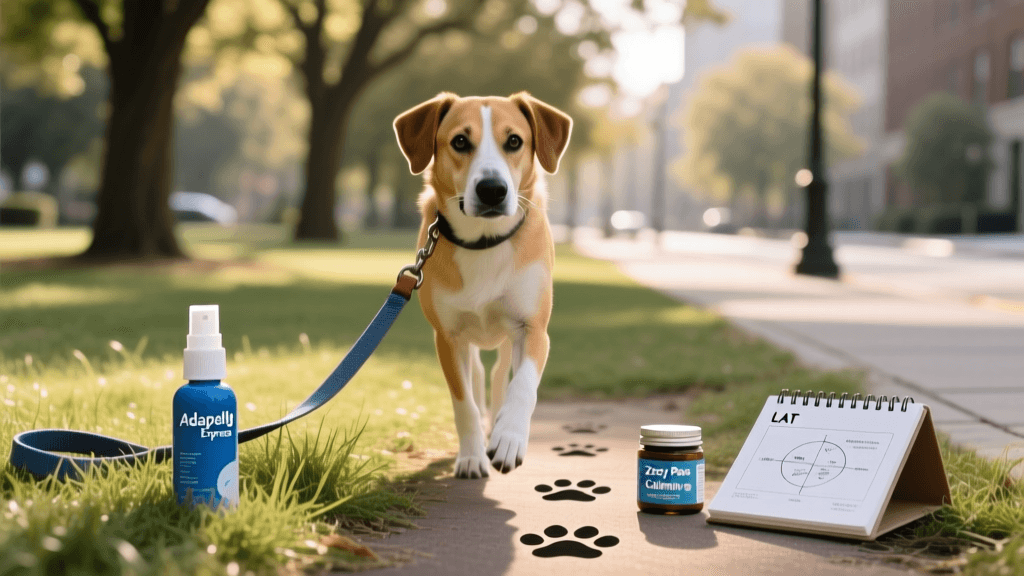
How to Use It for Reactivity: Adaptil Express should never be sprayed directly onto the dog. Instead, spray it onto a bandana or the inside of your dog's Y-front harness 15 minutes before your walk. This allows the alcohol carrier to evaporate, leaving only the active pheromones. It is highly effective for situational spikes in anxiety, such as leaving the house, entering a busy veterinary waiting room, or walking past a known neighborhood trigger zone.
Pros: Immediate onset (within 15 minutes), drug-free, no gastrointestinal side effects, and safe to use alongside prescription anxiety medications like fluoxetine or trazodone.
Cons: The effects last roughly 2 to 3 hours, requiring reapplication for longer outings. It also does not address underlying nutritional deficits or chronic baseline anxiety.
Zesty Paws Advanced Calming Bites: Nutritional Support
Zesty Paws Advanced Calming Bites take a different, ingestible approach to anxiety management. These soft chews are formulated to support the central nervous system through a blend of clinically studied, natural ingredients. The 2026 recipe features Suntheanine (a patented, highly bioavailable form of L-Theanine), KSM-66 Ashwagandha root extract, organic hemp seed powder, and chamomile.
How to Use It for Reactivity: Unlike pheromones, these chews require digestion and metabolic processing. For leash reactivity, you should administer the weight-appropriate dose (e.g., 2 chews for a 45 lb dog) roughly 30 to 45 minutes before stepping outside. L-Theanine promotes the production of alpha brain waves, which are associated with a state of relaxed alertness—exactly the mental state you want your dog to be in when practicing threshold training. Ashwagandha acts as an adaptogen, helping to regulate the adrenal glands and blunt the spike of cortisol when a trigger appears.
Pros: Longer-lasting effects (up to 6 hours), supports overall nervous system health, and the soft-chew format is highly palatable, making it a great pre-training ritual.
Cons: Slower onset time requires planning. Some dogs with sensitive stomachs may experience mild loose stools if introduced too quickly. Must be used daily for chronic anxiety to see baseline improvements.
2026 Comparison Chart: Adaptil Express vs. Zesty Paws
| Feature | Adaptil Express Spray | Zesty Paws Advanced Calming Bites |
|---|---|---|
| Primary Mechanism | Olfactory (Synthetic Pheromones) | Ingestible (L-Theanine & Adaptogens) |
| Onset Time | 15 Minutes | 30 to 45 Minutes |
| Duration of Effect | 2 to 3 Hours | 4 to 6 Hours |
| 2026 Average Cost | $24.99 (20 mL travel spray) | $28.99 (90 count bag) |
| Best Used For | Sudden triggers, vet visits, travel | Daily walks, chronic baseline anxiety |
| Stomach Sensitivity | None (Non-ingestible) | Mild risk (Introduce slowly) |
The 2026 Dual-Action LAT Protocol
Neither Adaptil nor Zesty Paws will "cure" leash reactivity on their own. They are tools designed to lower your dog's threshold so that their brain is receptive to learning. To achieve lasting behavioral change, you must pair these calming aids with a structured training protocol. The gold standard for leash reactivity in 2026 remains the Look At That (LAT) game, developed by canine behavior expert Leslie McDevitt.
Step 1: Establish Your Threshold Distance
Find the distance at which your dog notices a trigger (like another dog) but does not react. This is their "threshold." For some dogs, this is 50 feet; for others, it is 150 feet. If your dog is barking or lunging, you are under threshold, and learning cannot occur. Use a 15-foot or 30-foot biothane long line attached to a well-fitted Y-front harness to give your dog space to decompress without the tension of a standard 6-foot leash.
Step 2: The LAT Clicker Game
- Spot the Trigger: When your dog looks at the trigger from a safe distance, immediately mark the behavior with a clicker or a verbal "Yes!"
- Deliver the Reward: Feed a high-value treat (like boiled chicken or freeze-dried liver) away from the trigger. The goal is to teach the dog that seeing a trigger predicts a high-value reward, effectively rewiring their emotional response from fear to anticipation of a treat.
- Repeat and Disengage: If your dog looks back at the trigger, click and treat again. If they voluntarily disengage and look at you, celebrate with a "jackpot" reward of 3 to 4 treats in a row.
Pro-Tip: Administer your Zesty Paws Calming Bite 45 minutes before this session, and apply Adaptil Express to your dog's walking bandana 15 minutes prior. This dual-action chemical support will help your dog recover from the cortisol spike much faster between repetitions.
Incorporating Decompression Walks
Reactive dogs live in a state of chronic stress. In 2026, veterinary behaviorists heavily emphasize the importance of "decompression walks" or "sniffaris." Unlike structured heel walks, a sniffari allows the dog to wander on a long line in a low-traffic, nature-rich environment, sniffing at their own pace. Sniffing naturally lowers a dog's heart rate and stimulates the production of dopamine and serotonin. Aim for at least two 30-minute decompression walks per week in addition to your structured LAT training sessions.
Knowing When to Call a Professional
While over-the-counter calming aids and positive reinforcement protocols are highly effective for mild to moderate reactivity, severe cases require professional intervention. If your dog has a bite history, causes injury to themselves while lunging, or shows zero improvement after 60 days of consistent threshold training, it is time to escalate your care.
Professionals certified through the Fear Free Pets certification program are trained to handle reactive dogs without inducing further trauma or fear. Furthermore, a Veterinary Behaviorist can assess whether your dog requires prescription psychopharmacology (such as SSRIs or Gabapentin) to manage severe neurochemical imbalances. The American Veterinary Society of Animal Behavior (AVSAB) strongly recommends seeking the guidance of a board-certified veterinary behaviorist for cases involving severe aggression or self-harm, as they are uniquely qualified to diagnose underlying medical conditions that may be exacerbating the behavioral symptoms.
Conclusion
Managing a leash-reactive dog in 2026 requires patience, empathy, and the right toolkit. Adaptil Express offers rapid, situational relief through the power of pheromones, making it ideal for unpredictable environments. Zesty Paws Advanced Calming Bites provide sustained, nutritional support for the nervous system, making them a staple for daily training walks. By combining these calming aids with the Look At That protocol and prioritizing your dog's mental health through decompression walks, you can transform your stressful neighborhood strolls into peaceful, bonding experiences.
anouk-beaumont
All our authors care for dogs every day — read more of their work on the authors page.