Diagnosing and Managing Dog Osteoarthritis Symptoms
Learn how to diagnose canine osteoarthritis early and explore effective, multi-modal solutions to manage joint pain and improve your senior dog's mobility.
The Hidden Epidemic of Canine Osteoarthritis
Osteoarthritis (OA), also known as degenerative joint disease, is a progressive, chronic condition that affects the cartilage, synovial fluid, and underlying bone within a dog's joints. According to the American College of Veterinary Surgeons, osteoarthritis is the most common cause of chronic pain in dogs, affecting up to 20% of adult dogs and over 80% of senior canines. Despite its prevalence, OA is frequently underdiagnosed because dogs are evolutionarily hardwired to mask pain. As a pet owner, understanding how to diagnose the subtle early warning signs and implementing a comprehensive, multi-modal management plan is critical to preserving your dog's quality of life, mobility, and overall wellbeing.
Step 1: Diagnosing the Problem at Home
Unlike humans, dogs rarely vocalize chronic joint pain. They will not typically whine or cry when suffering from osteoarthritis unless the pain is acute and sudden. Instead, canine OA manifests through subtle behavioral and biomechanical shifts. To diagnose the problem early, you must become a keen observer of your dog's daily movements and habits.
- Reluctance to Perform Familiar Tasks: Hesitation before jumping into the car, climbing stairs, or leaping onto the couch. You may notice your dog 'thinking' about a jump before ultimately deciding to walk away.
- Altered Gait and Posture: A 'bunny-hopping' gait in the hind legs, a stiff stride after resting, or a noticeable shift in weight away from the affected limb. Dogs with hip OA often shift their weight to their front legs, leading to overdeveloped shoulder muscles and atrophied thigh muscles.
- Behavioral Changes: Increased irritability, reluctance to be groomed or touched in specific areas, decreased play drive, and sleeping more than usual. Some dogs may excessively lick or chew at the skin overlying the painful joint.
- Lagging on Walks: A dog that previously pulled on the leash may now lag behind, sit down frequently during walks, or refuse to walk on hard surfaces like asphalt.
Step 2: Veterinary Diagnostics
If you observe any of the signs above, a veterinary visit is essential. The Washington State University College of Veterinary Medicine emphasizes that a definitive diagnosis requires a combination of physical manipulation and diagnostic imaging. Your veterinarian will perform a comprehensive orthopedic examination, checking for joint effusion (swelling), decreased range of motion, crepitus (a grinding sensation during joint movement), and pain upon palpation.
Radiographs (X-rays) are the gold standard for confirming OA. They reveal osteophytes (bone spurs), subchondral bone sclerosis, and narrowed joint spaces. In some cases, blood work is also recommended to rule out tick-borne diseases like Lyme disease or systemic conditions like hypothyroidism, which can mimic or exacerbate joint stiffness.
Step 3: Multi-Modal Solutions for Joint Pain
There is no cure for osteoarthritis, but a multi-modal approach can dramatically slow disease progression and eliminate daily pain. Relying on a single treatment is rarely effective; combining weight management, nutraceuticals, environmental modifications, and medical therapies yields the best outcomes.
1. Strategic Weight Management
Weight control is the single most effective intervention for canine OA. Biomechanical studies show that every one pound of excess body weight places an additional four pounds of pressure on weight-bearing joints. Your dog's Body Condition Score (BCS) should ideally be a 4 out of 9, where the ribs are easily palpable without pressing hard, and a distinct waist is visible from above.
Actionable Advice: Stop free-feeding and ditch the standard measuring cups, which can vary caloric output by up to 20%. Instead, use a digital kitchen scale to weigh your dog's daily food allotment in grams. If your dog needs to lose weight, reduce their daily caloric intake by 10% to 20% and switch to a prescription joint-and-weight management diet, such as Hill's Prescription Diet j/d or Royal Canin Mobility Support, which are formulated with targeted levels of Omega-3 fatty acids.
2. Targeted Joint Supplements (Nutraceuticals)
Joint supplements are foundational for long-term cartilage support and inflammation reduction. However, not all supplements are created equal. You must look for products backed by clinical trials and bearing the National Animal Supplement Council (NASC) seal.
- Glucosamine HCl & Chondroitin Sulfate: These provide the building blocks for glycosaminoglycans (GAGs), which are essential for synovial fluid viscosity and cartilage repair. Products like Cosequin DS or Dasuquin Advanced are veterinary staples.
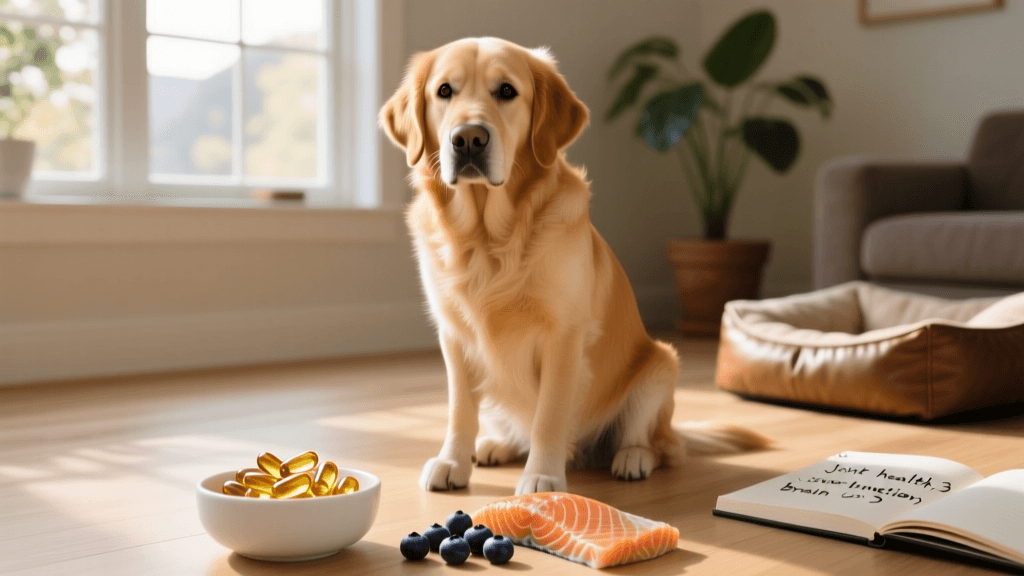
- Omega-3 Fatty Acids (EPA & DHA): Omega-3s disrupt the inflammatory cascade within the joint capsule. The therapeutic dose for joint pain is high: approximately 300 mg of combined EPA/DHA per 10 kg (22 lbs) of body weight. Welactin 3 or Nordic Naturals Omega-3 Pet are excellent, purified options.
- Green-Lipped Mussel (GLM): A natural source of ETA (a unique Omega-3), glucosamine, and antioxidants. GLM has been shown to significantly reduce joint swelling and pain in clinical studies.
3. Environmental Modifications
Adapting your home environment reduces the mechanical load on your dog's compromised joints and prevents secondary injuries from slipping.
- Orthopedic Bedding: Invest in a high-quality orthopedic bed featuring at least 4 to 7 inches of high-density, supportive memory foam (e.g., Big Barker Orthopedic Dog Bed). Avoid beds stuffed with poly-fill, which compress and offer zero joint relief. Expect to invest $150 to $300 for a durable, therapeutic bed.
- Ramps and Stairs: Use a ramp for vehicle entry to eliminate the impact of jumping. Ensure the ramp has a high-traction surface and an incline no steeper than 18 to 20 degrees (e.g., PetSafe Happy Ride Folding Dog Ramp, costing around $40 to $70).
- Floor Traction: Place interlocking foam mats or non-slip area rugs over hardwood and tile floors. Slipping on smooth surfaces causes micro-traumas to the joint capsule and accelerates OA progression.
4. Veterinary Medical Management
When lifestyle modifications and supplements are not enough to keep pain at bay, pharmaceutical intervention is necessary.
- NSAIDs (Non-Steroidal Anti-Inflammatory Drugs): Medications like Carprofen (Rimadyl) or Meloxicam inhibit COX enzymes to reduce inflammation. They are highly effective but require periodic blood work to monitor liver and kidney function. Cost: $30 to $70 per month.
- Monoclonal Antibodies (NGF Inhibitors): A revolutionary breakthrough in veterinary medicine, Librela (bedinvetmab) is a monthly subcutaneous injection that targets Nerve Growth Factor (NGF), a key protein involved in pain signaling. Unlike NSAIDs, Librela is not metabolized by the liver or kidneys, making it exceptionally safe for senior dogs with comorbidities. Cost: $60 to $130 per month, depending on the dog's weight.
- Adjunctive Therapies: Gabapentin for neuropathic pain, Amantadine for chronic pain wind-up, and professional canine rehabilitation (laser therapy, underwater treadmill) can further enhance mobility.
Comparing Canine Osteoarthritis Treatments
| Treatment Category | Specific Product/Option | Mechanism of Action | Estimated Monthly Cost | Time to Noticeable Effect |
|---|---|---|---|---|
| Nutraceutical | Dasuquin Advanced | Cartilage matrix protection, ASU inhibition | $45 - $65 | 4 - 6 weeks |
| Omega-3 Supplement | Welactin 3 Canine | Reduces pro-inflammatory cytokines in joints | $25 - $40 | 6 - 8 weeks |
| Pharmaceutical (NSAID) | Carprofen (Rimadyl) | COX enzyme inhibition, reduces inflammation | $30 - $70 | 1 - 3 days |
| Biologic (mAb) | Librela Injection | Neutralizes Nerve Growth Factor (NGF) pain signals | $60 - $130 | 2 - 4 weeks |
| Environmental | Memory Foam Bed (7') | Eliminates pressure points, supports joint alignment | $150 - $300 (One-time) | Immediate |
Your Actionable Daily Routine
Managing osteoarthritis requires consistency. Implement this daily checklist to ensure your dog receives comprehensive care:
- Morning: Administer NSAIDs or joint supplements with a full meal to prevent gastrointestinal upset. Engage in a 10-minute 'sniffari' (slow, mentally stimulating leash walk) to gently lubricate stiff joints after a night of rest.
- Mid-Day: Encourage low-impact movement. If you have a backyard, allow for free-roaming on soft grass. Avoid high-impact games like fetch or frisbee, which involve sudden, jarring stops and turns.
- Evening: Perform gentle, passive range-of-motion (PROM) exercises on the affected limbs for 5 minutes. Apply a warm compress to the hips or shoulders for 10 minutes to increase local blood flow and relax tense muscles.
- Night: Ensure your dog is settled on their orthopedic bed in a draft-free, warm room. Cold temperatures exacerbate joint stiffness and pain.
By combining keen observation for early diagnosis with a structured, multi-modal treatment plan, you can successfully manage canine osteoarthritis. Consult with your veterinarian to tailor these solutions to your dog's specific weight, age, and disease severity, ensuring they enjoy their golden years with comfort, dignity, and joy.
aaron-whyte
All our authors care for dogs every day — read more of their work on the authors page.